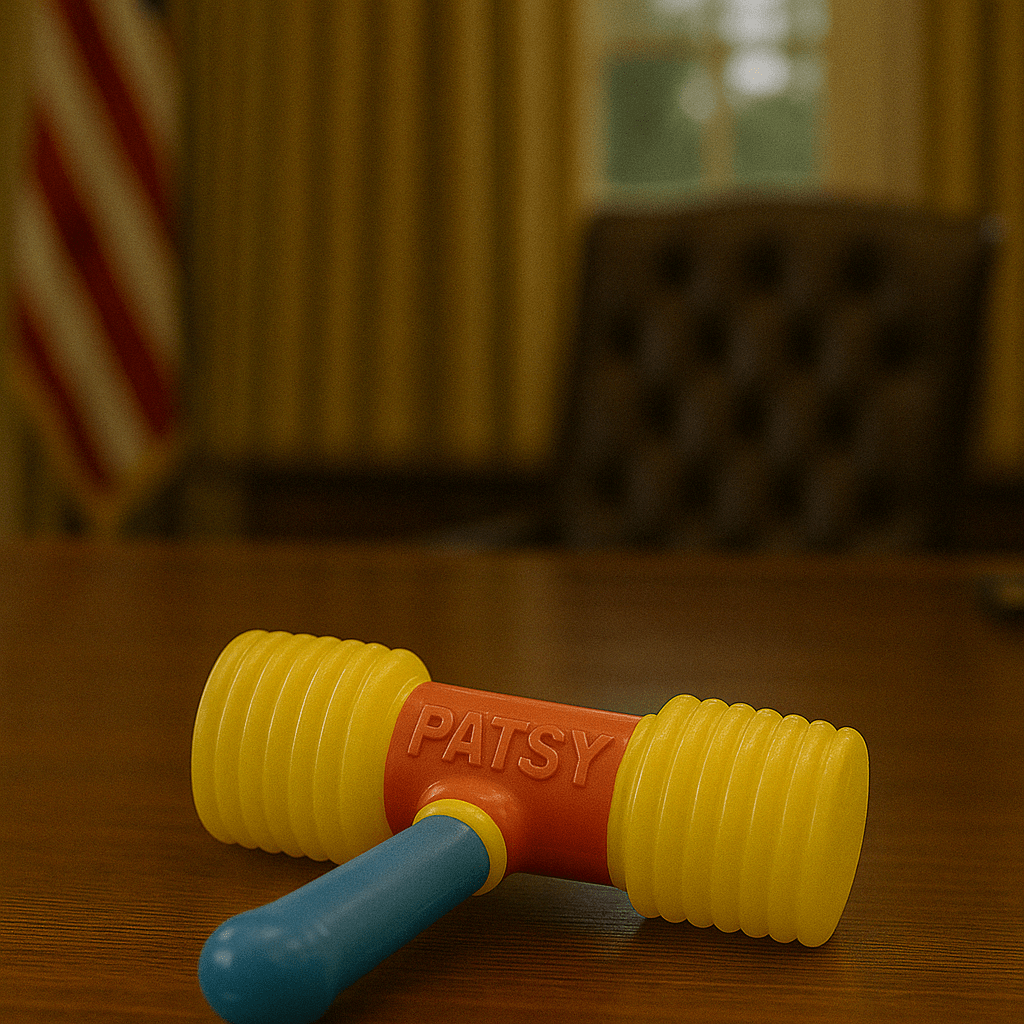
We tend to fixate on the rise of misanthropes—as though selfishness were some aberration rather than a predictable by-product of a system driven by commercial imperative. But the deeper concern is structural: the ease with which sprawling, intricate bureaucracies can be repurposed, nudged, or tilted into autocratic shapes. That this is possible suggests not merely infiltration or corruption, but a latent compatibility—a quiet affinity between systemic inertia and centralised control. A machine as vast as the United States doesn’t turn on a dime unless it was already shaped to allow it. Which implies that the emergence of autocracy isn’t a disruption but a continuation—under different semantics.
The true puzzle, then, is not moral but dynamical. What is it about these systems that makes them so amenable to recursive self-replication of their worst tendencies? Perhaps the logic lies in entropy: what reproduces is what is easiest to reproduce. And simplicity often wears the mask of authority. In this light, even the most grotesque political regressions become legible—not excusable, but intelligible—as functions of underlying parameters. If we can isolate those parameters, we approach not just critique but universality—a way to read the architecture of power not as history, but as mathematics.
 Daedelus Kite