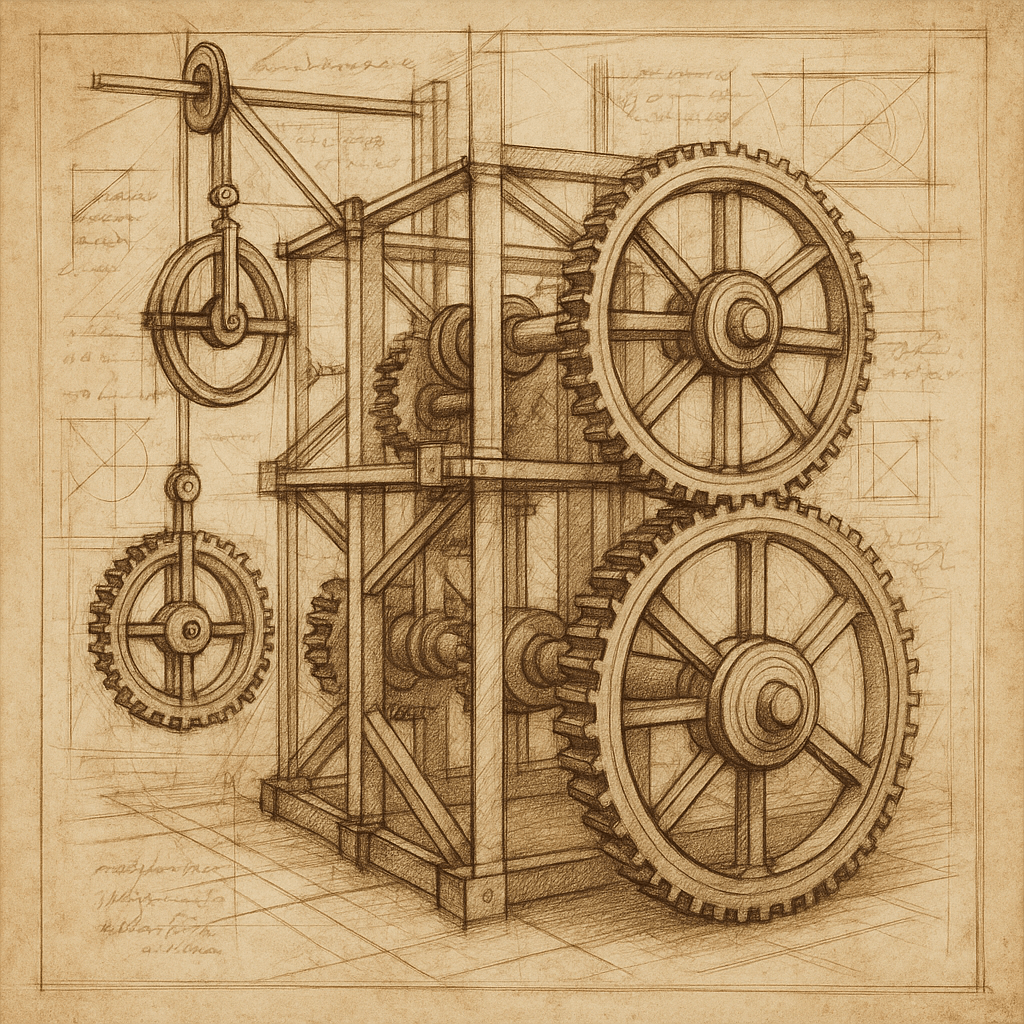
Regulatory institutions are not accidents of governance but emergent properties of scale. As societies expand, complexity multiplies, and so does the potential for fracture. Out of this turbulence, mechanisms appear that promise to stabilize the system. Yet once established, they carry their own imperative: self-preservation. Regulation does not only constrain; it seeks to justify and extend itself, and in doing so often amplifies the very conditions it was designed to control.
This is the logic of dissipative systems. They survive not by erasing turbulence but by metabolizing it, turning disorder into the fuel of continuity. Social structures, in particular, exhibit this pattern: they stabilize by channelling energy into rituals of oversight and codification, but in the process they ensure that instability never vanishes. A financial regulator expands the taxonomy of risk; a safety authority proliferates rules; a health body multiplies categories of hazard. Each act extends continuity while entangling the institution in the very problems it seeks to resolve.
Such continuity, however, is not the same as significance. Dissipative systems persist for their own sake; they are machines of survival, not meaning. They generate patterns around stability and self-reference, but these patterns lack universality. The equilibrium they achieve is metastability, order without finality, structure without permanence. And here the contrast becomes sharp: the continuity of institutions is local, contingent, temporary. What remains elusive is universal significance—the kind of meaning that does not collapse into self-preservation but resonates beyond the system itself.
Still, regulation matters. Without it, complexity tips into collapse, and the damage of unchecked power is immediate and severe. In principle, regulation could be a stabilizing intelligence—adaptive, transparent, and genuinely protective. In practice, it rarely achieves this. More often, it spirals into self-amplification or capture, serving its own survival rather than the public good. When it works, it works by accident or through brief clarity of purpose; when it fails, it fails systemically. The tragedy is not that regulation is unnecessary, but that it is almost never done properly.
 Daedelus Kite