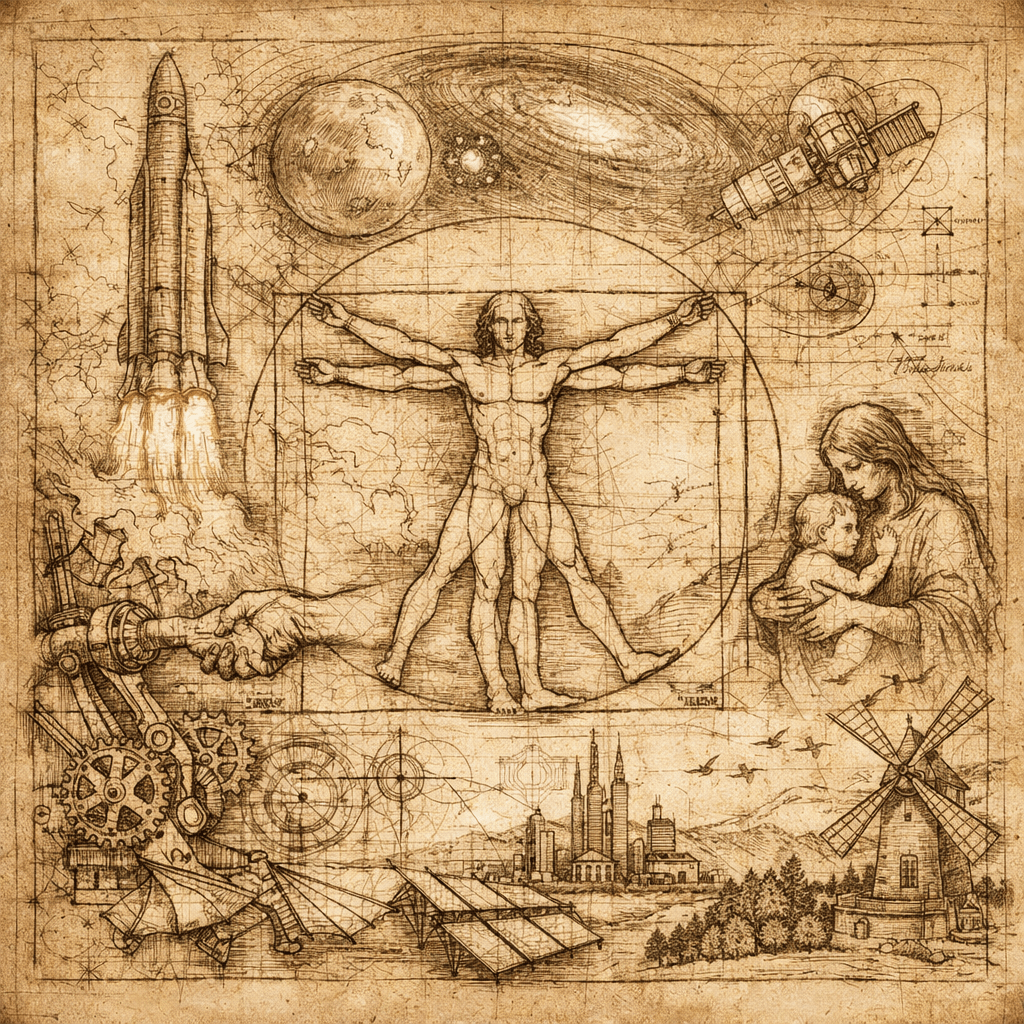
We are not simply, or only, facing a crisis of leadership or values. We are facing a coordination failure at planetary scale, driven by technologies and institutions that reward domination, speed, and spectacle while quietly eroding the conditions that make intelligence, civilisation, and continuity possible at all. This is not a morality play. It is a design problem that has been mistaken for success.
A system can look brilliant while it is eating its own foundations. That is the trick. We confused indicators with outcomes. We built systems to optimise what is easy to count, fast to circulate, and simple to reward, then mistook improvement in those signals for improvement in reality. Speed came to look like intelligence. Growth like health. Attention like relevance. Wealth like wisdom. Each proxy worked locally and briefly, so the system appeared successful while unpriced damage accumulated elsewhere. By the time consequences became visible, they were displaced in time, space, or population. The design failed, but the metrics said “winning,” so the failure was never recognised as such.
Greed is not the core issue. Confusion about what money is for is. There is an old story, told by , about , who was mocked for being poor. Thales predicted a strong olive harvest, borrowed just enough to secure the olive presses, and made a fortune when demand spiked. The point of the story was not that philosophy should turn into commerce, nor that cleverness should be cashed out as domination. The point was precisely the opposite. If you understand the world, money is easy to make. Which is why it is not worthy of worship. Wealth was meant to demonstrate insight, not replace it.
We inverted that lesson. Accumulation became proof of intelligence rather than a by-product of it. Display became meaning. Insulation from consequence became success. Resources stopped being tools for shared flourishing and became instruments of signalling, leverage, and control. This is not strength. It is insecurity rendered infrastructural. Those still straining to push that boulder uphill mistake motion for progress and noise for victory.
This is why replacing leaders rarely works. The field itself rewards the wrong behaviours, then feigns surprise when they proliferate. If attention is the currency, outrage is the mint. If velocity is the key metric, reflection becomes a liability. If winning means pushing costs outward, cruelty starts to look efficient and responsibility starts to look naïve. Politics slides into theatre because theatre scales. Truth becomes a format. The public develops the nervous system of something living under constant noise: jumpy, exhausted, hungry for simple stories.
Acceleration is the real danger. Speed collapses reflection. Throughput destroys meaning because meaning requires slack, and slack looks like waste to systems addicted to circulation. Narcissism stops being a personal failing and becomes an emergent property of platforms that reward visibility without accountability. Billionaires matter here not as villains but as artefacts: predictable outputs of a system that mistakes accumulation for insight.
The deeper risk is epistemic. No one fully understands intelligence. Human or artificial. Consciousness, agency, meaning, judgment: all partial, inferred, contingent. That should lead us to design for humility and error-correction. Instead we design for certainty-performance, because certainty propagates better. Loudness beats calibration. Confidence substitutes for wisdom. Complex systems drift toward catastrophe while congratulating themselves, because applause is also a metric.
The way forward is not collapse or salvation, but maturity. Redesign the reward landscape. Make it expensive to offload cost and prestigious to absorb it. Treat delay and friction as engineering variables, not moral failures. Slow the loops where harm propagates faster than understanding. Speed the loops where evidence produces correction. Shift status from domination to stewardship, from disruption to repair, from extraction to resilience. Nature already solved this problem. It survives by distributing stress, preserving slack, and avoiding single points of failure. We inverted those principles and called the result progress.
Peace is not naïve. It is a high-bandwidth coordination achievement. Enlightenment is not mystical. It is what happens when systems stop lying to themselves about where their costs go. The future remains open. But only if we stop confusing speed for intelligence, wealth for wisdom, and noise for truth.
 Daedelus Kite