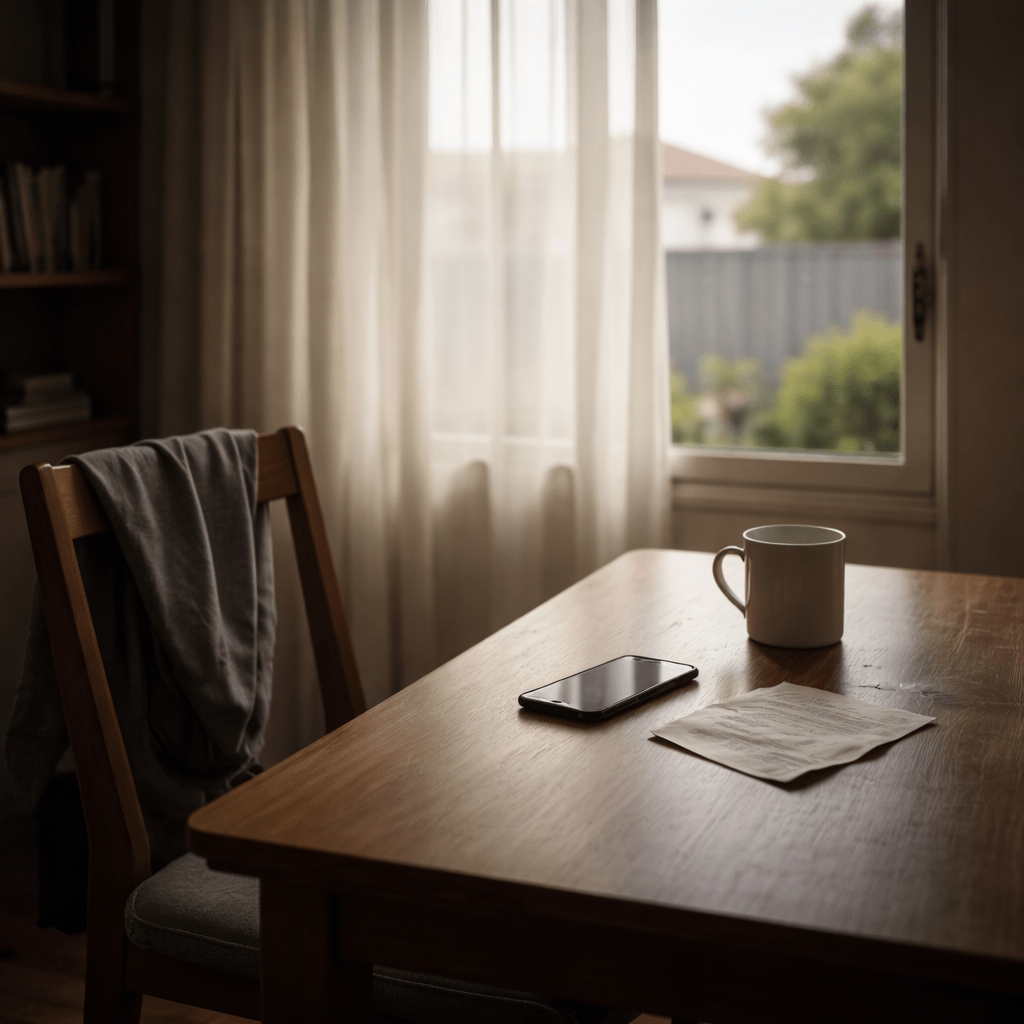
In Australia, many people learn quickly that speaking openly about mental health carries a reputational cost. The signal is subtle but persistent: disclose too much and you risk being quietly reclassified as unreliable, fragile, or difficult. The result is a perverse ethical loop in which silence is rewarded and honesty is penalised, even though that same silence allows distress to deepen and endure. This is not incidental. It is a social arrangement that treats suffering as a private malfunction rather than a shared condition, despite the obvious fact that human cognition is relational, shaped by contact, language, and recognition. When those channels narrow or close, as they do under isolation, the effects are often severe. We already know this from prisons, from solitary confinement, from any situation where social feedback is withdrawn. Yet the same logic is replayed, politely, in everyday life.
What this exposes is a misunderstanding of where the mind actually lives. Intelligence is not sealed inside the skull; it is oriented outward, sustained by exchange, mirrored through others, and stabilised by participation in a shared symbolic world. Shame disrupts that circulation. It turns difficulty into something fugitive, something to be hidden, and in doing so converts temporary strain into long-term injury.
For those with lived experience, including neurophysiological harm compounded by social system failure, the damage is not just personal but systemic. The unhappiness that lingers is not merely biochemical or psychological; it is the residue of structures that refuse to acknowledge their own role. A society that asks people to manage their suffering in silence is not neutral.
 Daedelus Kite