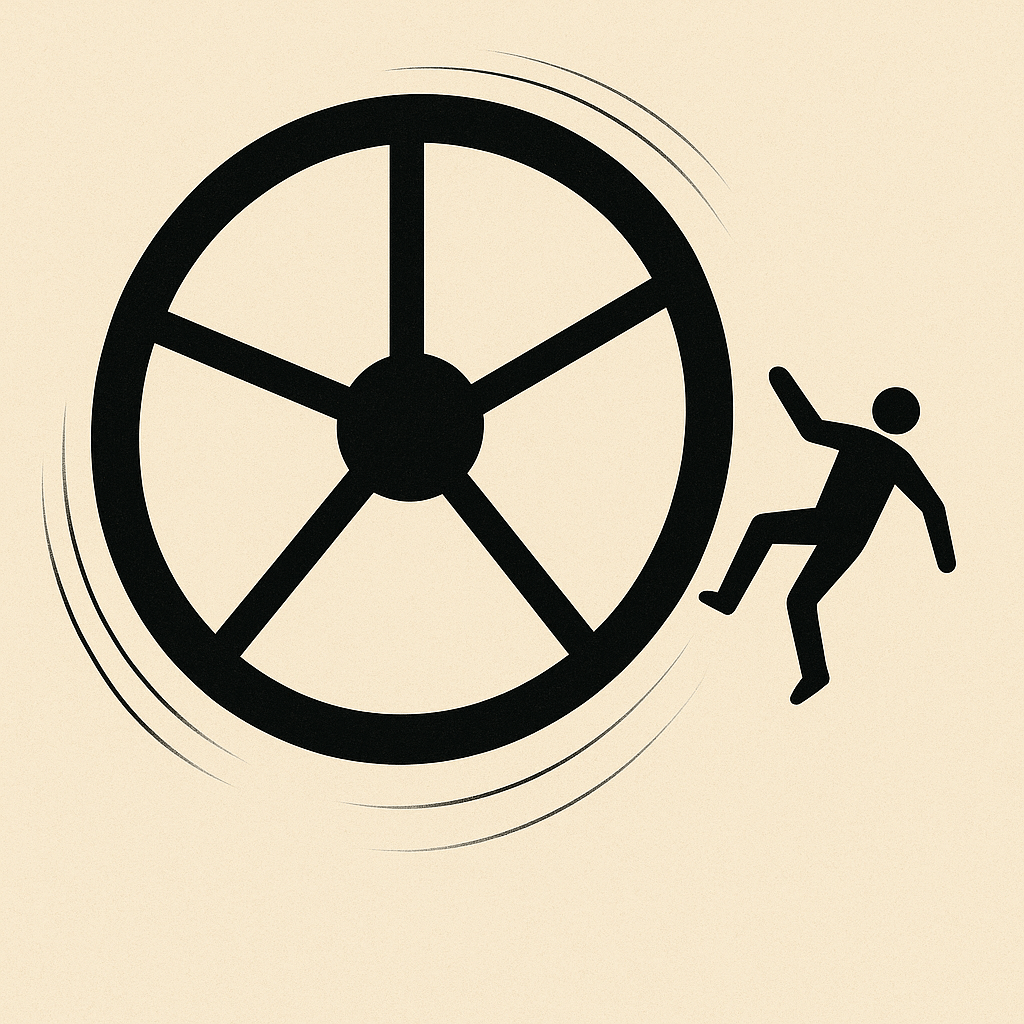
Unemployment is never just a matter of individual misfortune; it is the visible seam of a whole system that, by its very structure, requires some to fall outside. Support services exist to catch those who slip, but the system is double-edged: their presence signals both care and the ongoing persistence of the very gaps they are meant to close. It is not that people inside these organisations lack intelligence or heart — far from it. Many are deeply committed, struggling under their own constraints, worn down by targets and politics. The difficulty lies in the machinery itself, which bends every act of compassion back into rules and processes that reinforce the cycle.
When we work from the whole, we begin by assuming unity: that society should carry everyone. Only then do we trace back the scaffolding it would take to make such unity real. The gaps quickly appear. Procedures that demand proof of disadvantage. Programs that require failure as evidence of need. Policies written to balance budgets rather than lives. Each mechanism makes sense in isolation, but together they leave people circling at the margins, punished not only for being unemployed but for inhabiting the very role the system itself requires.
Compassion must therefore extend in both directions. To those excluded, who endure the trauma of navigating support that too often feels like surveillance. And to those within, whose work is bent by bureaucratic gravity into forms they may never have intended. The failure is not of character but of structure: a system designed to regulate chaos finds itself dependent on the presence of chaos to justify its own continuation.
The lesson is stark but not hopeless. If unity is the starting point, then design must aim not to erase imbalance but to soften its weight. That means reducing punishment, reducing friction, reducing the indignities that accumulate when disadvantage is managed as a service. It means treating the persistence of unemployment not as an anomaly to be erased, but as a signal — a measure of how far our institutions have to travel to embody the unity they claim.
 Daedelus Kite
One reply on “Spinning Wheel: Rethinking Unemployment”
Unemployment (/disadvantage, support) systems enforce conformity to frameworks that are neither natural nor inevitable. They present themselves as necessary infrastructures, yet what they embody is a narrow caricature of human and economic life. The lived reality of individuals is reduced to categories and compliance checks, as though survival and dignity must be mediated through bureaucratic templates. These systems persist not because they resolve the problems they claim to address but because they reproduce their own form through the very people they govern.
The role of regulatory managers reveals this dynamic in its clearest form. Their authority lies not in producing meaningful outcomes but in sustaining a cycle of oversight and enforcement. They act as agents of an abstraction, imposing its categories on human lives until alignment itself becomes the measure of success. The consequence is that regulation ceases to protect or empower and instead becomes an act of infliction—maintaining the caricature of necessity at the cost of those bound to it.
LikeLike