The Soviet Union collapsed, capitalism declared victory, and everyone went shopping. Now political instability is a profitable industry, foreign adversaries exploit the machinery, and the race to the bottom has become self-financing.

The Soviet Union collapsed, capitalism declared victory, and everyone went shopping. Now political instability is a profitable industry, foreign adversaries exploit the machinery, and the race to the bottom has become self-financing.
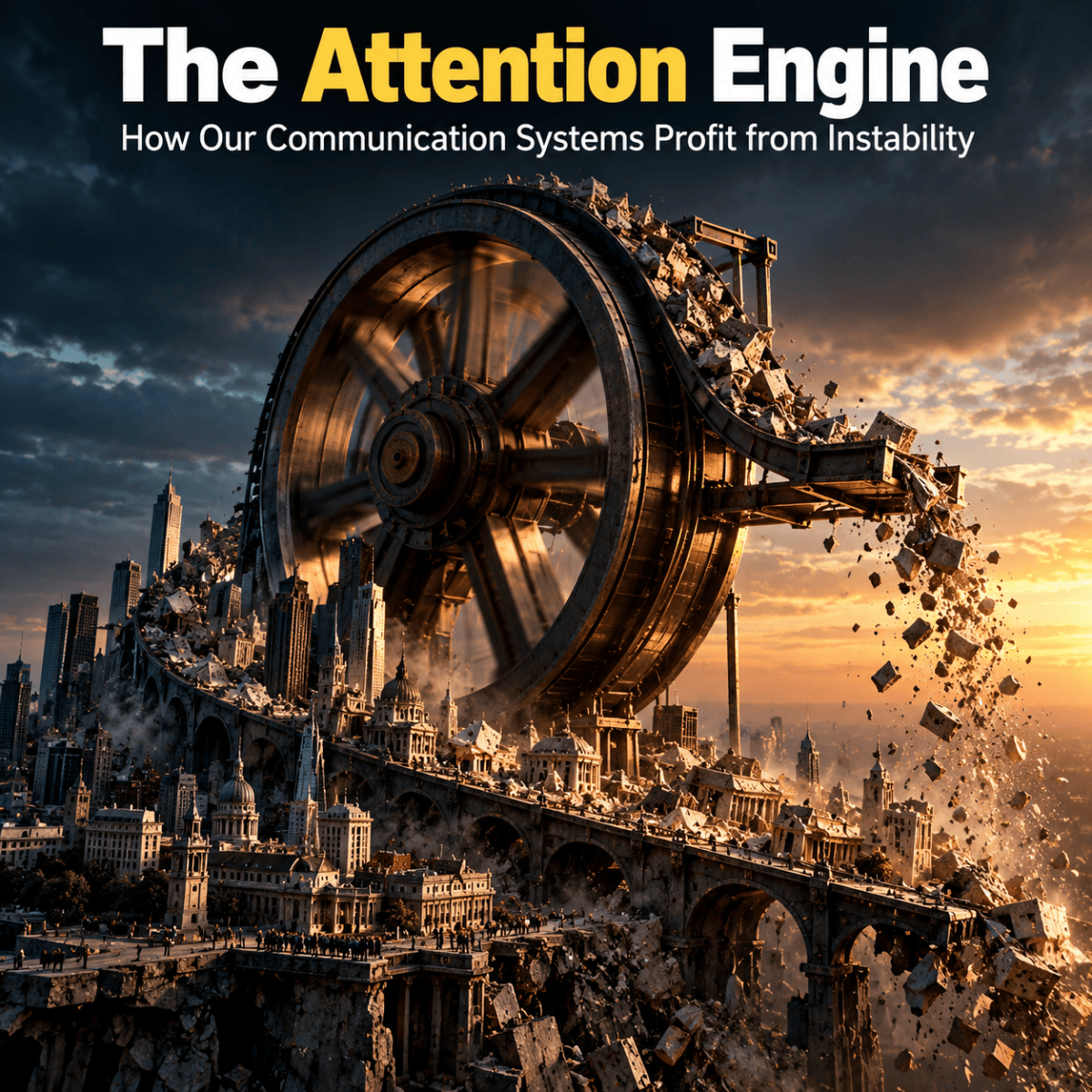
Civilisations have collapsed before. What distinguishes ours is a communications economy that profits from accelerating the disturbances society must then struggle to absorb. The danger lies in a recursive feedback system that rewards instability while transferring its consequences to everyone else.

Japan’s cybersecurity crisis reveals how interconnected infrastructure creates systemic vulnerabilities that conventional security measures cannot eliminate.

Popularity is not a measure of significance. The economics of attention systematically rewards familiar ideas while disadvantaging those capable of changing how we think.
A more durable security paradigm would concern the organisation of differences through which competition can continue without destroying the conditions necessary for its participants to survive.

Our extraordinary technological and expressive abundance conceals a narrowing of possibility, as the systems rewarding innovation and success make civilisation increasingly fragile.

The story of Ignaz Semmelweis, whose life-saving discovery reveals how established practices can obstruct new knowledge, with profound human consequences.

We mistake extreme wealth for extraordinary human worth, celebrating billionaires as visionaries while overlooking the collective labour, public investment and institutional power behind their fortunes. It’s time to stop confusing wealth with wisdom.

Why institutions, political movements and intellectual communities reproduce the same patterns of identity, conformity and exclusion while insisting on their differences.

A protest becomes something different when separate grievances begin moving at the same time. France offers a glimpse of how synchronisation amplifies communicative affect.

Populism may not need to be manufactured. An overwhelmed communication system already rewards simplification, antagonism and recurrence, while those best placed to change it profit from the resulting volatility.

Nobody needs to control the machinery. Repeated communication changes what people notice, expect and respond to, gradually reshaping the culture and politics that emerge from those interactions.
Have a WordPress.com account? Log in now.

