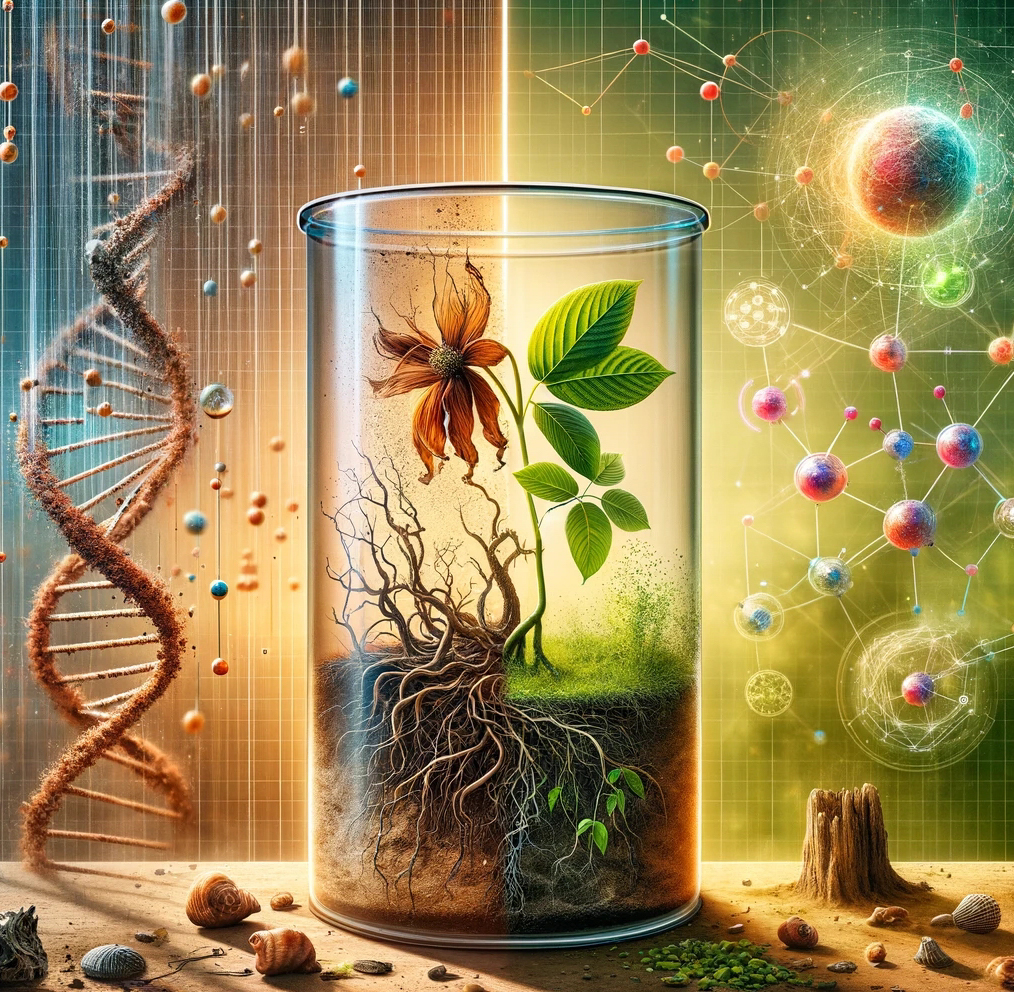
Ludwig von Bertalanffy, a biologist and a pioneer of the General Systems Theory, discussed the concept of entropy in relation to system dynamics, particularly in large-scale systems. His views can be summarized as follows:
- Entropy and Open Systems: Bertalanffy emphasized the difference between closed and open systems. In closed systems, entropy inevitably increases, leading to disorder and equilibrium (as per the second law of thermodynamics). However, he noted that most systems in nature, including biological and social systems, are open systems. These systems exchange matter and energy with their environment, which allows them to maintain or decrease their internal entropy.
- Negentropy: He introduced the concept of “negentropy” (negative entropy) to describe how open systems can import energy from their environment to maintain their organization and structure, thus counteracting the effects of entropy. This concept is crucial in understanding how living organisms maintain their complex structure despite the natural trend towards disorder.
- System Dynamics at Scale: Bertalanffy suggested that as systems become more complex and larger in scale, their ability to manage entropy becomes more critical. Large-scale systems (like ecosystems or societies) have more interactions and interdependencies, making the flow and balance of energy and matter essential for their sustainability.
- Applications beyond Biology: While Bertalanffy’s work was rooted in biology, he believed that these principles of system dynamics and entropy had broader applications, including in social sciences, economics, and technology. He saw systems theory as a way to unify scientific inquiry across different disciplines.
Bertalanffy’s ideas were foundational in the development of systems theory, and his insights into the role of entropy in system dynamics have influenced a wide range of fields, from biology to sociology and beyond.
Note: The term “negentropy” was coined by the physicist Erwin Schrödinger in his 1944 book “What is Life?” Schrödinger used the concept of negentropy (negative entropy) to describe how living systems import order from their environment, which allows them to maintain their structure and decrease internal entropy, contrary to the general trend towards increased entropy in closed systems as stated in the second law of thermodynamics. This concept was a significant contribution to understanding the physical basis of life and was influential in the development of later theories in systems biology and complexity science.
 Daedelus Kite