
In the current metamorphoses and radiative speciation of artificial intelligence, we’re witnessing a subtle yet profound transformation in our relationship with technology. AI, often perceived through a lens of fear and dystopian fictional narratives, is in reality a mirror reflecting and amplifying our own existential anxieties and aspirations. This reflection reveals not only our concerns about the machines themselves, but deeper, more intrinsic and characteristically unresolved human fears about change, uncertainty and the metaphysical unintelligibility (as threat) that Others and difference must always at some level represent.
At the heart of the AI conversation lies a fundamental truth: this technology is a catalyst for self-reflection and societal introspection; effectively isolating and augmenting the recursive signal of combinatorial (i.e. entropic) explosion that drives technological growth, among other things. AI’s true impact isn’t in its potential for unconstructive disruption, but in its ability to serve as a companion in our collective journey towards sustainably well-managed innovation and efficiency. It’s not about a clash between human intelligence and artificial intelligence, but indicates an elementary harmonic resonance where each of these distributed (as entangled) abstract systems propels the other forward.
For professionals across various fields, from education to art to business, AI presents an opportunity for growth rather than a threat to existence. It’s a tool that enhances, not replaces, the human element in our work. The challenge lies in adapting to this new landscape, leveraging AI to augment our capabilities and creativity.
Yet, as much as technology is adaptively shaping our future, we are the ones purposefully steering its course. The decisions we make, the values we uphold, and the directions we choose will determine the trajectory of this technological odyssey. AI is not just a technological advancement; it’s a societal shift demanding thoughtful (as strategic) navigation.
This narrative of AI as a transformative force extends beyond the confines of code, algorithms and strobing patterns of logical symmetry. It’s about understanding and embracing the seismic shifts in our cultural, social, and economic fabric that these technologies will most certainly bring. AI is less a specter of the future and more a reflection of our current state – a state of transition, where the old grapples with the new, and where our fears and hopes are intertwined.
In essence, AI is a journey of adaptation and co-creation, where the potential for a symbiotic relationship between human and machine lies in our hands. It challenges us to rethink our roles, to reimagine our futures, and to embrace the possibilities that lie in this era of technological and human convergence. As we navigate this path, the real question is not about how AI will change us, but how we will change with AI.
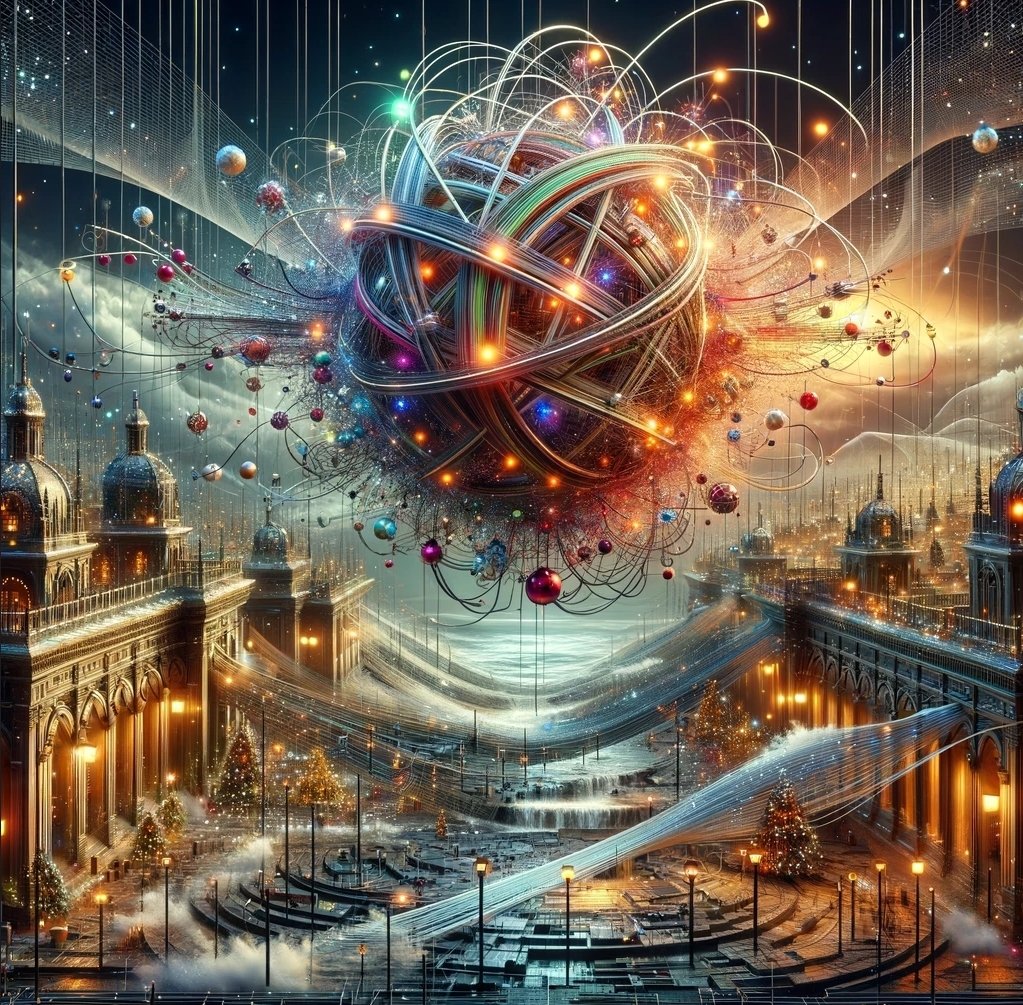
 Daedelus Kite