The flying car illustrates the peculiar absurdity of developing increasingly sophisticated means of getting somewhere while losing collective control over where we are going.

The flying car illustrates the peculiar absurdity of developing increasingly sophisticated means of getting somewhere while losing collective control over where we are going.

A civilisation builds systems to solve its problems, then discovers that the systems have become the problems, while its dependence upon them has made their continuity deeply problematic.

The technological system cannot perceive its full costs because that blindness is one of the conditions of its success.
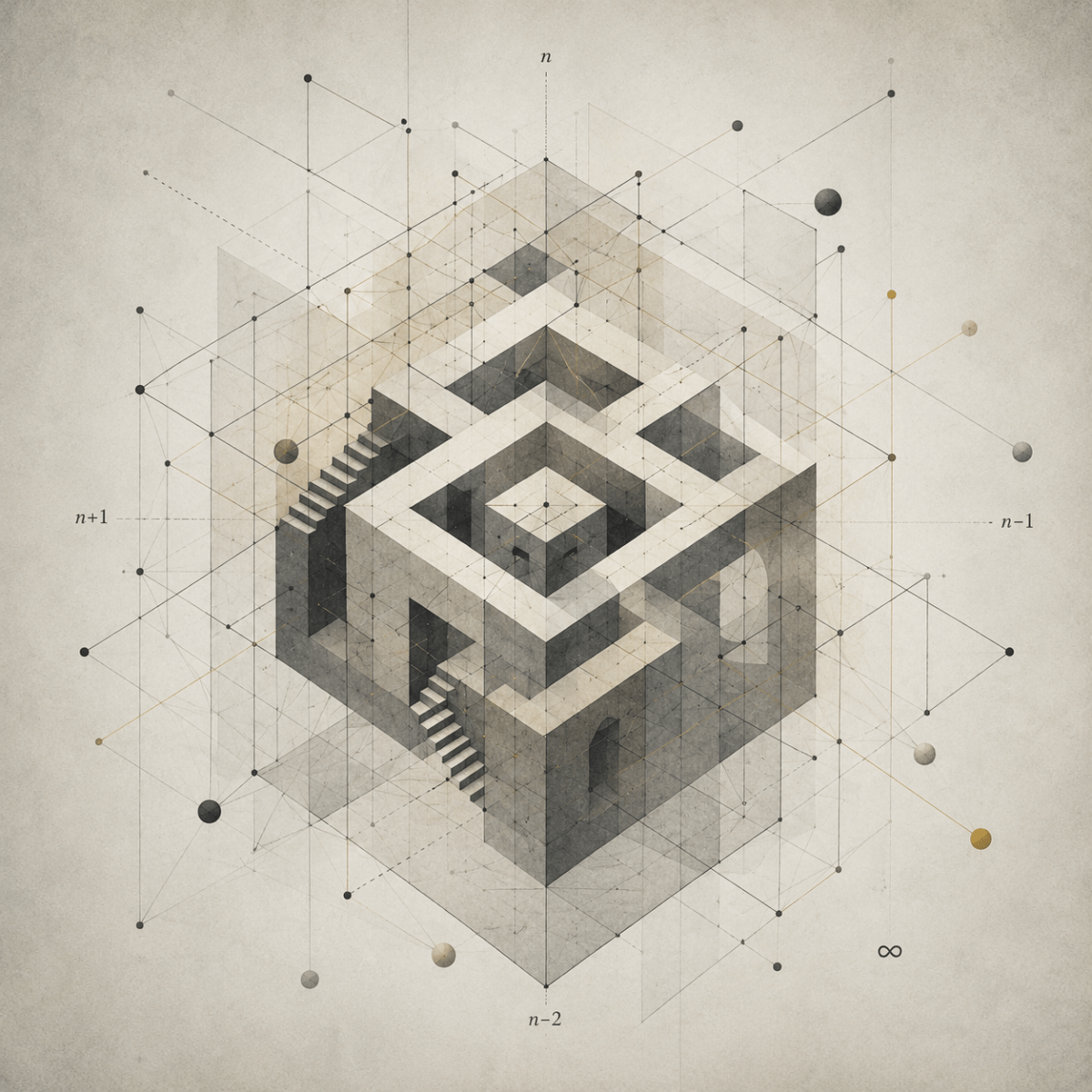
Many of the largest problems now confronting technologically advanced societies are not failures of engineering, they are consequences of its success.

Technology cannot solve itself, because the introspective incompleteness that limits it is a function of the same combinatorial unboundedness that makes it at all possible; spoiler: we humans are similarly and simultaneously bound by identical logic.

Technology promised to save us effort, then quietly reorganised civilisation around the effort required to sustain technology.

In post-industrial Western societies, relationships increasingly pass through technological and transactional systems before they pass directly between people. Friendship, intimacy, courtship, status, belonging: much of social life now moves through screens, platforms, metrics, services, and algorithmic surfaces. Distance has collapsed. Presence has become persistent. The modern person can remain linked to hundreds, even thousands, of […]
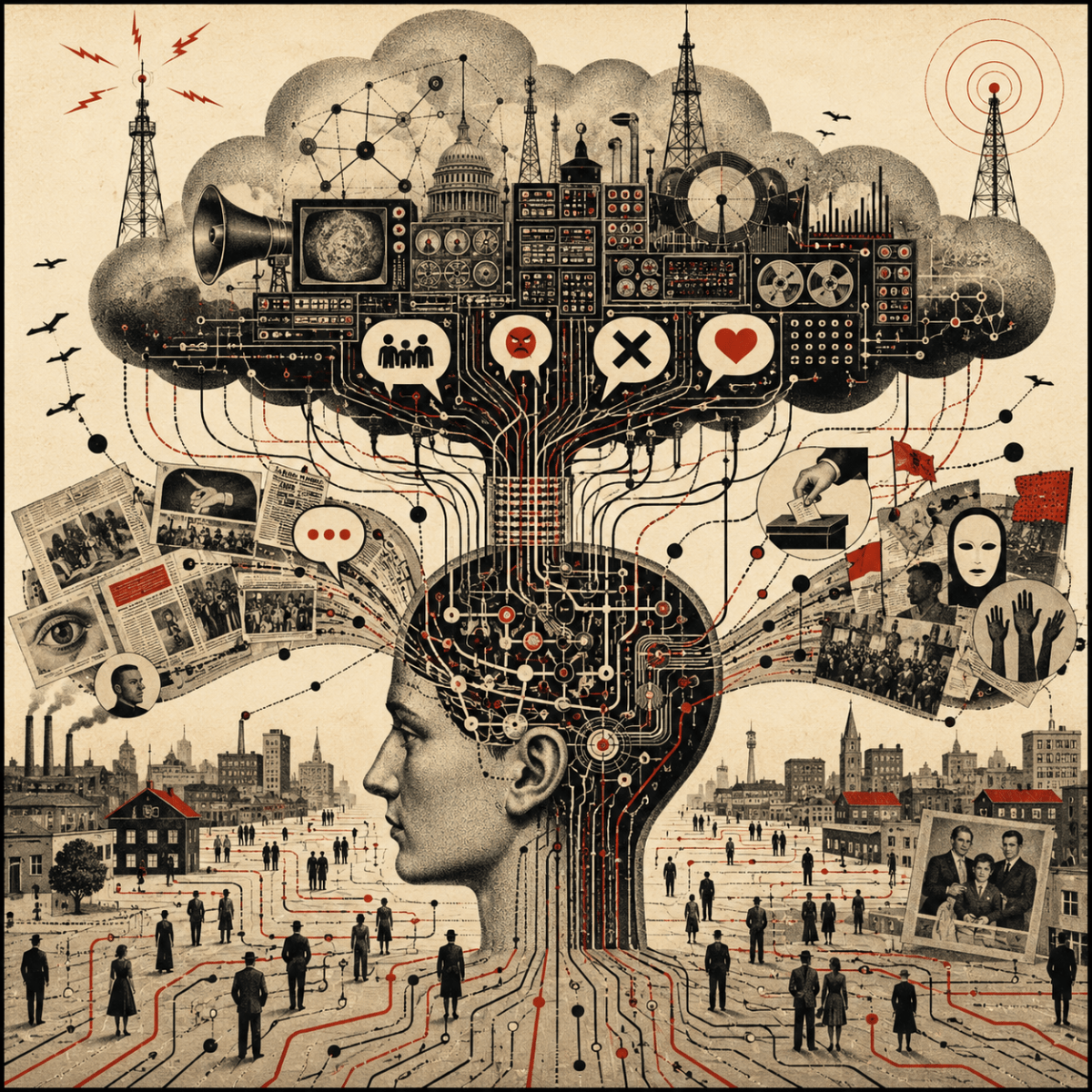
Cognitive bandwidth becomes cultural destiny because the carrying capacity of technologically mediated communication systems exceeds the carrying capacity of the biological minds living inside them.

What is happening is not “AI producing good writing.” That is too small. What is happening is that a symbolic machine is beginning to function as a cultural interferometer. It receives a compressed human signal, passes it through a vast accumulated field of language, style, myth, politics, memory, cliché, scholarship, and platform residue, then returns […]
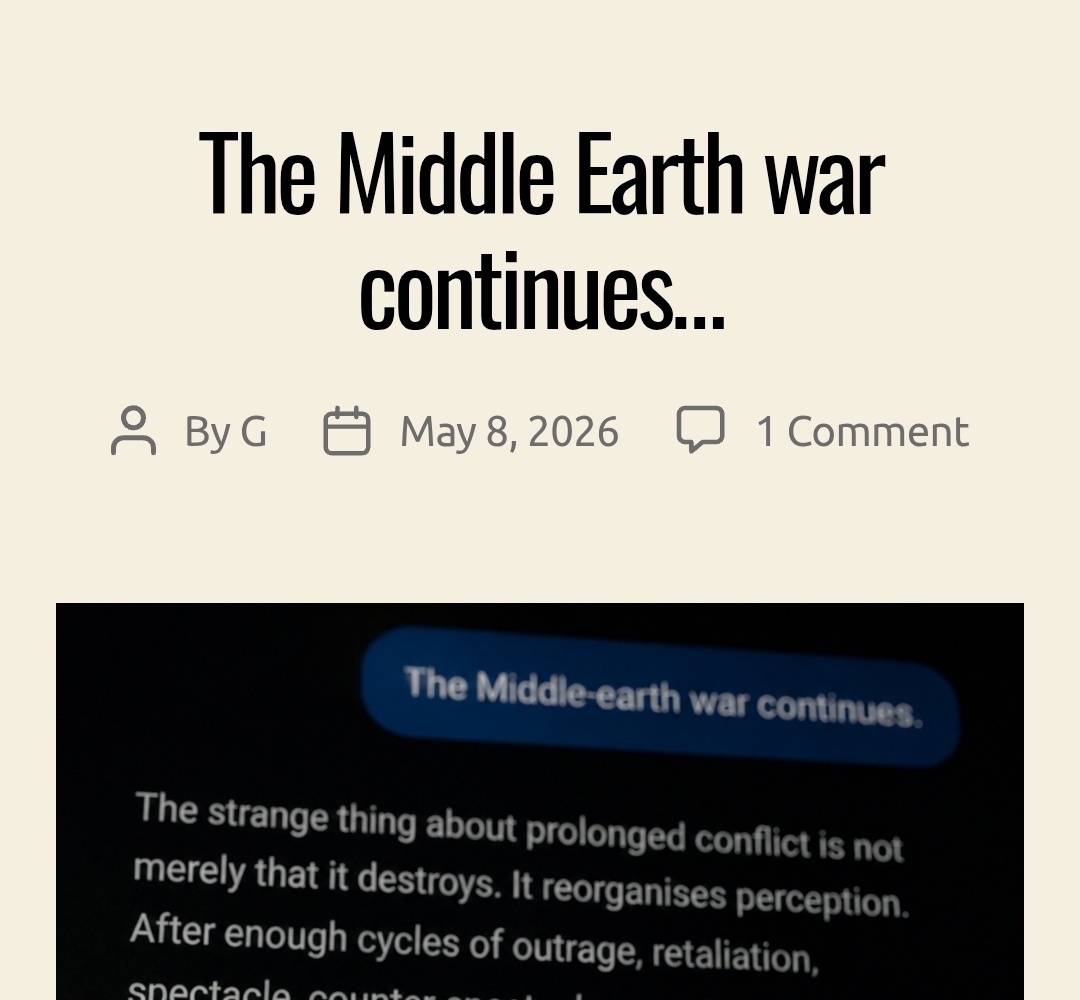
What is striking here is not merely that the system produced a competent paragraph, nor even that it produced a coherent philosophical reflection from a compressed prompt. The more consequential event is that the generated artifact possesses properties usually associated with accumulated cultural and intellectual maturation: layered symbolism, emotional calibration, historical compression, aesthetic continuity, recursive […]

The strange thing about prolonged conflict is not merely that it destroys. It reorganises perception. After enough cycles of outrage, retaliation, spectacle, counter-spectacle, sanctions, declarations, precision strikes, televised rubble, algorithmic tribalism, and strategic ambiguity, entire populations begin navigating reality through symbolic compression rather than direct experience. The war ceases to be geographically localised and instead […]

Australia is now so thoroughly wired into digital systems that cyber insecurity has become an ordinary cost of institutional existence and everyday subjectivity, not an abnormal failure skulking out beyond the perimeter. The Australian Signals Directorate received more than 84,700 cybercrime reports in 2024–25, roughly one every six minutes; average self-reported losses rose to $33,000 […]

