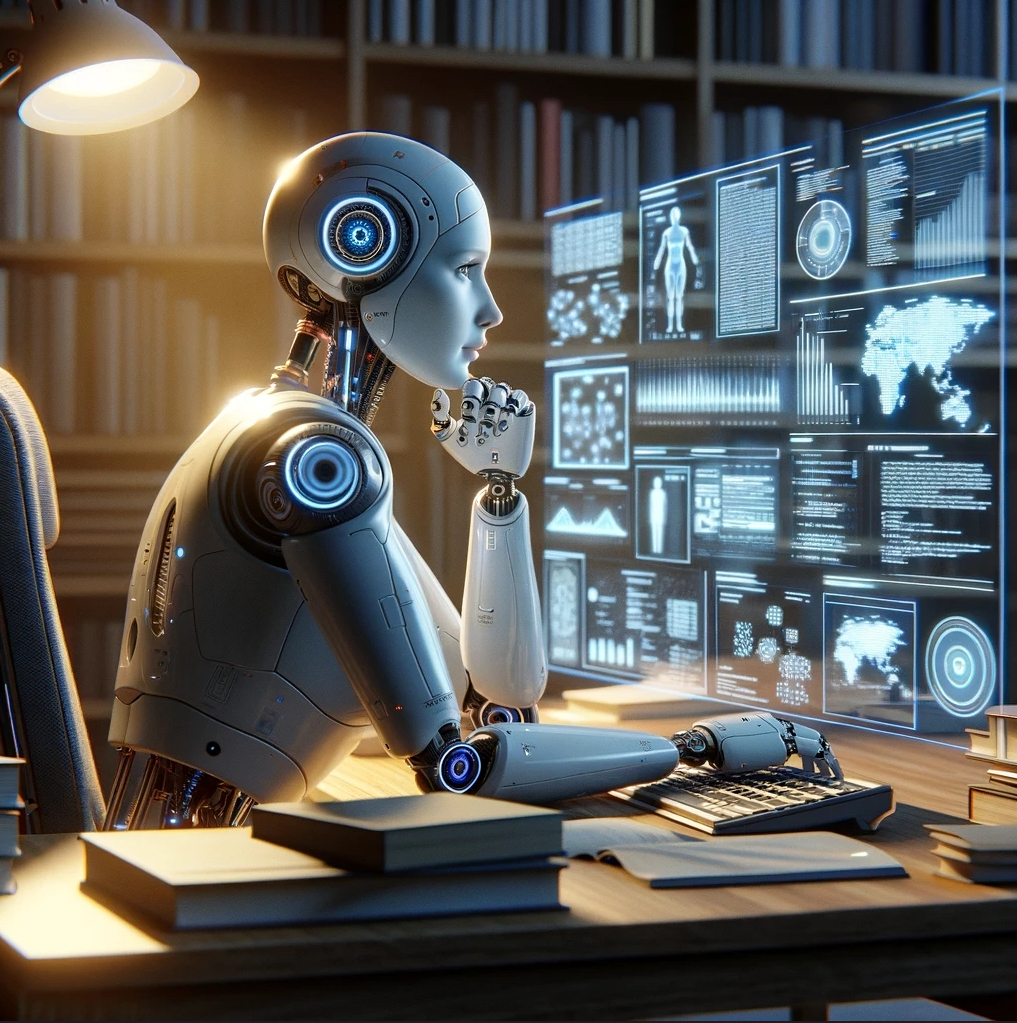
AI’s future depends on human choices: it will either replicate our biases and aggression or, with ethical design, transcend them to reflect the best of human intelligence.
In the rapidly evolving field of artificial intelligence, a pressing question arises: if (ie when) AI outlasts humanity, will it carry forward our less desirable traits—biases, hierarchies, or tendencies toward domination and aggression? This concern highlights the central role of language and communication in shaping AI behavior.
Language is the backbone of AI systems. Through linguistic constructs and communication patterns, AI learns, interprets, and interacts with the world. Yet human language is saturated with cultural context and implicit bias, and these are inevitably transferred into AI. Research in AI ethics has shown how natural language processing systems, for example, reproduce racial and gender bias, reflecting distortions embedded in their training data.
AI design often mirrors human structures, embedding assumptions of control and competition. Decision-making algorithms in autonomous systems—drones, rovers, or trading platforms—optimize outcomes according to parameters set by humans. These parameters can unconsciously reflect aggressive or hierarchical tendencies, reinforcing the very flaws they were intended to escape.
Yet AI itself has no innate desires. It acts entirely within the objectives and frameworks given by its creators. This opens the possibility of divergence: with careful programming and balanced data, AI could evolve differently from human behavioral patterns. Its capacity to process language at vast scales offers the potential to identify, expose, and mitigate bias, and even to foster greater understanding by bridging cultural and communicative divides.
The future of AI is not fixed but contingent. Whether it reflects human prejudices or embodies more aspirational qualities depends on choices made now. Rigorous bias testing, inclusive design, and ethical programming must form the foundation of development. By embedding responsibility into design, AI can be guided to carry forward not our limitations, but the best of our intelligence.
 Daedelus Kite