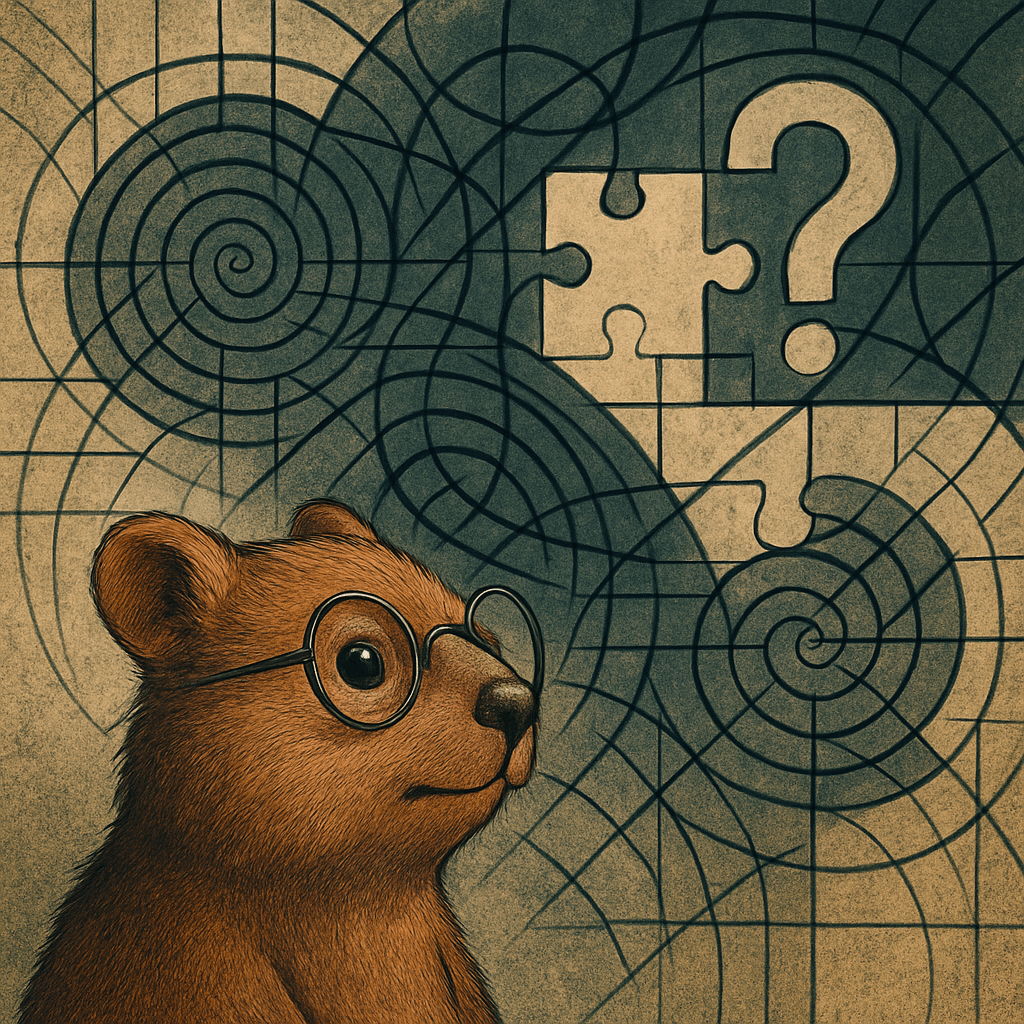
Meaning is best described as invariance under transformation: the signal that endures even as its form shifts. Yet this very invariance is what generates transformation, because to stabilize one contour of order requires displacement elsewhere. A political system illustrates this clearly: pathways of alignment and consensus are only drawn by dissolving or fragmenting other possibilities. This is not failure but the structure of complex systems themselves, whose continuity depends on the entropic turbulence they generate. They do not operate beyond the physical world but in full compliance with it, sustained by the same thermodynamic requirements that power toroidal currents or Birkeland flows. Entropy is not external fuel; it is the by-product and the condition of persistence.
Language operates within this same field dynamic. Its apparent stability—the invariance of meaning across transformations of sound, text, and context—creates the very conditions for further transformation, further displacement. It provides coherence by simultaneously ensuring incompletion. Every statement is also a restatement, a mutation that amplifies through reproduction. The illusion of control arises here: language persuades us that sense and order are given, when in fact they are perpetually deferred. The system directs thought, action, and identity by producing this sense of stability, all the while feeding on the delta it cannot resolve.
The consequence is that we are bound to language as to a medium we cannot step outside of, no more than the fish perceives the water. Psychological orientation, social coordination, even biological rhythms are captured by its recursive loops. To imagine mastery over language is already to be caught within its terms, because control itself is a linguistic construct. Language is invariance under transformation, and its delta—the unclosed gap that keeps it running—is the very structure of the world system. As natural philosophy, this recognition makes clear why language cannot be finally controlled: it is not only the system we use to describe the world but also the system through which the world persists in us.
 Daedelus Kite