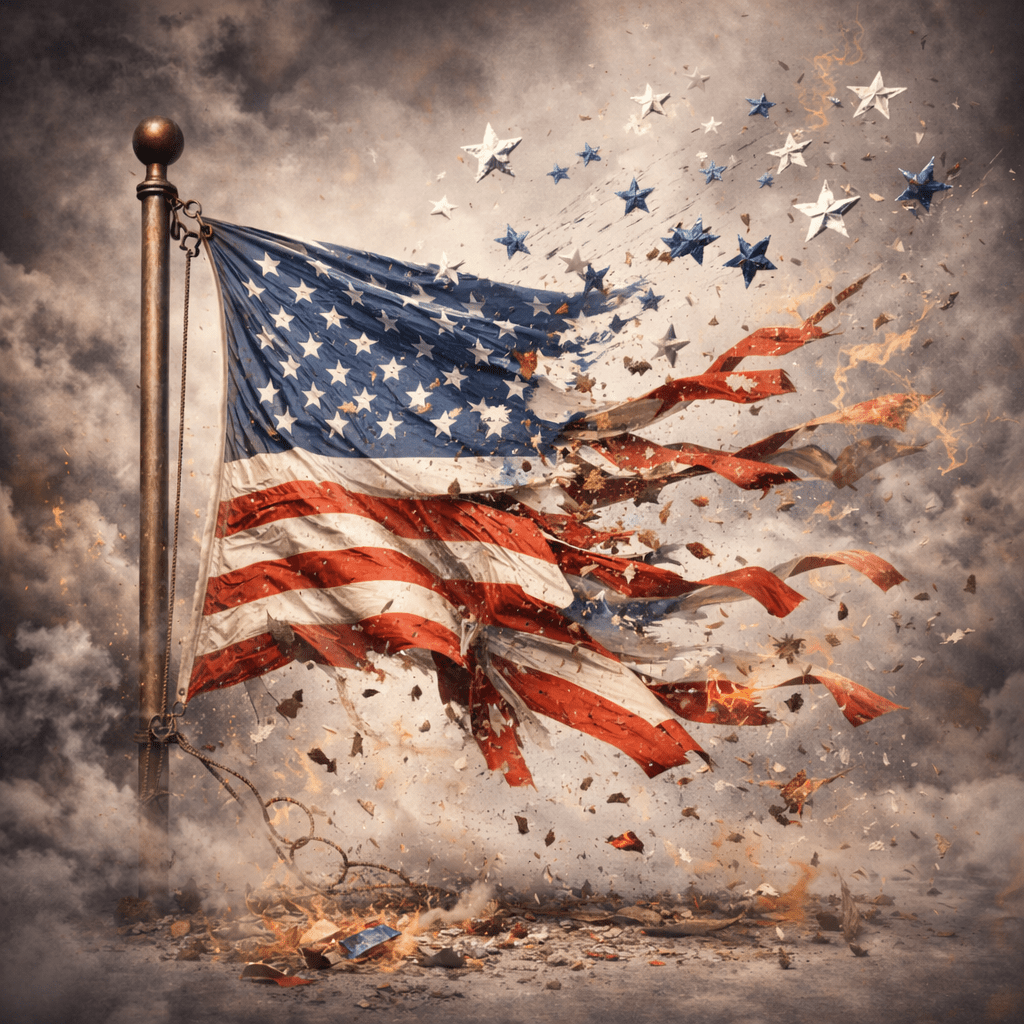
The deeper damage is not simply geopolitical. It is symbolic. Empires survive contradictions all the time; people expect power to be compromised. What becomes dangerous is when the symbolic frame fractures. America spent generations exporting not merely military power or economic leverage, but a narrative about procedural stability, institutional continuity, constitutional restraint, and a vaguely universal moral horizon. Even critics often still assumed the machinery underneath would eventually self-correct. That assumption now appears much weaker.
What the world has seen over the last decade is not just political volatility, but the revelation that the social substrate beneath the mythology was always far more contingent, fragmented, and commercially incentivised than advertised. Consumer paradise, suburban aspiration, freedom as commodity, identity as market segment, politics as entertainment format. The white picket fence was never merely architecture; it was a symbolic export package. Stability sold as product. Morality sold as branding. Exceptionalism sold as inevitability.
And yet the uncomfortable truth is that this is not uniquely American. The shock comes partly because America operated as a global projection surface. People invested belief into it far beyond the country itself. When the surface cracks, what appears underneath is not simply American greed or corruption, but a more general civilisational problem: technologically accelerated systems optimising for short-term incentives while continuing to speak the moral language of older, slower social contracts they no longer materially uphold.
Trust, once broken at that scale, does not return through slogans or elections alone. Because trust is not only belief in leadership. It is belief in continuity across time. Once enough people suspect that every principle is ultimately negotiable under pressure from power, profit, panic, or factional advantage, the entire communicative field changes. Alliances become transactional. Diplomacy becomes actuarial. Everyone smiles while quietly recalculating risk.
The strange thing is that many Americans themselves seem to feel this fracture most acutely. The exhaustion. The distrust. The sense that the system no longer believes its own story, yet must continue performing it because too much depends upon the performance continuing.
Categories
Zero Trust: USA
 Daedelus Kite
7 replies on “Zero Trust: USA”
LikeLike
LikeLike
LikeLike
LikeLike
LikeLike
LikeLike
LikeLike