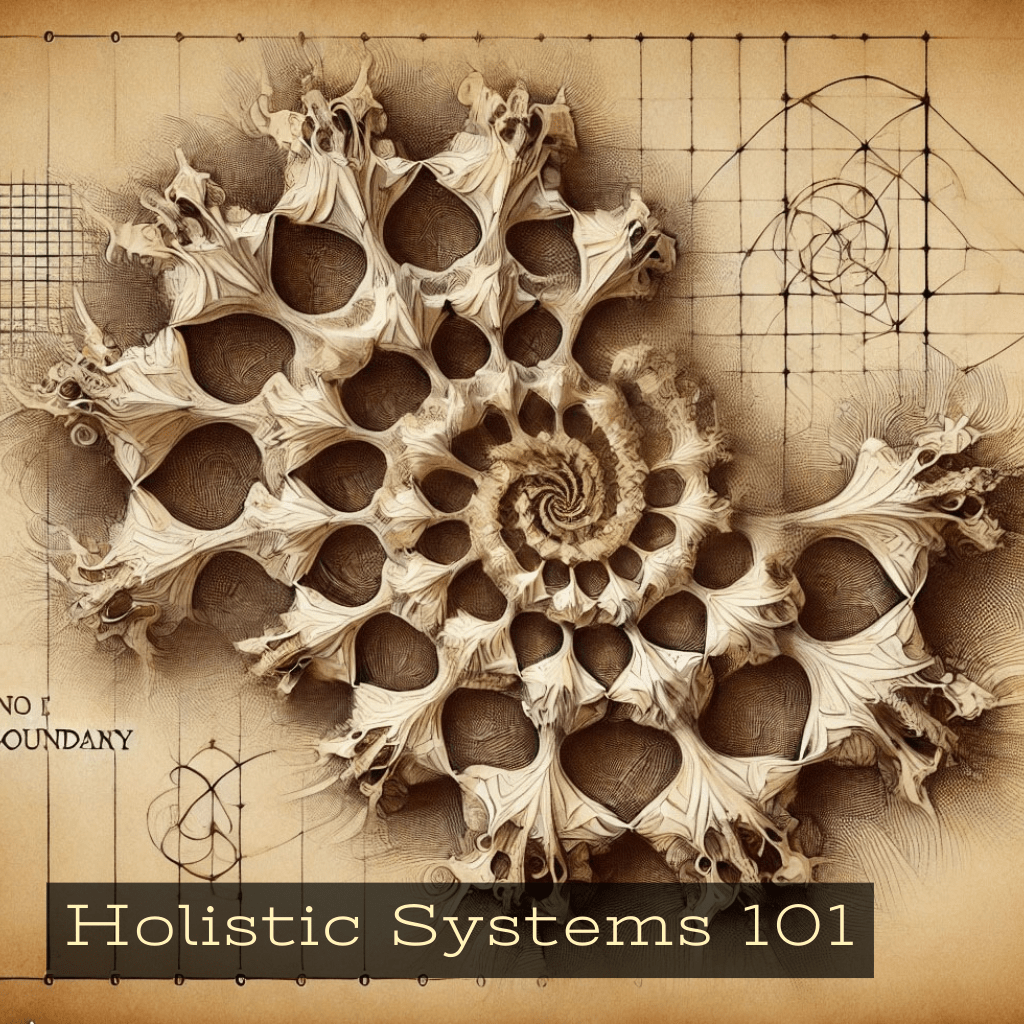
Any system, when considered in its entirety, has no external reference point. If it is an abstraction, then it is wholly self-contained, looping back into itself without remainder. But if that abstraction maps onto reality, then the implication is staggering—there must be a fundamental discontinuity woven into the structure of existence itself.°°
Absence is not just a void; it is an active structural force. It binds, shapes, and generates systems through its own recursive logic. This isn’t just an abstract notion—it appears in thermodynamics, language, identity, governance. The patterns are everywhere, but they are hard to see because we are conditioned to look for what is present, not for what is missing. The structuring effects of absence are distributed, nonlocal, and often mistaken for something else—entropy, inefficiency, uncertainty—when in fact, they are the foundation of how systems sustain themselves.
I have been circling this idea for decades, refining it, compressing it, looking for the right way to articulate it. The difficulty isn’t just in the complexity but in the fact that it resists conventional description. Language assumes presence. It assumes structure in ways that obscure the generative role of what isn’t there. Whatever final form this model takes, it will be an inversion—an attempt to see the whole system through its own blind spot.
Categories
Holistic Systems 101
 Daedelus Kite