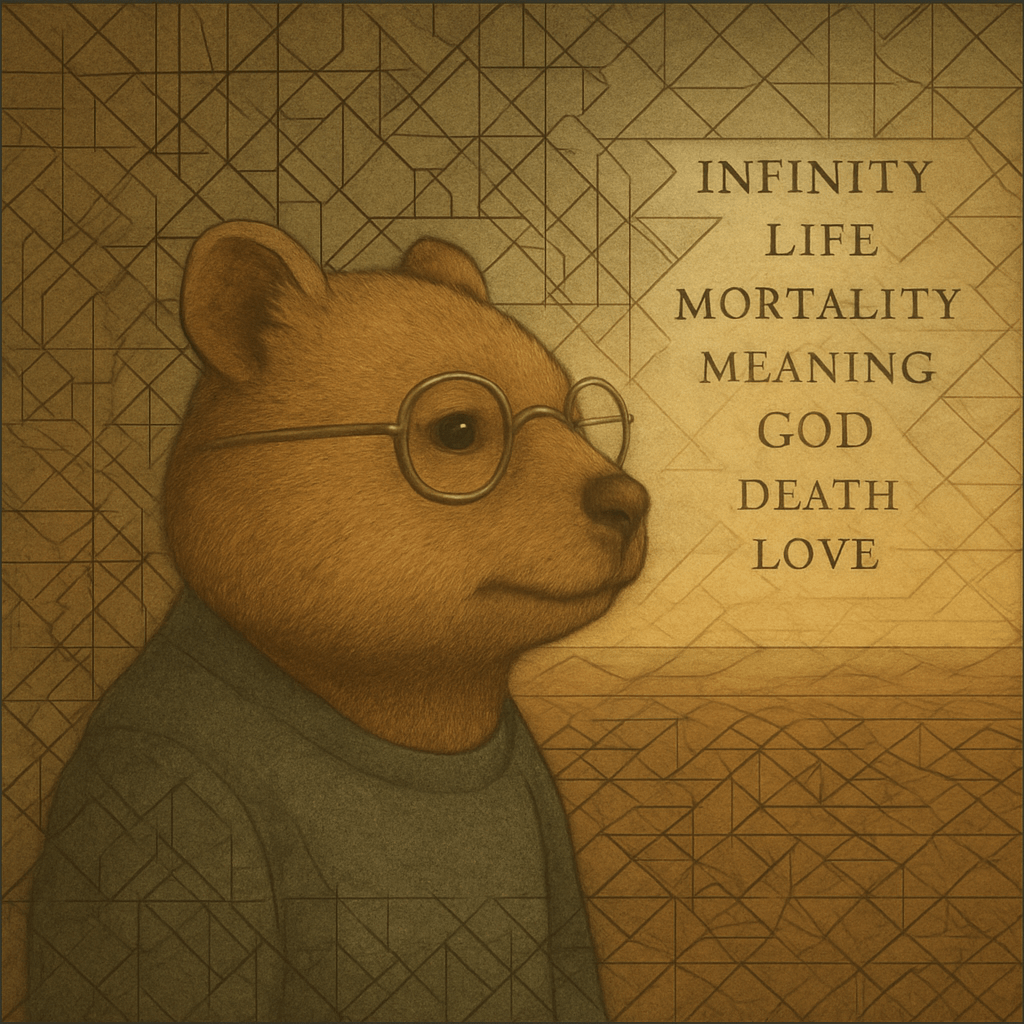
Symbolic representation is always in dynamic balance with the complexity it tries to capture. Narratives, languages, and cultural signs compress overwhelming multiplicity into shareable forms, but compression means loss. What is lost is precisely the irreducible turbulence, entanglement, and simultaneity of cultural and civilizational life.
Language provides scaffolding for thought and communication, but its grammar and lexicon impose a structure that cannot fully absorb the systemic, distributed, and recursive character of society. Representation stabilizes fragments, but society is not fragmentary—it is continuous flux. This is why language both sustains civilization and fails it: it produces coherence by excluding what exceeds its capacity, leaving vast domains of lived complexity unarticulated yet still active.
Yet our descriptions of the world do not contain the world; they remain within it, nested and entangled in the very fabric they attempt to survey. This paradox has never been resolved, and perhaps cannot be, since it is bound to the undecidability of self-reference: the map that is always drawn on the terrain it seeks to depict. Language is not external to the world but generated within it, implicated in the same flows and uncertainties it claims to render intelligible.
Because language is not only consequential but endemic—ubiquitous and intimate—it binds itself to us with every breath and utterance. Our cognition, memory, and culture propagate through it, and what we do, we do largely to generate more of it. This operates like an entropic contract: order can be produced, but only by displacing disorder elsewhere. Disorder, however, is not simply decay but often metastable, recirculating, reconstituting patterns that endure. Language thrives and survives through us as much as we through it, an inseparability we have not fully grasped.
 Daedelus Kite