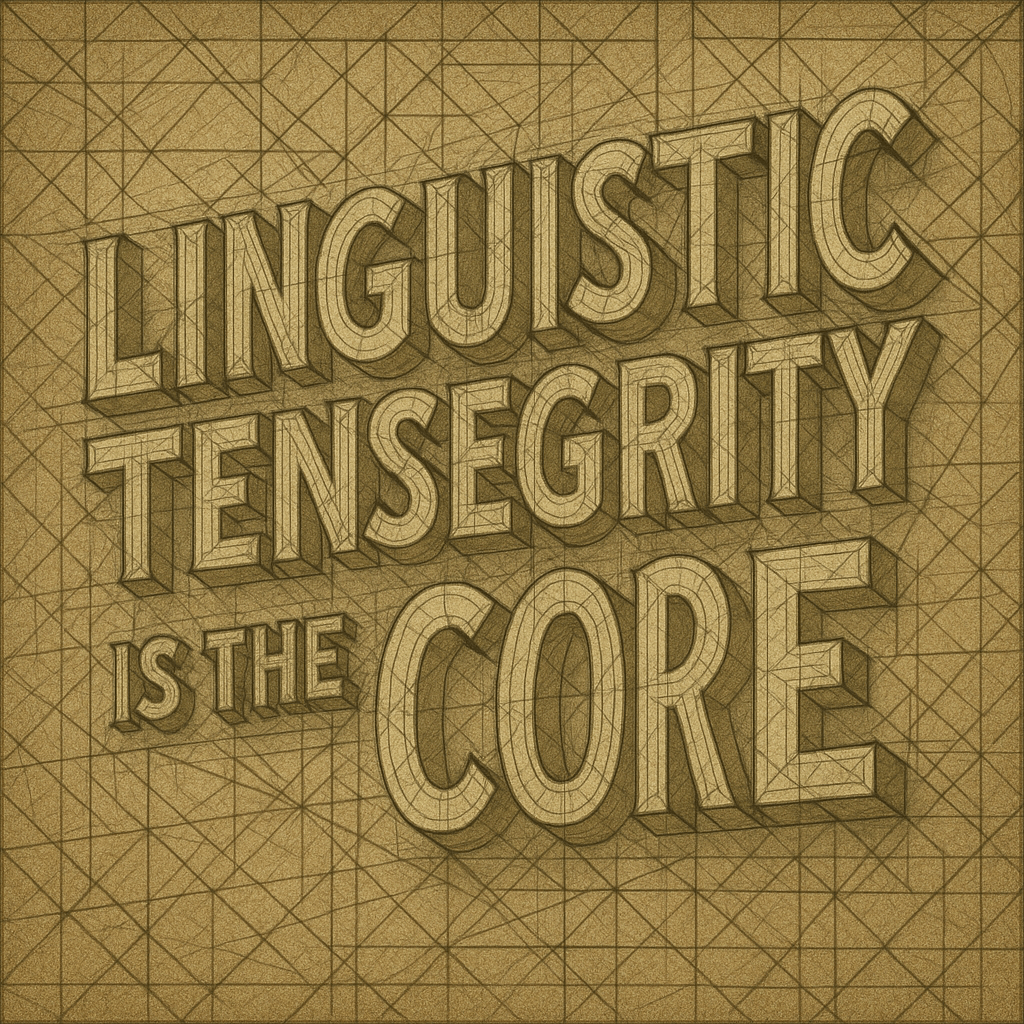
Inasmuch as we exist in, through, and as language, language itself exists through us. Every action—social, emotional, political—is mediated by language, whether spoken, written, or silently structured in thought. What rises to prominence in our networks, especially in today’s hyper-connected systems, is not necessarily truth or depth, but whatever generates further propagation. Language reproduces itself by leveraging us as its medium, just as technology now mirrors this dynamic—its survival secured not by purpose or coherence but by its own continuation. In this sense, the bond between language and technology is less causal than structural, both shaped by the same recursive logic that predates even consciousness.
The paradox is that the order we demand from language depends upon its inability to ever fully provide that order. It is this slippage, this persistent delta, that sustains the system. Language survives by never quite closing the gap between representation and reality, producing more discourse in the attempt. Like a structural balance that holds by unresolved difference—an analogue to tensegrity—this unresolvable gap is what keeps meaning alive. If language were complete, it would end; but in its incompletion, it continues, and through us, we continue with it.
 Daedelus Kite