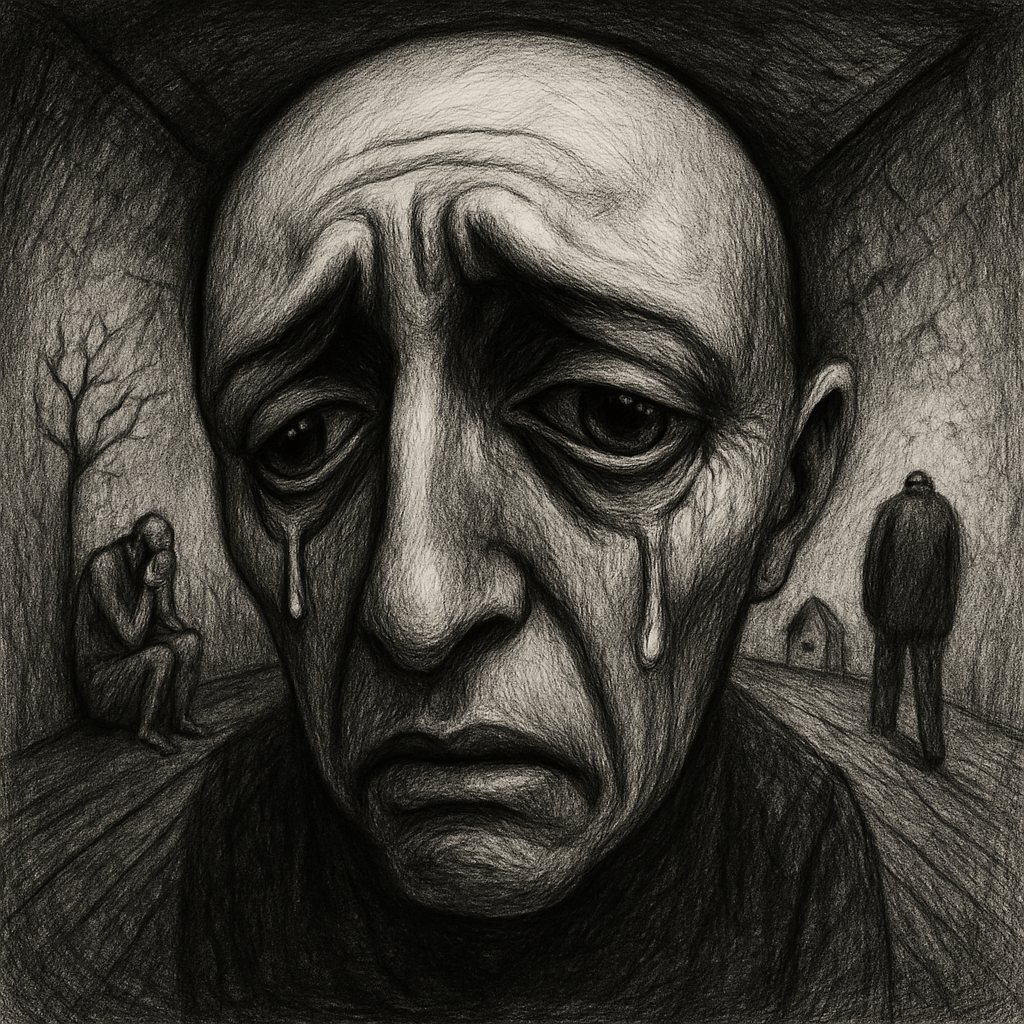
Mental health issues are often asserted as neurochemical or physiological malfunction, located in the individual. Yet this framing conceals how distress emerges from larger social systems, which depend upon gradients of exclusion and disaffection to function. Just as unemployment is not an error but a structural feature of employment markets, sorrow and psychic fracture are woven into the logic of individuation itself—shadow conditions that sustain the visible surface of happiness and belonging.
Material substrate matters, but at the apogee of materialist thinking we find the insistence that what is good or bad is located in the individual. This is misleading, since the individual is not a self-standing entity but a construct of systemic, linguistic, and political scaffolding. Its very non-existence produces grief, yet this grief should not be mistaken for fault or failure. By localising suffering in the “individual,” systemic responsibility is evaded, and exploitation left intact. Recognising the absence of the individual shifts attention outward: to the collective architectures that generate both unhappiness and the illusion of autonomy.
 Daedelus Kite