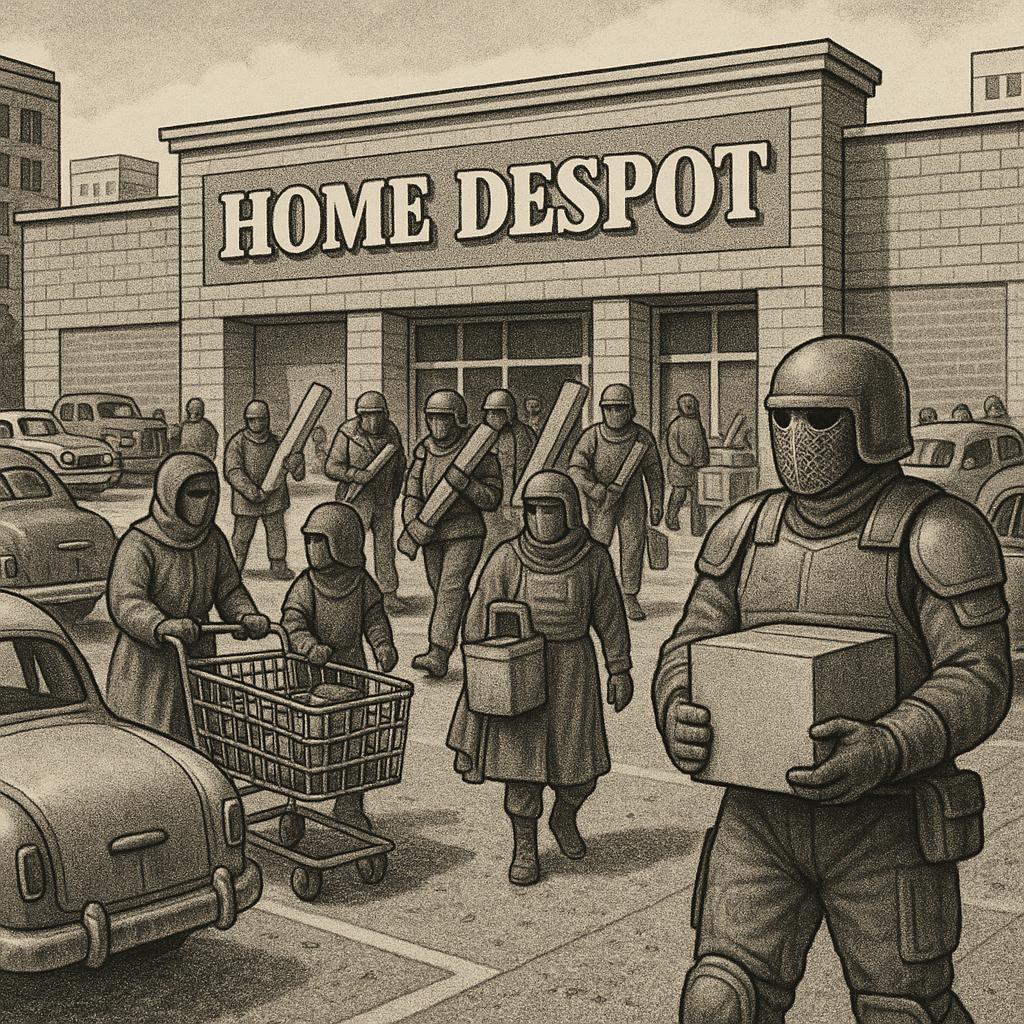
Systems don’t hold their shape by conviction. They hold it by habit, cadence, and the slow accretion of tiny decisions that feel neutral while they’re happening. What we call an “economic model” or a “political order” is just a particular tuning of incentives, language, and expectation. Shift the tuning and the whole field reconfigures. The shift rarely looks dramatic from the inside. It feels like drift, like accommodation, like people doing what seems reasonable in the moment. Modulation is simple because coherence doesn’t need consent — only repetition.
The danger is that people mistake familiarity for permanence. They assume the current configuration is anchored by logic or destiny rather than momentum. When enough actors adjust their behaviour around fear, resentment, scarcity, or grievance, the system retunes itself around those frequencies. You don’t need a manifesto for that — just a long sequence of small moves that contour attention, loyalty, and threat perception.
That is what’s happening now in the United States: a slow modulation into a form that will constrain everyone, including those who believe they’re steering it. The system isn’t collapsing; it’s doing what systems always do — reorganising itself through countless small shifts in behaviour and expectation. Modulation is constant, and the form it settles into depends less on design than on whichever signals dominate the moment.
What’s emerging is a configuration shaped by fear and grievance, tightening its own feedback pathways — narrowing correction, dampening anything that falls outside the pattern, and amplifying what feeds it. The grievances short-term actors exploit don’t dissipate; they intensify. The system reorganises itself around those simplified us-versus-them currents, using their emotional charge as the binding force that holds the new configuration together.
 Daedelus Kite