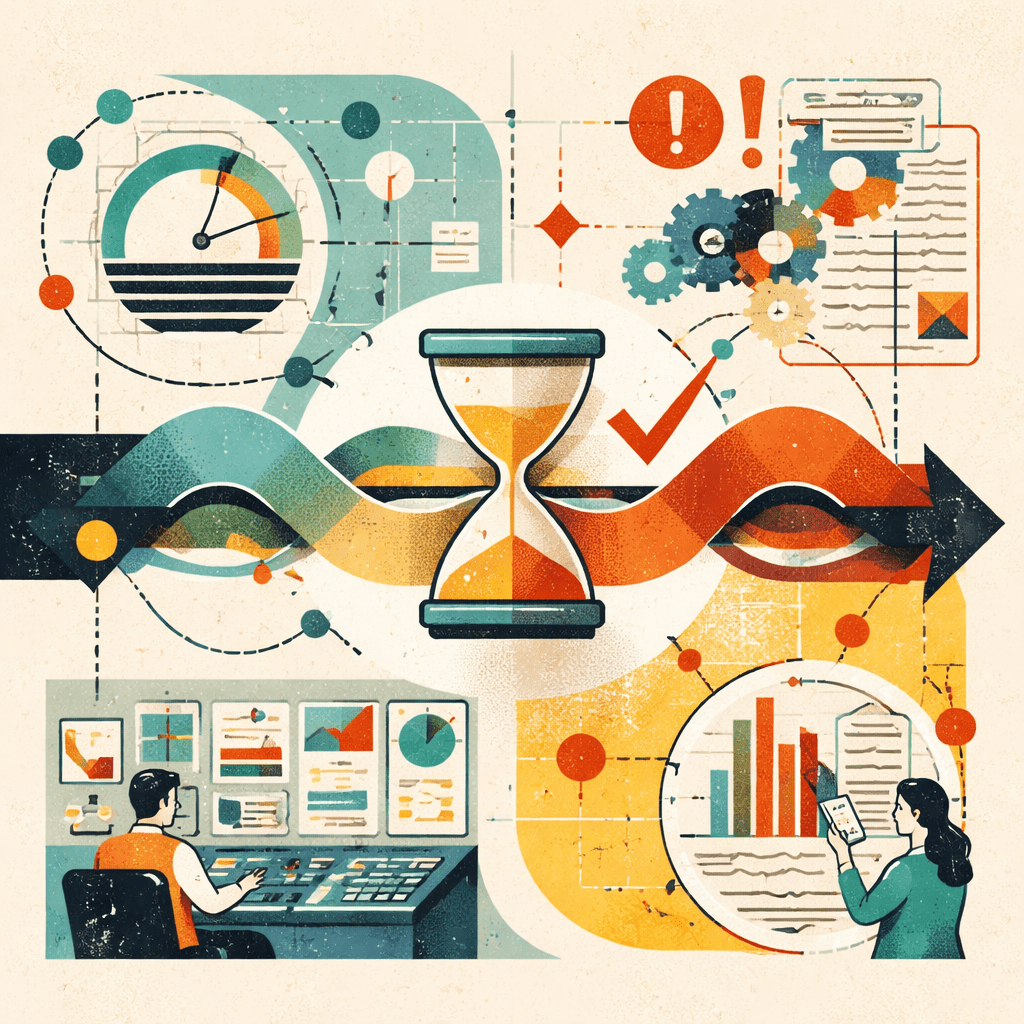
Service delivery systems must model the environments they act within. This is unavoidable. Eligibility rules, risk categories, performance metrics, and compliance frameworks are all abstractions that allow action under constraint. The model is not the world. It is an interface that reduces complexity to something administrable.
Over time, however, the interface acquires weight. The abstraction ceases to be merely instrumental and becomes the system’s primary point of reference. Funding, legitimacy, professional status, and political accountability all flow through it. What must be preserved is no longer simply the service outcome, but the coherence and continuity of the representational frame itself. The system’s centre of gravity shifts from service provision toward self-maintenance.
This shift does not require malice. It arises from statistical pressure. Large systems operate under scarcity, scrutiny, and conflicting objectives. To remain stable, they must regulate demand, simplify variance, and maintain legibility. Friction, delay, procedural complexity, and churn emerge as functional by-products. These mechanisms are rarely named as such, yet they reliably shape who succeeds, who persists, and who falls out.
The unresolved problem produced by this process is not located in any single person. It is distributed across populations and time. Individuals cycle through systems, disengage, re-enter, appeal, wait, fail to qualify, or partially comply. The faces change. The pattern does not. The problem remains statistically unresolved even as particular cases are processed, closed, or replaced.
This dynamic can be seen clearly in welfare systems, but it is not unique to them. Justice systems show similar patterns: high rates of recidivism, procedural throughput, and limited long-term remediation. Regulatory systems exhibit repeated misfit between regulatory models and the lived experience of both providers and recipients. Even commercial platforms reflect the same logic. A dating app can function perfectly while remaining structurally dependent on continued participation rather than successful matches. Its optimisation target is persistence, not closure.
It is tempting to moralise this outcome, to frame systems as predatory or indifferent. That temptation should be resisted. Systems are not moral agents. They do not intend harm, nor do they seek it. They are statistical constructs responding to incentives, constraints, and feedback. The human experience within them, however, is unavoidably moral. Delay hurts. Confusion exhausts. Rejection stings. Validation and justification matter because people live them as good or bad, fair or unfair, dignifying or degrading.
What is often misread as cruelty is more accurately a failure of comprehension. Systems mistake their own operational stability for effectiveness. Because they function, they assume they succeed. Disadvantage, recidivism, and unmet need become normalised inputs rather than signals of model failure. Complexity that cannot be absorbed internally is displaced outward, onto those with the least capacity to manage it.
This produces what can be called productive misanthropy. Not hatred of people, but a structural orientation that quietly depends on the continued reproduction of human difficulty. Disadvantage becomes fuel. Unresolved need becomes throughput. Confusion at the edges preserves order at the centre. Careers, budgets, and political narratives stabilise around this equilibrium without requiring anyone to endorse it explicitly.
There are, inevitably, individuals who respond to complexity with predation. That is a human constant. But it is not the core mechanism at work here. The deeper issue is that high-dimensional social systems generate outcomes statistically, not morally. What we experience as personal failure, exclusion, or injustice is often the surface expression of optimisation processes operating far beyond individual intent or awareness.
This does not reduce human life to mathematics or technology, nor does it deny agency or responsibility. It situates them. Our experiences, meanings, and harms arise within fields shaped by probability, feedback, delay, and scale. To address suffering effectively requires recognising this without retreating into cynicism or blame.
The task, then, is not to accuse systems of evil, nor to absolve them of consequence. It is to understand the dynamics they sustain and the costs they export. Until service delivery systems can treat their own models as provisional, their metrics as hypotheses, and their stability as distinct from success, they will continue to reproduce the conditions they exist to address. Not because they are cruel, but because, left unexamined, they cannot do otherwise.
 Daedelus Kite