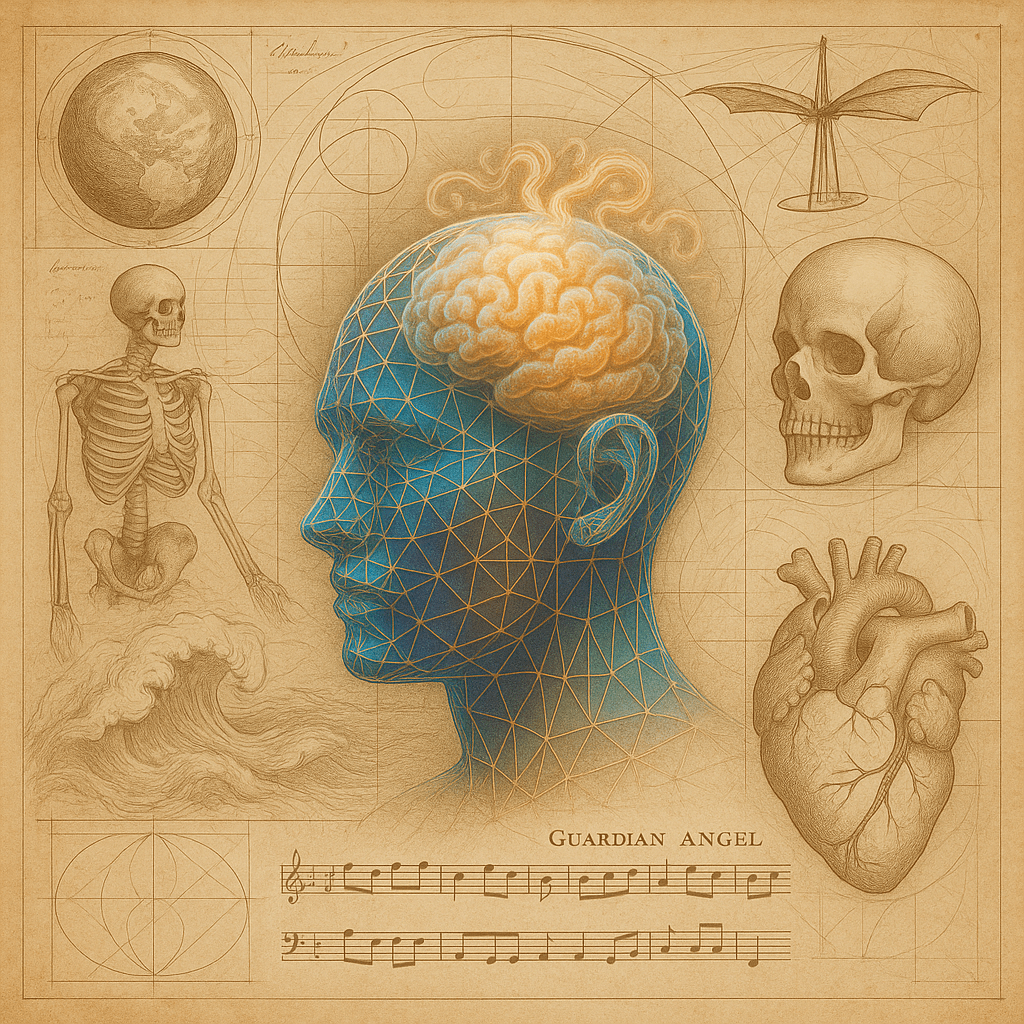
Technology inserts itself into experience by mediating, amplifying, and normalising it. What once belonged to us in the raw, unfiltered sense is now shaped by templates and signals recycled from past data points. The repetition of what is measurable and recognisable makes certain experiences feel inevitable, while sidelining the nuance that refuses codification. This isn’t simply an overlay—it’s a wholesale restructuring of how experience registers at all.
The claim that technology could orchestrate everything is less a coherent design than a distributed drift of systems, each with its own inertia. Corporations reduce complexity into policy, but this is cosmetic. Governments try to regulate, but the levers they pull reach very little; the institutional pipelines through which ideas must pass—universities, consultancies, committees—strip out most of the variability that makes adaptive governance possible. The loudest voices are not necessarily the most relevant, just those that survive the filter.
This narrowing produces its own recursive trap. Universities constrain what governments see; governments, in turn, entrench those limits through policy. Corporate systems then exploit the resulting gap between actual complexity and what institutions can handle. The outcome is a state apparatus struggling with problems it has rendered insoluble, and a public obliged to live within those constraints. The difficulty is not accidental but structural: the orbit never closes, yet the system insists it does.

 Daedelus Kite