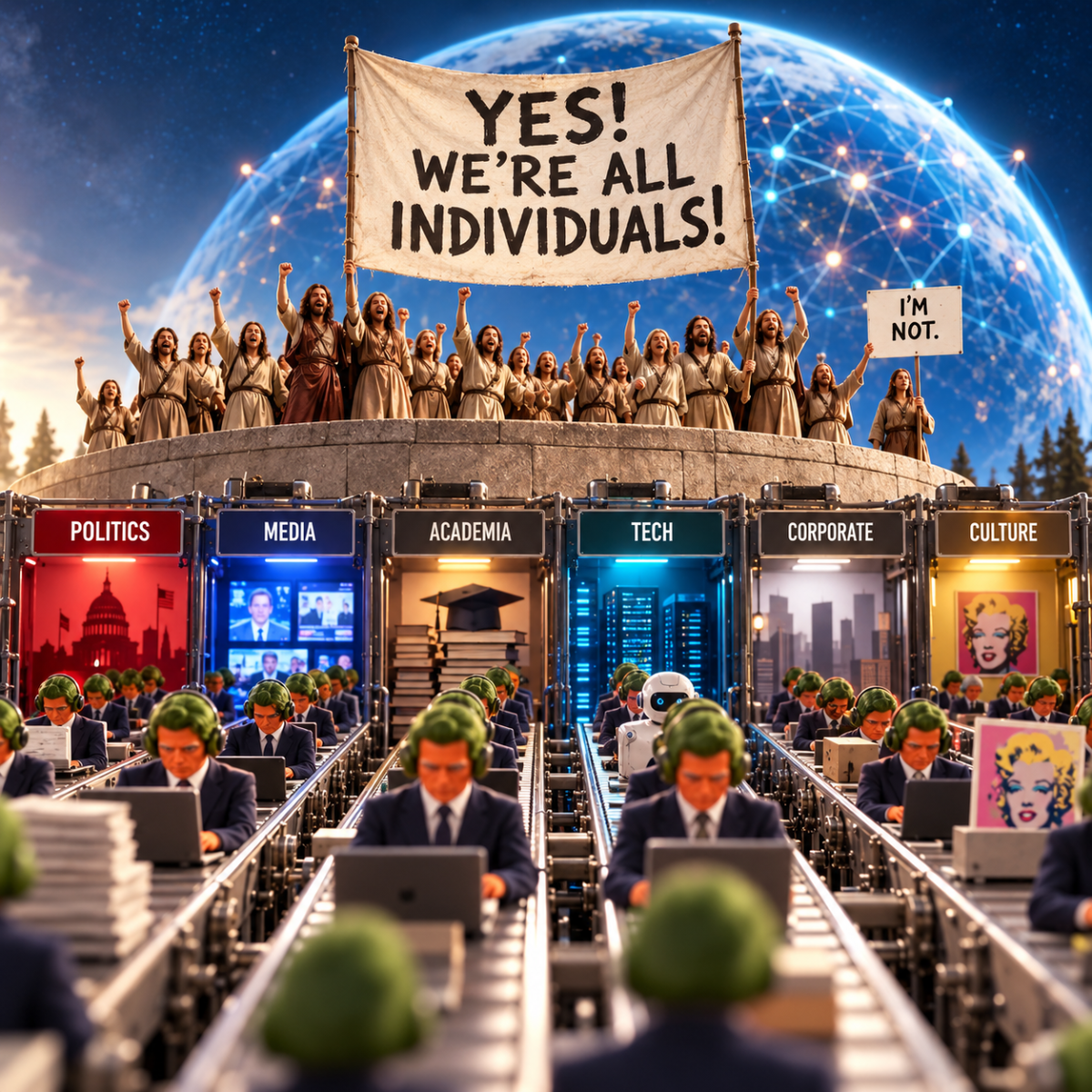
Disaffection is not giving up. It is what happens when you can no longer see yourself in the world that helped create you.
social distortion: disaffection
Disaffection is not giving up. It is what happens when you can no longer see yourself in the world that helped create you.
Life does not belong to things. Things belong to life. Consciousness, relation, memory, recurrence, and form are not exceptions within reality. They are what reality does.
Reality is not made of things. Things are what appear when deeper patterns of relation become temporarily stable.
History is rarely guided by wisdom. It is dragged forward by traumatic sorrow, bad maps, and strategic failure masquerading as ideological destiny.
Science has not stopped discovering reality. We have become less capable of surviving what those discoveries imply about ourselves.
Disinformation is not the opposite of information, but one of the ways communication organises uncertainty into meaning. Its deeper structure belongs less to politics than to the philosophical problem of how truth, coherence, and identity emerge at all.
Corruption is not what happens when a healthy system breaks; it is what emerges when enough incentives, privileges, dependencies, and concentrations of power quietly align, turning private advantage into public infrastructure.
Clouds show that form can recur without becoming fixed, and that identity may be less a hidden essence than a pattern sustained through change.
Fear of others is not finally fear of difference, but fear of the gap through which the self discovers it was never solid, never alone, and never entirely its own.
What is missing precedes the language with which we attempt to describe its consequences.
The afterlife, if the phrase is to be used at all, is not best imagined as a sentimental annex bolted onto death. Nor, however, is it something about which confidence is easily justified. What we call a life may be only a local and temporary stabilisation within conditions the person cannot comprehend or contain. The […]
The only (or at least most) comprehensive way to account for emergent behaviour is to grant some ontic reality to the abstract relational patterns, symmetries, and phase dynamics that bind and sustain it. A collection of things is, in other words, also a thing. That is not especially surprising at one intuitive level, but it […]