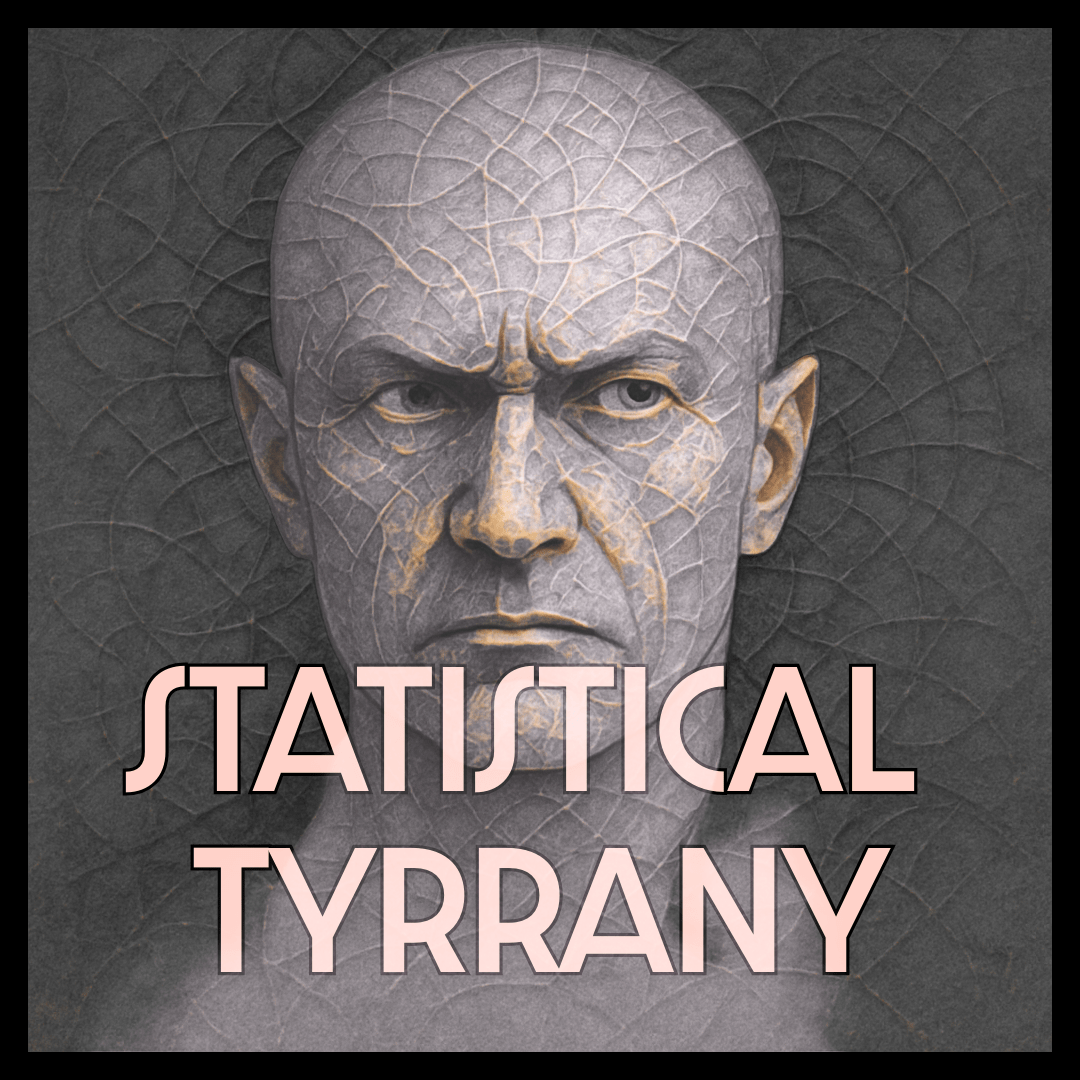
Tyranny is not an aberration, it is a statistical phase of collective system dynamics. Choice persists, and ethics matter, but the options available are constrained by effectively entropic structural conditions that favour transmissibility over nuance. In turbulence, blunt and repetitive signals spread most efficiently, and power arises as both the effect of this modulation and the agent that amplifies it further.
The recurrence of authoritarianism seems less a function of moral lapse than a predictable outcome of communication system dynamics at scale and over long periods of time. Oscillations are inevitable: complex systems under stress fall into low-resistance attractors, optimising for frictionless resonance. Any appearance of order is always borrowed—taken from turbulence and paid back with greater disorder across the ensemble, over time.
Yet systems do more than maximise disorder; they reproduce the flows of energy and information that optimise the recurrence of the very conditions which allow order (and its coupled, oscillating disorder) to arise in the first place. The type of order that emerges is specific: it generates precisely the turbulence for which it can appear as a solution, while remaining implicitly dependent on never quite controlling the situation. This feedback primes the environment, suggesting that the attractor precedes the system, as seen in how autocracy thrives on crises it cannot fully resolve, or how social media depends upon the disinformation it amplifies, generating turbulence for which its own endless cycles of assertion, affiliation, difference, self-determination, and speech-for-the-sake-of-speech pose as remedies while collapsing into noise that compels only its own repetition.
 Daedelus Kite
One reply on “Statistical Tyrrany”
If we fail to grasp the dynamics and logic by which a phenomenon arises, we can neither engage it effectively nor remediate it, and my aim here is simply to make those dynamics transparent.
LikeLike