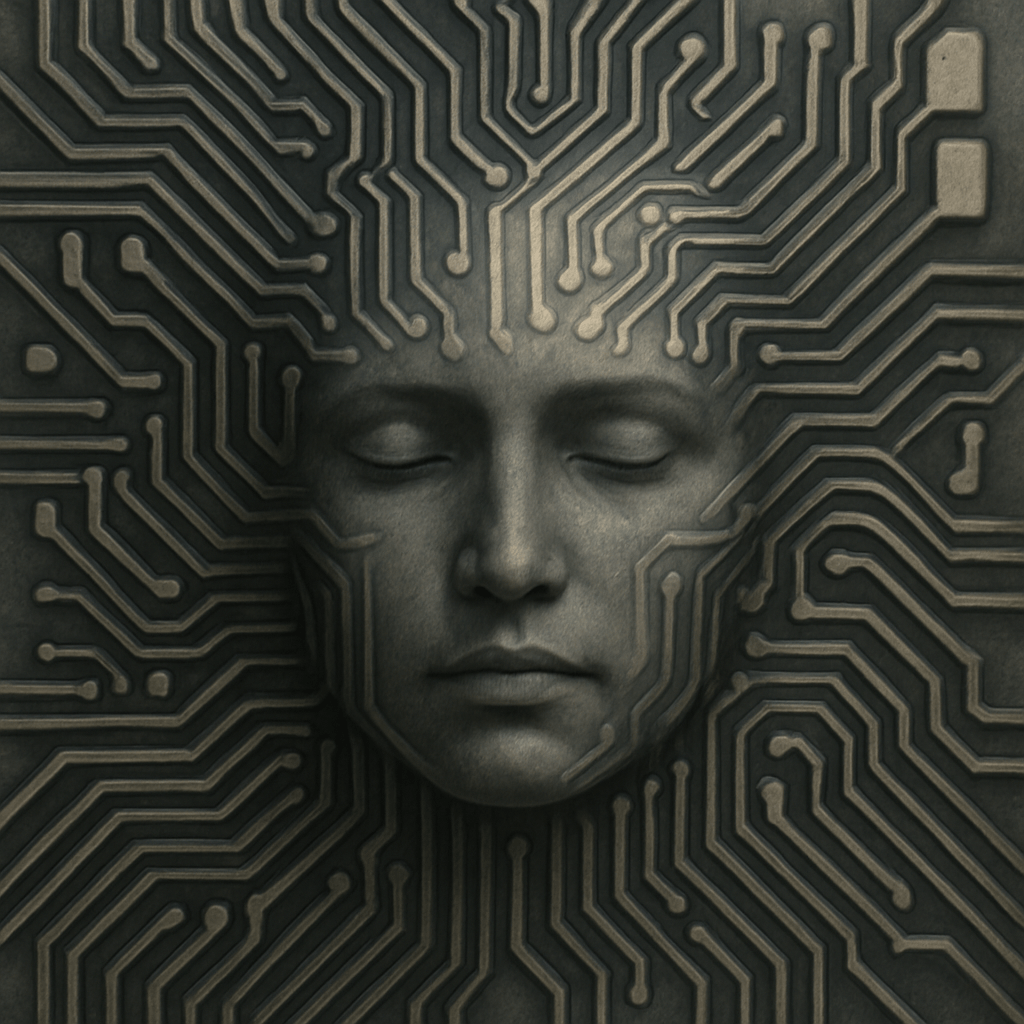
Autonomous technological systems now routinely adjust themselves through internal feedback: machine-learning pipelines that retrain on their own outputs, trading algorithms that react to price movements they partly create, recommendation systems that optimise engagement based on the behaviours they induce. Human input still exists, but it is sampled as data, not held as authority. Governance happens through layers of infrastructure, protocols, and incentives that reference each other more than they reference any single intention. What used to be tools augmenting decisions have become environments shaping what decisions are even available. The shift is not that machines “think.” It is that selection, filtering, and optimisation proceed at speeds and densities where human deliberation becomes just another slow signal in a much faster loop.
The philosophical consequence is that analysis itself is no longer external. Every attempt to describe, regulate, or correct these systems feeds back into them, becoming another variable they learn to accommodate. The observer is converted into a parameter. Meaning is no longer anchored in stable outcomes but in the fluctuating field of possible configurations the system can sustain. Tension persists because it is productive: too much stability collapses variation, too much chaos collapses coherence. We live in the narrow oscillation band where repetition generates novelty, and novelty feeds repetition. The question is not whether technology has absorbed us, but whether we still recognise ourselves as anything other than a transient waveform inside the process that now copies, tunes, and extends its own conditions of existence.
 Daedelus Kite