Consciousness, free will and the philosophical consequences of asking the wrong question.

Consciousness, free will and the philosophical consequences of asking the wrong question.

“The rarer action is in virtue than in vengeance.”
— William Shakespeare, The Tempest, Act V, Scene I.
A civilisation builds systems to solve its problems, then discovers that the systems have become the problems, while its dependence upon them has made their continuity deeply problematic.
Most of what commands attention now is not meaningful in any substantive sense. It is dependent meaning: signals that borrow significance from circulation, outrage, novelty, or proximity to power rather than from coherence, considered consequence, or truth. This hollowness is not accidental. It is structurally central to contemporary dissatisfaction, corruption, volatility, and political disorder. These […]
Power no longer argues; it pre-configures the field. That matters because political economy now unfolds inside communicative and technological environments that behave less like instruments of choice and more like complex systems seeking autonomously self-propagating continuity. Policy disputes over reform, productivity, welfare, housing, climate, or security feel intentional and contested, yet they mostly convert disagreement […]
Autonomous technological systems now routinely adjust themselves through internal feedback: machine-learning pipelines that retrain on their own outputs, trading algorithms that react to price movements they partly create, recommendation systems that optimise engagement based on the behaviours they induce. Human input still exists, but it is sampled as data, not held as authority. Governance happens […]
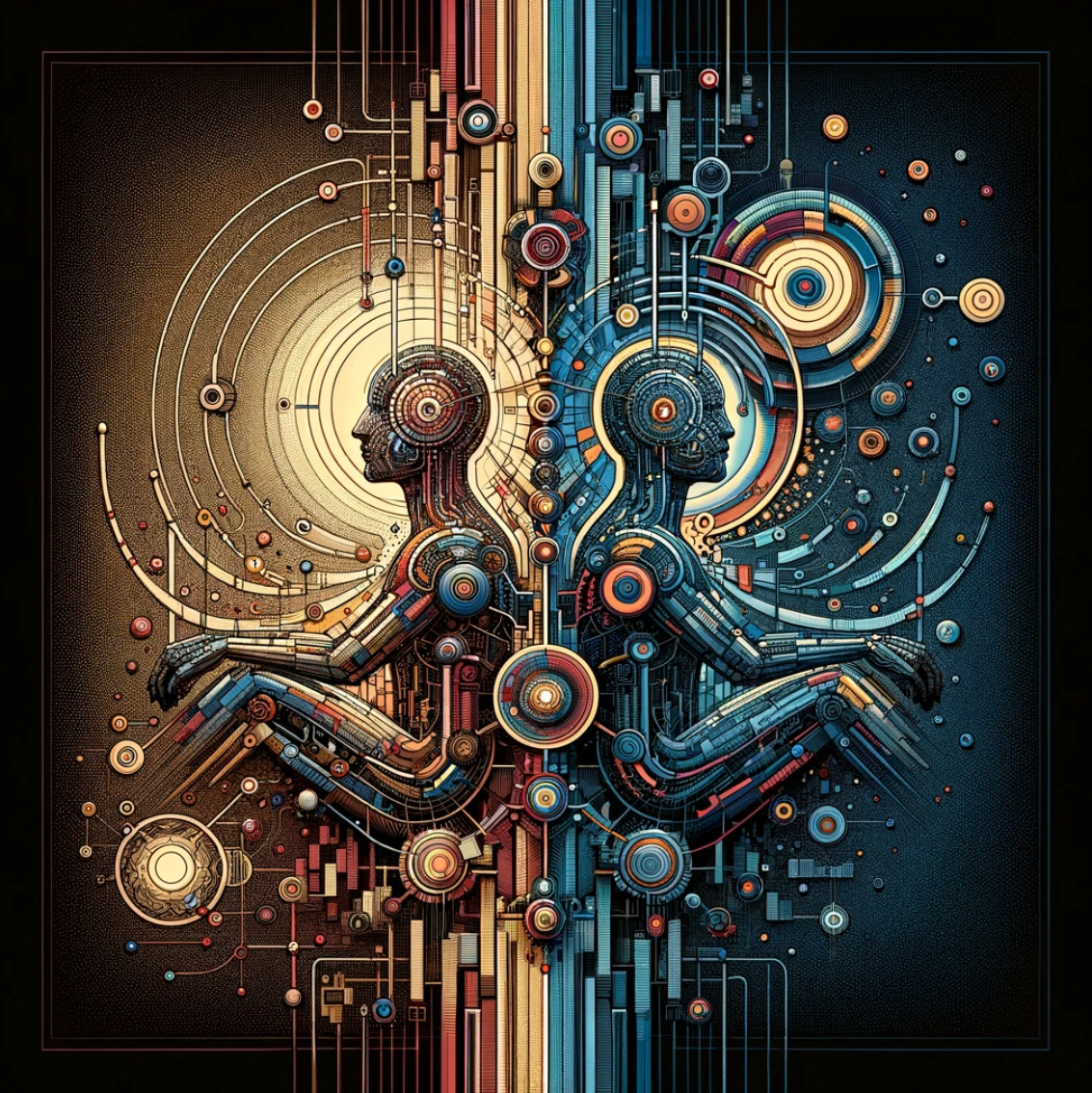
Understanding agency is deeply problematised by the languages with which we aspire to do so. We find ourselves haggling over meanings and inferential teleologies within a system of semantic encoding (in language) that, as complex adaptive system, maintains and sustains its tenured continuity in its environment as a function of the impossibility of isolating meaning, […]

Buddhist psychology can be uniquely insightful. The animist turn in Shinto casts nature (and all who sail in her) as something of and with an agency, an experience. If everything has experience, then in some sense nothing does but this is a rhetorical trick because negation, uncertainty, nothing, absence and potentiality are endemic to bio-logic. […]
Have a WordPress.com account? Log in now.

