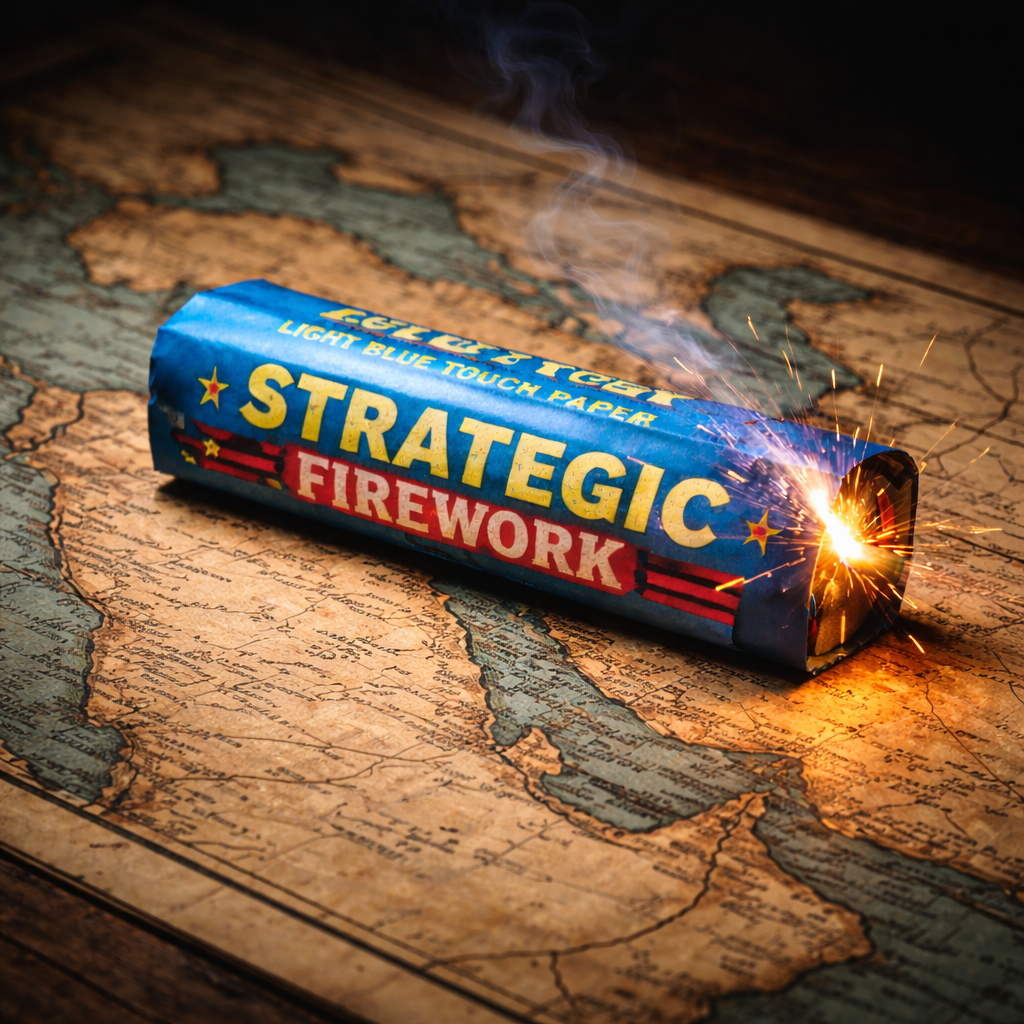
There is a familiar habit among commentators and observers to reach backward into history whenever the present becomes frightening, as though the archive might reassure us that the machinery of civilisation has seen worse and survived. Maybe it has. But what we are dealing with now looks less like a familiar historical episode and more like a dynamical system that has grown far larger than the people, processes, and policies attempting to run it. Communication networks, markets, military systems, and public psychology are now coupled so tightly that every statement, threat, image, or rumour moves through them like weather across an ocean, generating tides of reaction that no single leader, institution, or intelligence service can truly steer, however loudly they insist otherwise. What we are witnessing is not simply politics but the turbulence of a system that has outgrown the conceptual tools used to manage it.
Communication systems do not grant complete knowledge or control. They never have. Signals multiply, meanings drift, interpretations collide, and every attempt to stabilise the field creates disturbances somewhere else. Complexity feeds on that uncertainty and reproduces itself through it. The gap between what is said and what the system actually does with those words is not an accident but a permanent feature of complex societies. Leaders talk endlessly about command and control, yet what often happens in practice is far simpler and far more dangerous. A policy is announced, a threat is issued, a slogan is launched into the system, and the people responsible light the blue fuse paper and walk away while the consequences propagate through networks they barely understand.
The constant spectacle of left versus right, progressive versus conservative, misses the deeper point entirely. Democratic societies depend on disagreement. Different perspectives, competing interpretations, and opposing priorities are not flaws in the system but part of the mechanism that allows societies to adapt and remain resilient. The problem begins when those differences are treated as battles for total control. The belief that any faction can fully command a complex civilisation is not strength. It is a form of political narcissism that mistakes rhetoric for reality.
In the natural world nothing operates under that illusion. Ecologies regulate themselves. Economies adjust through feedback. Complex systems adapt without a single commanding centre dictating outcomes. Yet political discourse continues to behave as though declaring control is the same as possessing it. This is a fantasy maintained largely inside human heads. When leaders act as though the world will obey their words, the gap between language and reality widens until the consequences begin to propagate through the system itself.
The danger grows when rhetoric begins to drift into grand narratives of destiny or civilisational struggle. From time to time political movements convince themselves that history is moving toward some final reckoning and that their role is to push events toward that moment. That kind of thinking has appeared many times before and it rarely ends well. Whatever deeper questions people hold about meaning, faith, or the future of civilisation, they are not served by turning geopolitics into a stage for mythic drama.
The harsh truth is simple. The people speaking most confidently about control often have very little idea what they are doing. They ignite processes they cannot manage and then pretend the resulting fire was part of the plan all along. If the current geopolitical wildfire eventually burns itself out, the same voices will likely claim they were never holding the match in the first place. And the cost of that denial will be paid in life, liberty, and happiness by people who had no say in lighting the fuse.
 Daedelus Kite
One reply on “No Good War”
LikeLike