Categories
cybernetics

Angus Taylor’s Immigration Turn: When Populism Borrows the Machinery of the State

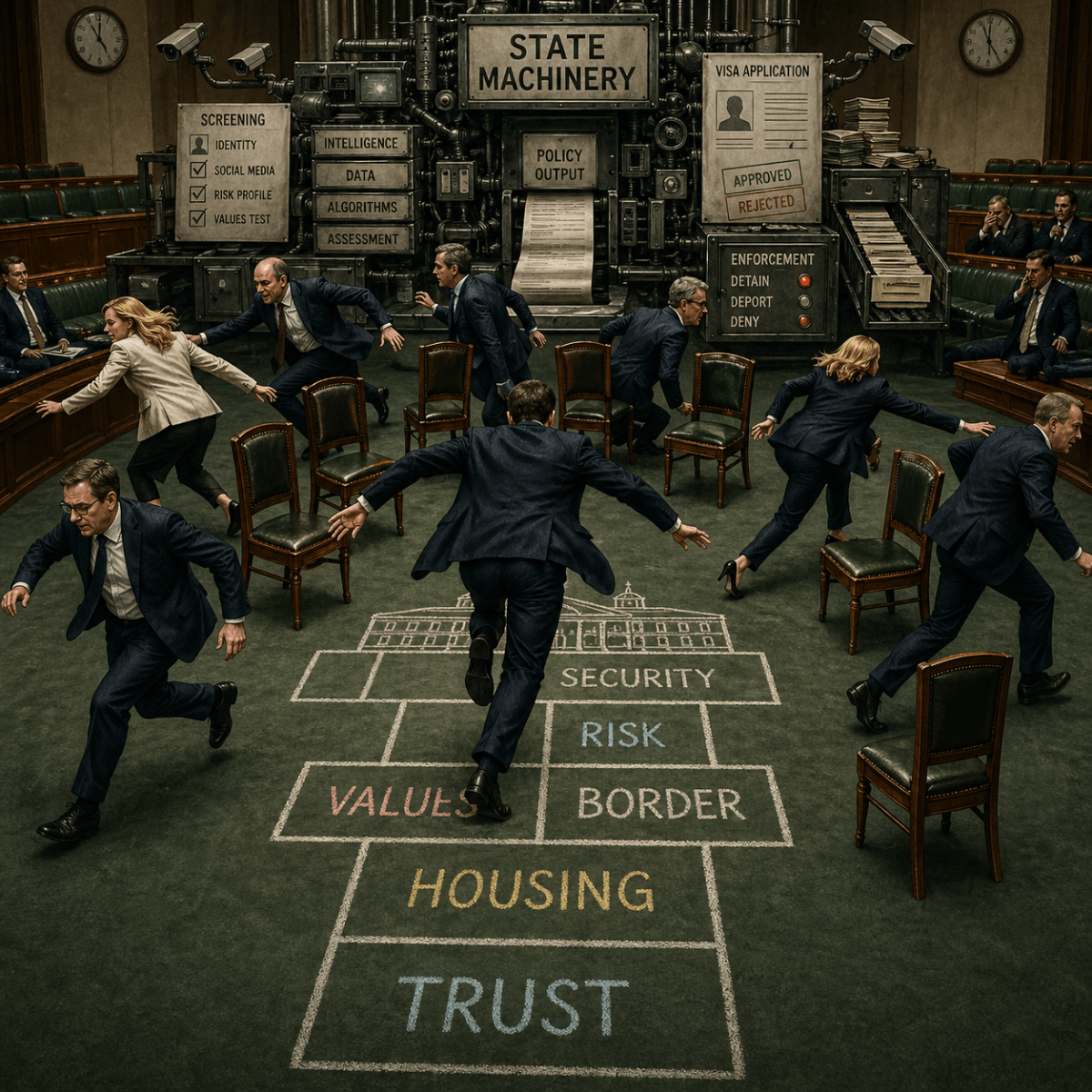
The Coalition’s recent turn on immigration should not be read only as a policy announcement. It is better understood as a communication event in which a party under pressure has reached for one of the oldest political instruments available: the conversion of broad social anxiety into a visible outsider. In its own language, the Coalition’s […]

Categories
cybernetics

Do Not Pay the Bill and Learn Nothing: Fuel Shock, Delay, and Adaptive Governance

Strategic Cost Recovery. The Australian fuel shock should not be treated as a discrete price problem. It is a moving disturbance through food, freight, work, health logistics, regional supply, household mobility, business continuity, inflation expectations, and public trust. The official response has been recognisable and partly necessary: temporary fuel excise relief, reduced heavy-vehicle road charges, […]

Categories
cybernetics

The Open System: Technology, Security, and the Management of Permanent Exposure

Technology is extraordinary. It extends memory, speed, coordination, reach, and control. But it also carries a persistent deception. Not because it is unreal, but because it repeatedly presents open systems as though they could be made to feel closed. Cybersecurity makes this especially clear. There is no final safety, no completed perimeter, no settled technical […]

Categories
Philosophy

The Problems a System Can See

Climate breakdown, war, energy insecurity, public health strain, technocratic overreach, automated exclusion, administrative drift, and the industrial circulation of disinformation are usually treated as separate crises, each assigned its own expert language, governance model, technical platform, and emergency response. But the deeper pattern is structural. Large systems do not merely solve problems. They determine which […]

Categories
Philosophy

Order, Disorder, and the Persistence of Socio-Political Form

Socio-political order does not arise because disorder has been removed, nor because conflict has been resolved. Large human systems endure by carrying tension and strain they cannot resolve: unequal interests, delayed consequences, institutional blind spots, competing stories, partial knowledge, uneven power, and the constant need to adapt. What looks like stability is usually a local […]

Categories
Philosophy

The Simplicity Trap: How Populist Narratives Turn Complexity into Crisis

Simple stories percolate because they compress reality into something the nervous system can carry. They move quickly, bind groups, assign blame, and generate the pleasant illusion that the world has become legible at last. Complexity does the opposite. It slows perception, forces qualification, and asks the mind to hold incompatible truths in suspension without collapsing […]

Categories
cybernetics

War and Peace: the necessary displacement of cost, complexity, consequence

In physics and complex systems science, local order is never self-originating and never free. It is produced by energy throughput, maintained by boundaries, and stabilised by exporting disorder beyond the region whose coherence is being preserved. This is not conjecture but a general consequence of thermodynamics, open-system dynamics, and basic control logic. Organisms preserve internal […]

Categories
cybernetics

The Mad King

The Mad King is usually treated as a personality problem. History supplies familiar figures. Erratic rulers, impulsive leaders, volatile decision makers whose behaviour appears to bend events. Yet this framing may be backwards. Instability at the top of power hierarchies may emerge not from individual psychology but from the structure of complex social systems themselves, […]

Categories
cybernetics

The Fool, the Follower, and the Systems That Make Them

Large populations have, at various points in history, rallied behind loud, simple, certainty-projecting figures who promise restoration, strength, or clarity amid confusion, even as those same movements steadily erode the very conditions upon which stability and shared reality depend, the quiet alignment between what people say, what they do, and what the world allows to […]

Categories
Complexity cybernetics environment

Beyond Eden: Climate, Complexity, Consequence

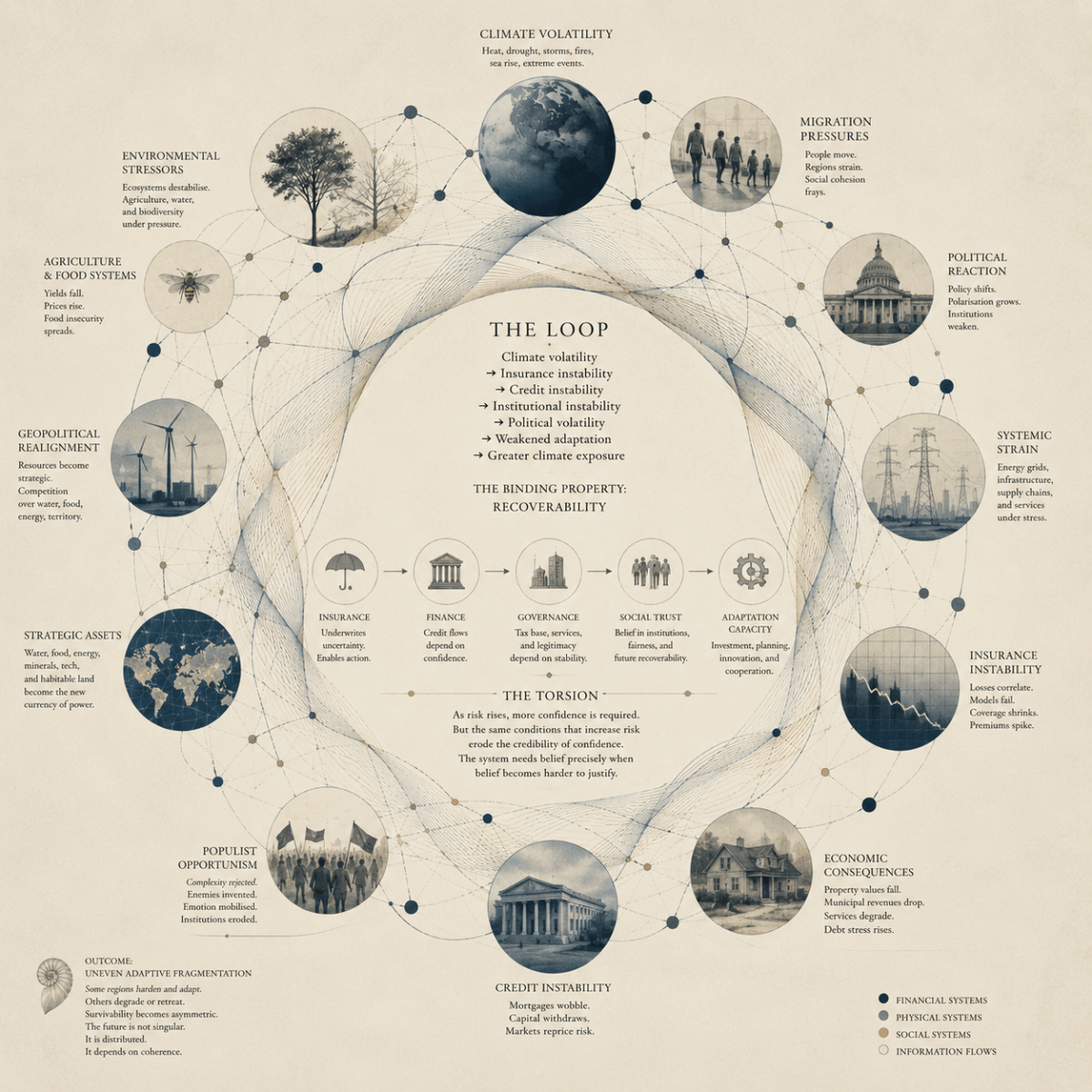
Anything we call a system is defined through relation, not contained within itself. Ice sheets, forests, oceans, atmospheric flows, monsoons. These are not isolated components but coupled processes that stabilise one another through ongoing exchange. The jet stream carries heat that shapes ice. Ice reflects light that shapes temperature. Forests regulate moisture that feeds rainfall. […]

Categories
communication cybernetics politics

Failure Mode: How Politics Lost Its Groove

Politics is not failing because people have become irrational; it is failing because the systems that coordinate perception, timing, and response have slipped out of phase, and what we are experiencing as conflict, populism, volatility, and institutional drift is the visible surface of a deeper timing problem in large-scale communication systems, one that also describes […]

Categories
communication cybernetics politics

It is not about politics

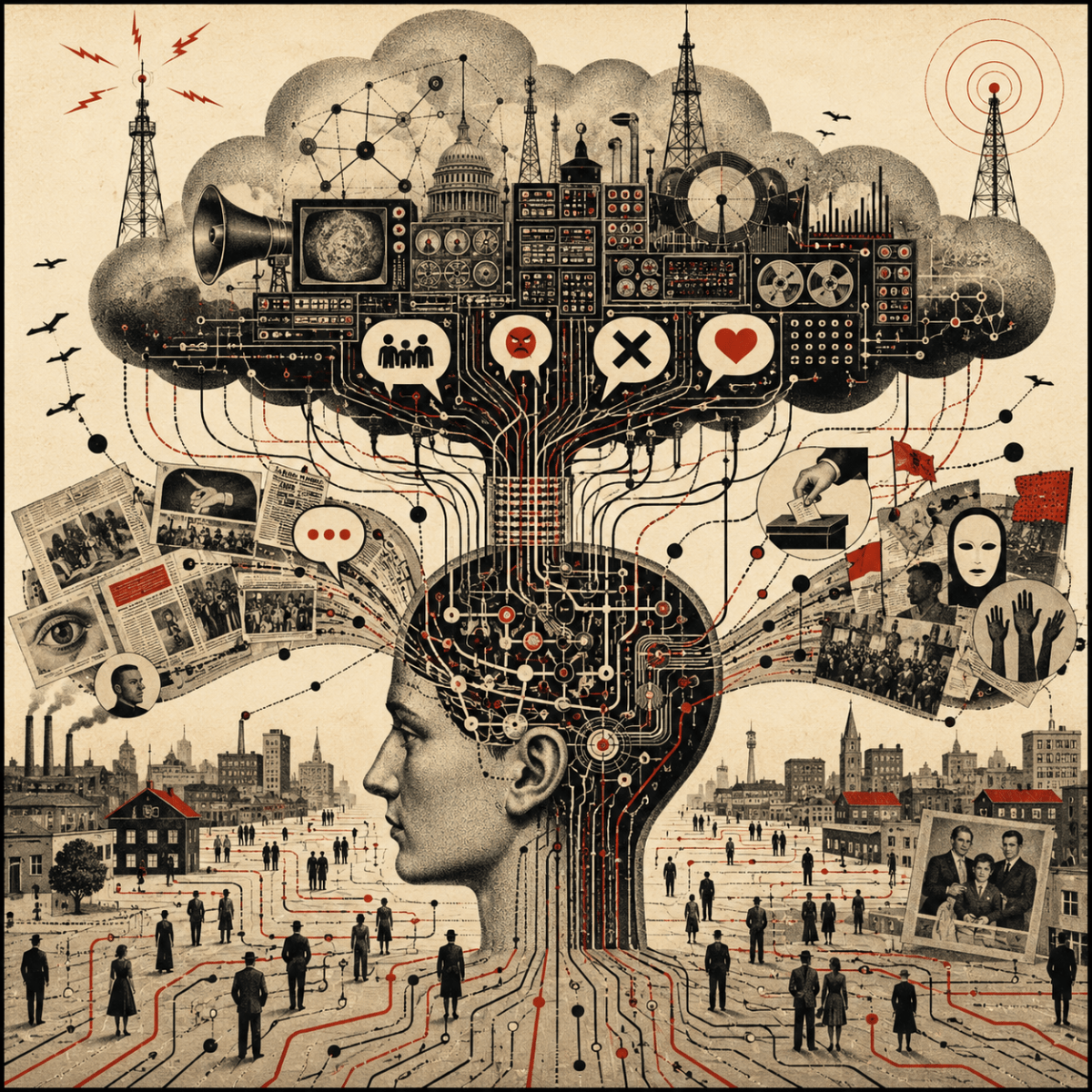
Across many countries, the current wave of populism looks like a political shift. It is, but it is also something deeper: a change in how communication systems select and stabilise meaning. Large, networked media environments now operate at high speed, uneven timing, and massive scale. In those conditions, not every idea travels equally. Some forms—short, […]