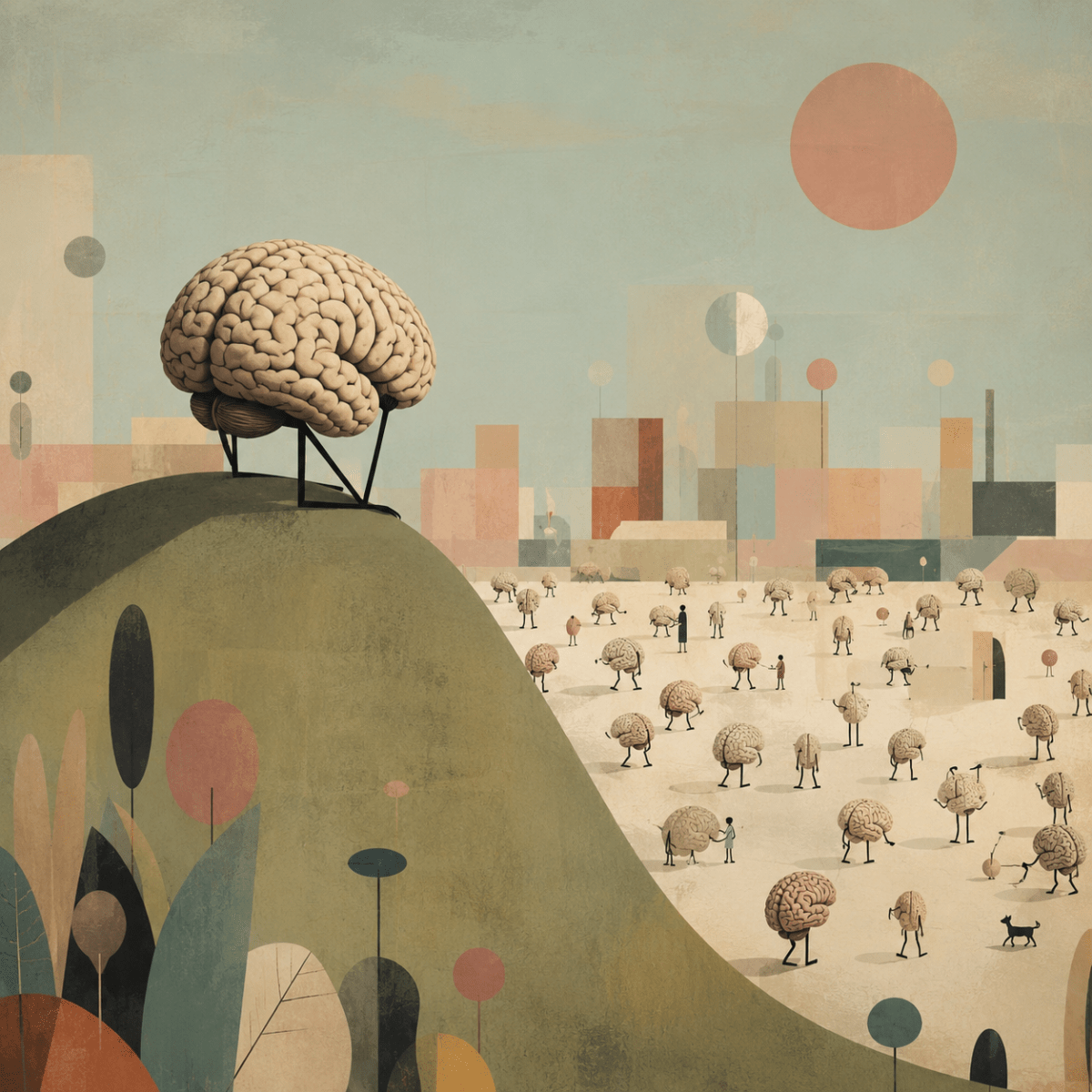
A stroke does not simply damage movement or speech. It can fracture the invisible interface through which a person participates in society. Since mine, language has become slower, vision less reliable, attention more fragile, and crowded environments cognitively expensive. Conversations that once unfolded effortlessly now require continual reconstruction. Every interaction demands concentration that few people can see. From the outside, the changes are often subtle. From the inside, they are structural. Isolation is not always chosen. Sometimes isolation is not withdrawal from the world, but the system choosing the only viable energy state left: lower outward participation, higher internal load.
A stroke reveals something uncomfortable about society itself. We imagine that civilisation is built from roads, institutions, laws, and economies, yet it exists only because minds continually succeed in making themselves intelligible to one another. Language, timing, memory, trust, and recognition are not accessories to social life; they are its infrastructure. When those interfaces fracture, exclusion follows almost automatically, not from malice but from failed coordination. The deepest injury is not always neurological. It is the gradual discovery that the world continues almost effortlessly without you, while every step back towards it demands a level of effort almost nobody else can see.

