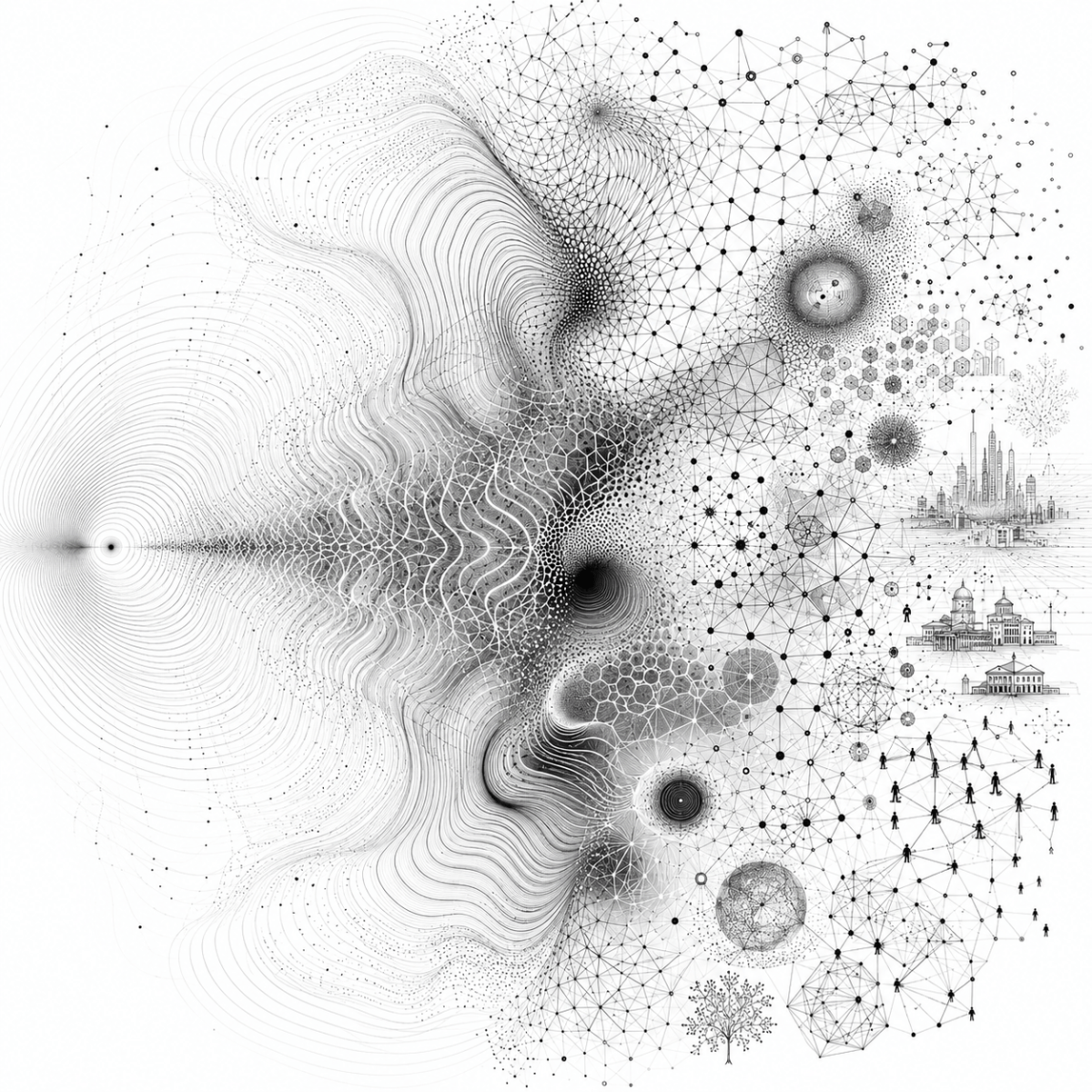
Australia’s housing crisis is not a collection of separate problems. Planning, finance, construction, taxation, wages, infrastructure, social housing, and homelessness are different parts of the same process. Each is routinely analysed in isolation, yet the behaviour of the housing system emerges from the relationships between them.
The defining characteristic of the housing system is differential rates of change. Credit, land values, investment, and prices can respond rapidly. Construction, infrastructure, planning, and public housing respond much more slowly. Household incomes usually move more slowly again. As these rates diverge, access to housing weakens. The crisis is not simply one of insufficient dwellings. It is a failure to maintain the relationship between the production of housing and the ability of people to obtain and retain it.
Housing differs from most goods because demand cannot be deferred indefinitely. People must live somewhere. When access weakens, the pressure is displaced rather than removed. It appears as rising rents, overcrowding, repeated moves, insecure tenancies, longer commutes, delayed family formation, temporary accommodation, and eventually homelessness. These are not separate problems requiring separate explanations. They are successive stages of the same process.
This also explains the apparent divide between economic and social policy. Economists usually examine interest rates, credit, borrowing capacity, investment, construction, prices, rents, and supply. Social organisations examine affordability, housing stress, exclusion, and homelessness. They are not describing different systems. They are observing different stages of the same one. Homelessness is not external to the housing market. It is the point at which access to stable shelter has failed completely.
Many interventions improve conditions locally while leaving the underlying dynamics unchanged. Increasing purchasing power without increasing accessible housing tends to increase competition for scarce dwellings. Increasing housing supply without improving access may expand the housing stock while leaving housing insecurity largely unchanged. Crisis accommodation is essential, but it usually begins after housing has already been lost. These responses reduce harm, but they do not necessarily change the conditions that continue to produce exclusion.
Housing instability does not remain within the housing sector. It propagates into hospitals, mental health services, policing, courts, schools, child protection, family violence services, and workforce participation. The cost has not disappeared; it has been redistributed. Housing policy is therefore inseparable from health policy, economic policy, education, justice, and public finance.
The useful measure of success is not simply how many dwellings are approved or completed. It is whether secure housing becomes easier to obtain and easier to retain. That requires reducing the delays between planning and construction, construction and occupancy, housing stress and intervention, and crisis accommodation and permanent housing. It also requires maintaining sufficient public, community, and affordable housing to absorb inevitable disruptions before they become permanent exclusion. Reserve capacity is not inefficiency. It is resilience.
Australia’s housing crisis is not fundamentally a failure of construction, finance, planning, or welfare considered independently. It emerges because each evolves according to its own incentives and timescale while remaining inseparably connected to the others. The objective is therefore not simply to build more dwellings or increase purchasing power. It is to reduce the rate at which secure housing is lost while increasing the rate at which it is restored. Every successful policy changes that relationship. Every unsuccessful policy merely redistributes its consequences.
Categories
the differential structure of Australia’s housing crisis
Australia’s housing crisis is not a collection of separate failures. It is what happens when finance, construction, wages, planning, and social policy move at different speeds while remaining inseparably connected.