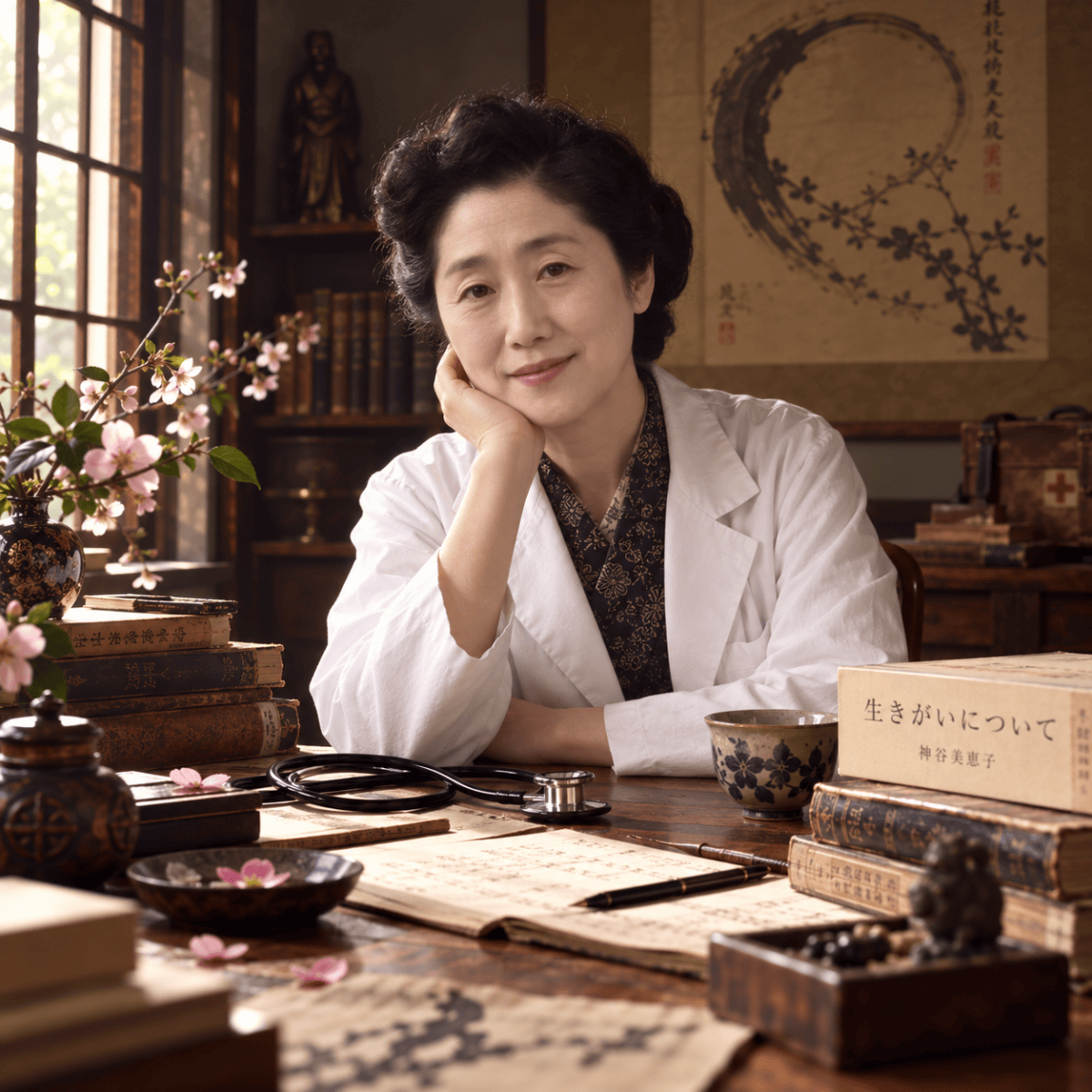
Mieko Kamiya (1914–1979), Japanese psychiatrist, philosopher and translator, understood suffering from both sides of the clinical divide. Tuberculosis, depression, the death of her first love and the competing demands of family and professional life shaped her difficult search for meaning. Working with patients affected by Hansen’s disease, historically known as leprosy, Kamiya encountered people subjected not only to chronic illness but to compulsory segregation, social rejection and the systematic destruction of ordinary human relationships. Their struggle to find meaning under such conditions became central to her understanding of ikigai. Her 1966 book, Ikigai ni Tsuite (生きがいについて), distinguished between what gives life meaning and the experience of life as meaningful. It was not an abstract intellectual exercise. It emerged from the difficult business of remaining alive when the familiar reasons for doing so had collapsed.
Kamiya’s insight reaches beyond psychiatry into the relational structure of existence itself. Ikigai is not a possession, achievement or destination, but a continuity arising through our relationships with a changing world. Meaning belongs neither to the individual nor to the world independently, but to the differences, dependencies and tensions through which each becomes intelligible to the other. Suffering does not simply interrupt this process; it transforms the relationships through which identity and purpose persist. What disappears can remain consequential, while what survives acquires meaning through its altered circumstances. Kamiya recognised that the sources of meaning and the experience of meaningfulness are distinct, yet inseparable. This distinction matters because life cannot be reduced to the purposes we assign it. We do not first discover a reason to live and then begin living. The reasons themselves emerge, change and sometimes disappear within the living. Ikigai names the worth experienced through that unfinished relationship, not its final resolution.