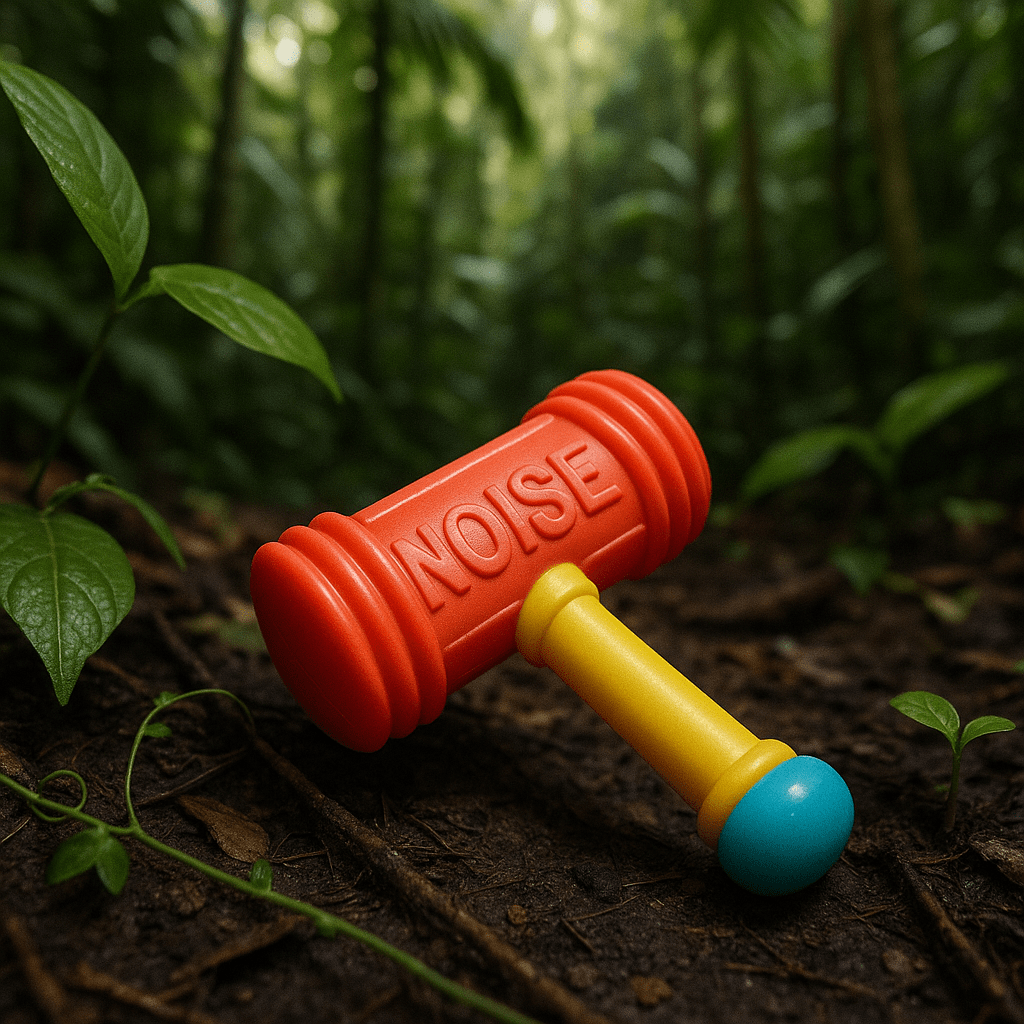
The atmosphere of American politics now resembles a dense fog of ideological noise. What registers as outrage, conviction or disgust is less the product of reasoned belief than the mechanics of replication: the simplest, most virulent signals race ahead of nuance. Words once tethered to meaning drift as tokens in a saturated field, their resonance drawn not from accuracy but from their ability to reproduce. Fascism resurfaces not as an argument but as a kind of statistical inevitability in systems that reward the loudest, most portable forms of difference.
The philosophical depth of the present moment lies in the recognition that language itself is shallow. Its apparent weight is not intrinsic but relational, an emergent property of connections between signs, people, and events. The tragedy is that signals which travel farthest are those stripped of subtlety—anger, fear, slogans—while nuance, compassion, and foresight decay in the noise. This is why money, power, and ideology so easily align with technological infrastructures: they exploit physics itself, where information is nothing more than patterned noise moving through a medium. Human brains and cultures are that medium, and the absurdity is complete—the fate of a nation, even of a species, entangled with the statistical turbulence of American Noise.
 Daedelus Kite