Most political arguments begin in the wrong place.
They begin with personalities, parties, ideologies, elections, leaders, and slogans. They begin by asking who should be in charge. Yet history suggests that changing the occupants of a system is often less important than understanding the system itself. New faces regularly inherit old incentives. New governments inherit old machinery. New movements inherit old failures. The packaging changes. The behaviour frequently remains recognisable.
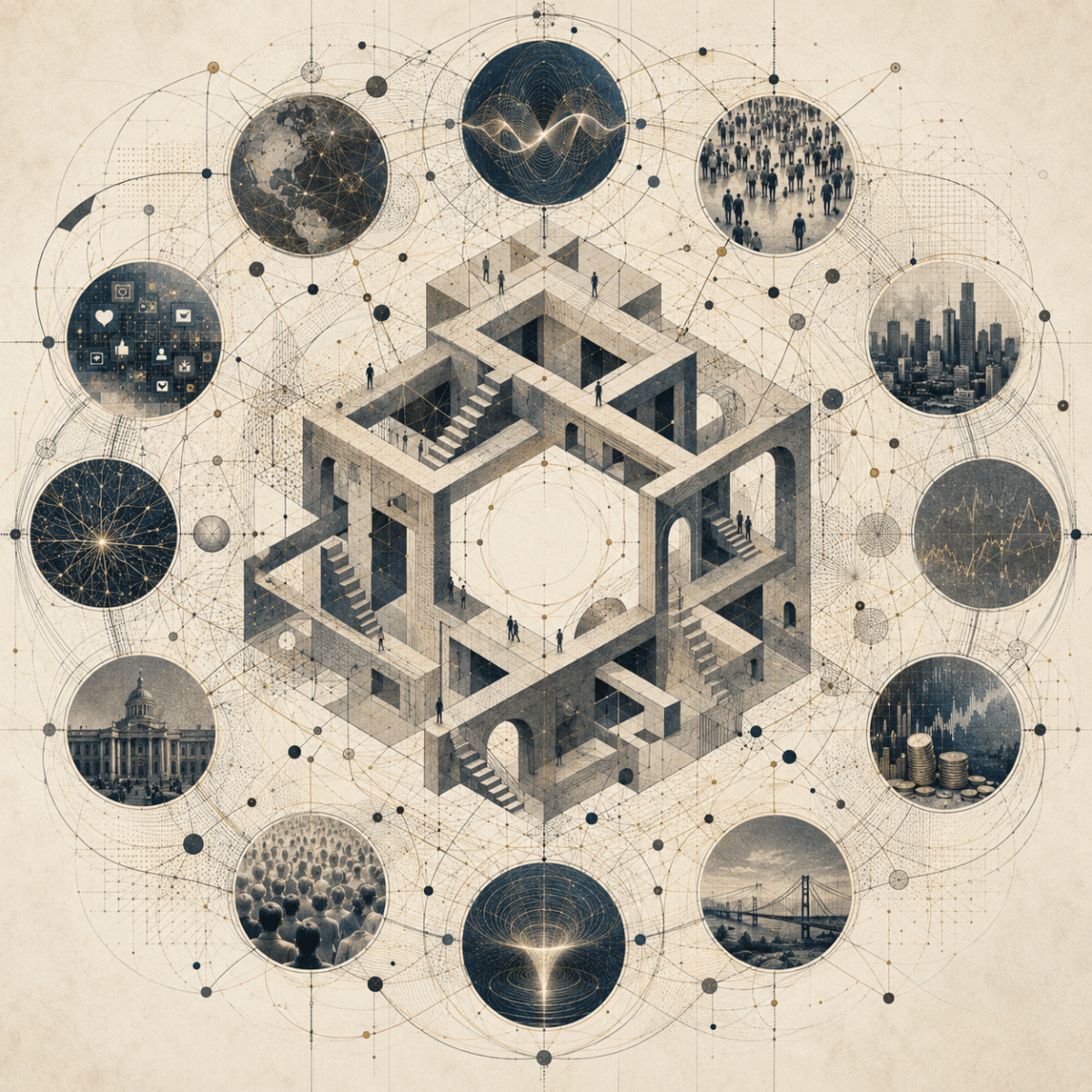
A better politics would begin not with power, but with relationships. The health of a society depends upon the quality of the relationships between citizens, institutions, communities, businesses, governments, cultures, and sources of knowledge. When those relationships become distorted, politics becomes distorted. Distrust grows. Information degrades. Bureaucracies become self-protecting. Public debate becomes theatrical. Entire populations can be organised around anger while fundamental problems remain untouched.
This is why neither populism nor technocracy offers a complete answer. Populism mistakes public emotion for public wisdom. Technocracy mistakes administration for understanding. One believes every problem can be solved by listening to the crowd. The other believes every problem can be solved by managing the crowd. Both approaches eventually lose contact with reality because reality is always more complex than either the mob or the spreadsheet.
A better politics would treat disagreement as a resource rather than a failure. Complex societies contain competing interests, competing values, and competing interpretations of events. The goal is not to eliminate these differences but to organise them productively. A healthy political system should allow conflict without requiring enemies. It should allow criticism without demanding disloyalty. It should permit correction before failure becomes catastrophe.
This requires institutions capable of hearing criticism from within. One of the strangest habits of modern organisations is their tendency to resist the very information they most need. Universities struggle to discuss universities. Bureaucracies struggle to discuss bureaucracy. Political parties struggle to discuss party structures. The closer criticism gets to the source of a problem, the more dangerous it is often considered. Yet a system that cannot learn from internal feedback eventually loses the ability to learn at all.
The purpose of politics is therefore not victory. It is orientation. The task is not to create perfect agreement, but to maintain enough shared coherence that a society can continue solving problems without tearing itself apart. The measure of success is not whether one faction wins. It is whether the system remains capable of adaptation, self-correction, and collective learning.
A better politics would ask less often who should rule and more often how power, information, responsibility, and accountability are organised. It would be less interested in heroes and villains and more interested in incentives and consequences. Above all, it would recognise a simple truth: no institution should be trusted if it cannot be criticised by the people closest to its failures.
Categories
better politics
The task is not to create perfect agreement, but to maintain enough shared coherence that a society can continue solving problems without tearing itself apart.