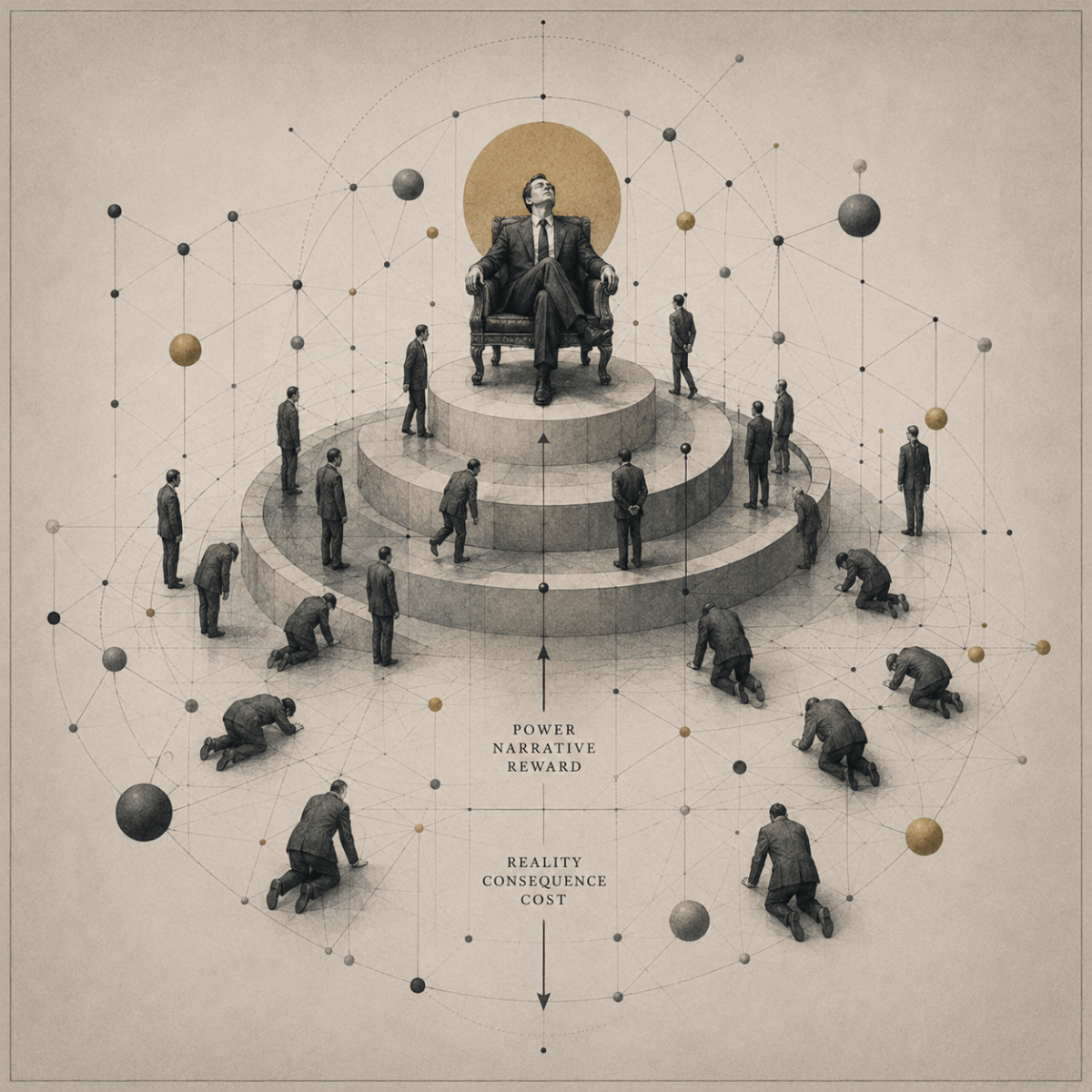
Neurotic bureaucracies are not usually captured by autocratic behaviour from the outside. They prepare the room themselves. The hierarchy is already there. The fear of error is already there. The preference for obedience over intelligence is already there. The organisation has often spent years hiring for compliance while advertising imagination, innovation, courage, and other decorative nouns suitable for annual reports.
The basic pattern is simple. A bureaucracy becomes anxious about its own status, reputation, and internal order. It then begins treating criticism as disorder, difference as risk, and independent judgement as a management problem. In such an environment, the most useful people are not necessarily the most capable. They are the most legible, deferential, and predictable. This is how organisations become stupid while employing intelligent people.
Once that structure is in place, it is not difficult to flip it into something darker. Autocracy does not require everyone to become cruel. It only requires enough people to prefer safety over truth, promotion over responsibility, and procedure over conscience. The system does the rest. Orders descend. Doubts are privatised. Dissent becomes “tone.” Harm becomes “process.” By the time anyone notices the moral weather has changed, most of the furniture has already been rearranged.
This is why so much institutional talk about complexity, adaptation, learning, and innovation is hollow. A system demonstrates its intelligence by what it can do with criticism of itself. If it can only discuss complexity as a consultancy product, while refusing to examine its own incentives, fears, hierarchies, and failures, then it is not complex in any useful sense. It is merely ornate. Possibly expensive. Often very pleased with itself.
The likely future is therefore not better organisations by default, but more neurotic ones: more managed, more performative, more anxious, more internally censored, and more vulnerable to authoritarian simplification. The alternative is not another leadership workshop with a leaf on the cover. It is the hard structural work of making organisations capable of hearing from the places where they are failing, before those failures become policy, culture, and finally identity.
Categories
autocratic capture: neurotic bureaucracy
Neurotic bureaucracies do not resist autocracy; they often rehearse for it.