The task is not to create perfect agreement, but to maintain enough shared coherence that a society can continue solving problems without tearing itself apart.
better politics
The task is not to create perfect agreement, but to maintain enough shared coherence that a society can continue solving problems without tearing itself apart.
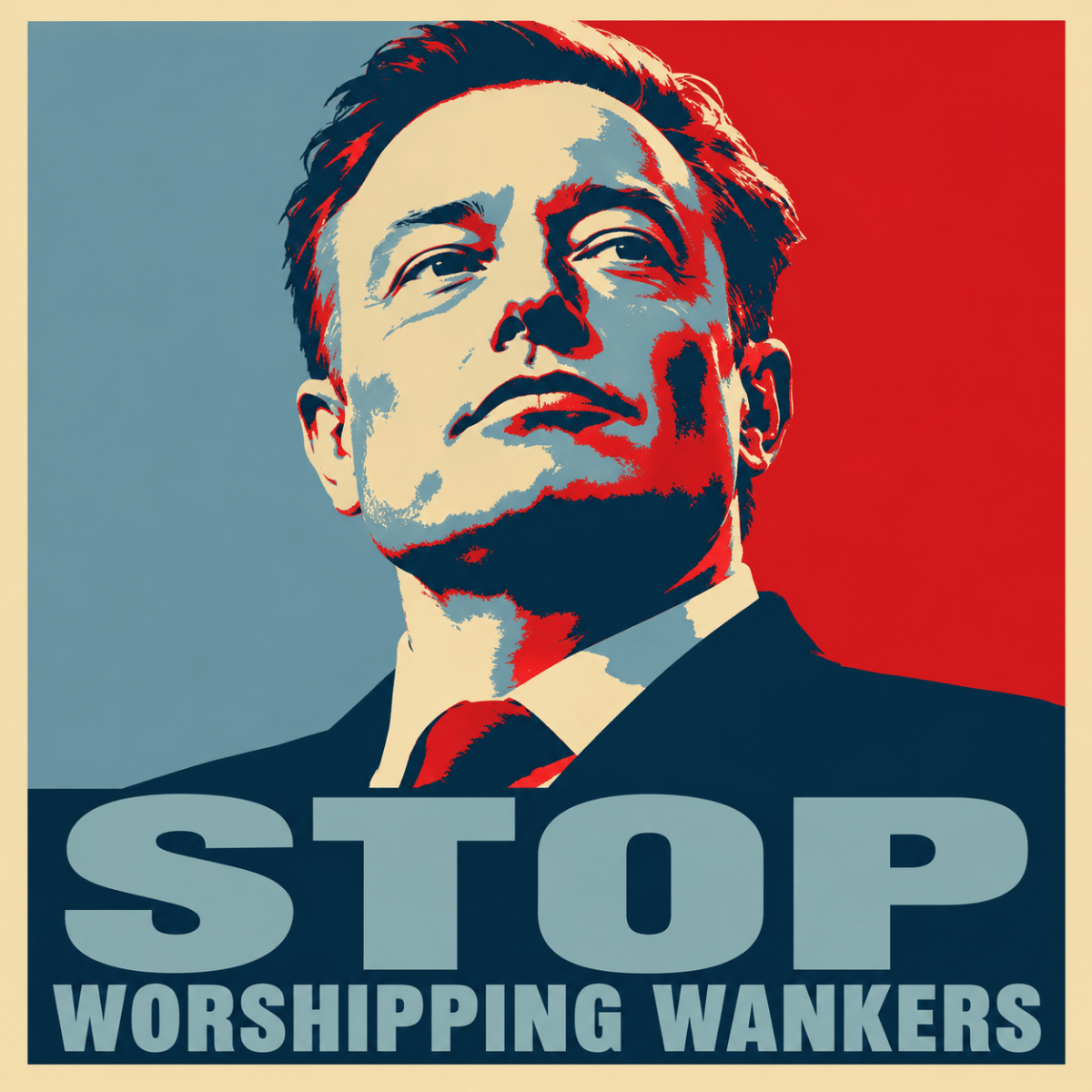
There is, at present, a strange cultural requirement to pretend that billionaires are evidence of societal success rather than evidence of systemic imbalance.
If the ideas and thinkers that rise to prominence are primarily those most adept at navigating the adaptively exasperating technocratic overreach and moribund status hierarchies of contemporary institutional research, then what ascends is rarely intellectual risk, conceptual courage, or genuine discovery. What is recognised, rewarded, and replicated instead are the values and assumptions already embedded […]
The Coalition’s recent turn on immigration should not be read only as a policy announcement. It is better understood as a communication event in which a party under pressure has reached for one of the oldest political instruments available: the conversion of broad social anxiety into a visible outsider. In its own language, the Coalition’s […]
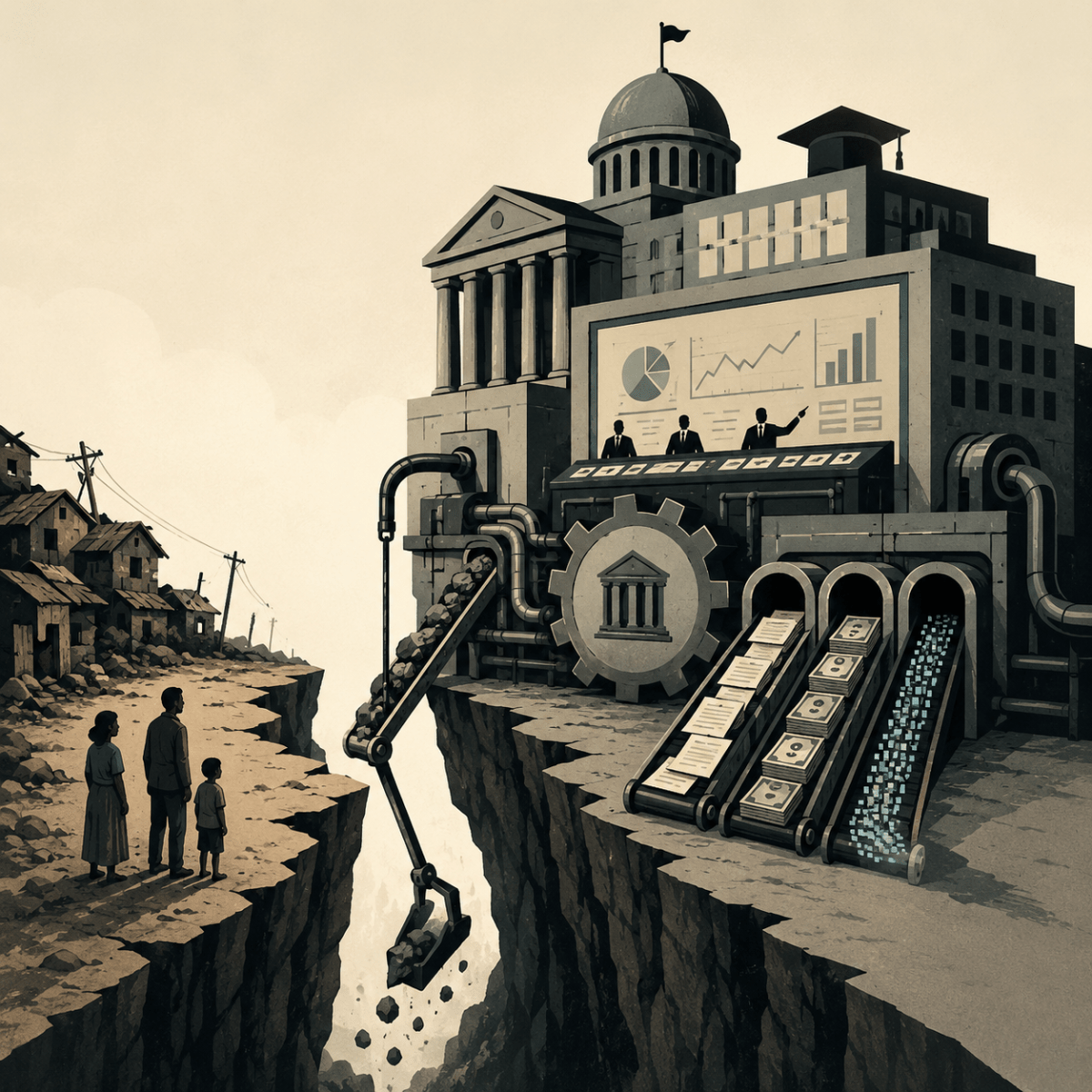
Climate breakdown, war, energy insecurity, public health strain, technocratic overreach, automated exclusion, administrative drift, and the industrial circulation of disinformation are usually treated as separate crises, each assigned its own expert language, governance model, technical platform, and emergency response. But the deeper pattern is structural. Large systems do not merely solve problems. They determine which […]
Let’s save AI, and ourselves, from the people currently running it as though technical intelligence were sufficient to govern human life. The problem is not simply that they are foolish in some ordinary sense, but that they mistake optimisation, scale, fluency, abstraction, and wealth for wisdom. Technical intelligence does not transduce lived experience with anything […]
In a world that has deeply and intractably commercialised the concept and experience of individuality, the very last thing actually required of us is to be different. We are sorted and we voluntarily self-sort into labels and categories, compressing ourselves into neat, data-ready boxes that serve as containers for self-managed subscription into vast machines of […]
Australia works because it stays balanced. Its democracy is not built on simple agreement, but on the disciplined interaction between different ways of seeing the world. Labor and Liberal are not just rival teams. Together, they form the smallest political structure capable of holding a complex society together. Two sides generate debate, correction, and restraint. […]
The language of the school was expansive: culture, power, technology, ethics, ecology, gender, indigeneity, diversity, human experience, systems, responsibility, complexity. It spoke fluently about uncertainty, fragility, and care. It marketed itself as a space for deep reflection on and constructive engagement with how technological systems were and are reshaping civilisation. But in one all-staff meeting, […]
Power no longer argues; it pre-configures the field. That matters because political economy now unfolds inside communicative and technological environments that behave less like instruments of choice and more like complex systems seeking autonomously self-propagating continuity. Policy disputes over reform, productivity, welfare, housing, climate, or security feel intentional and contested, yet they mostly convert disagreement […]
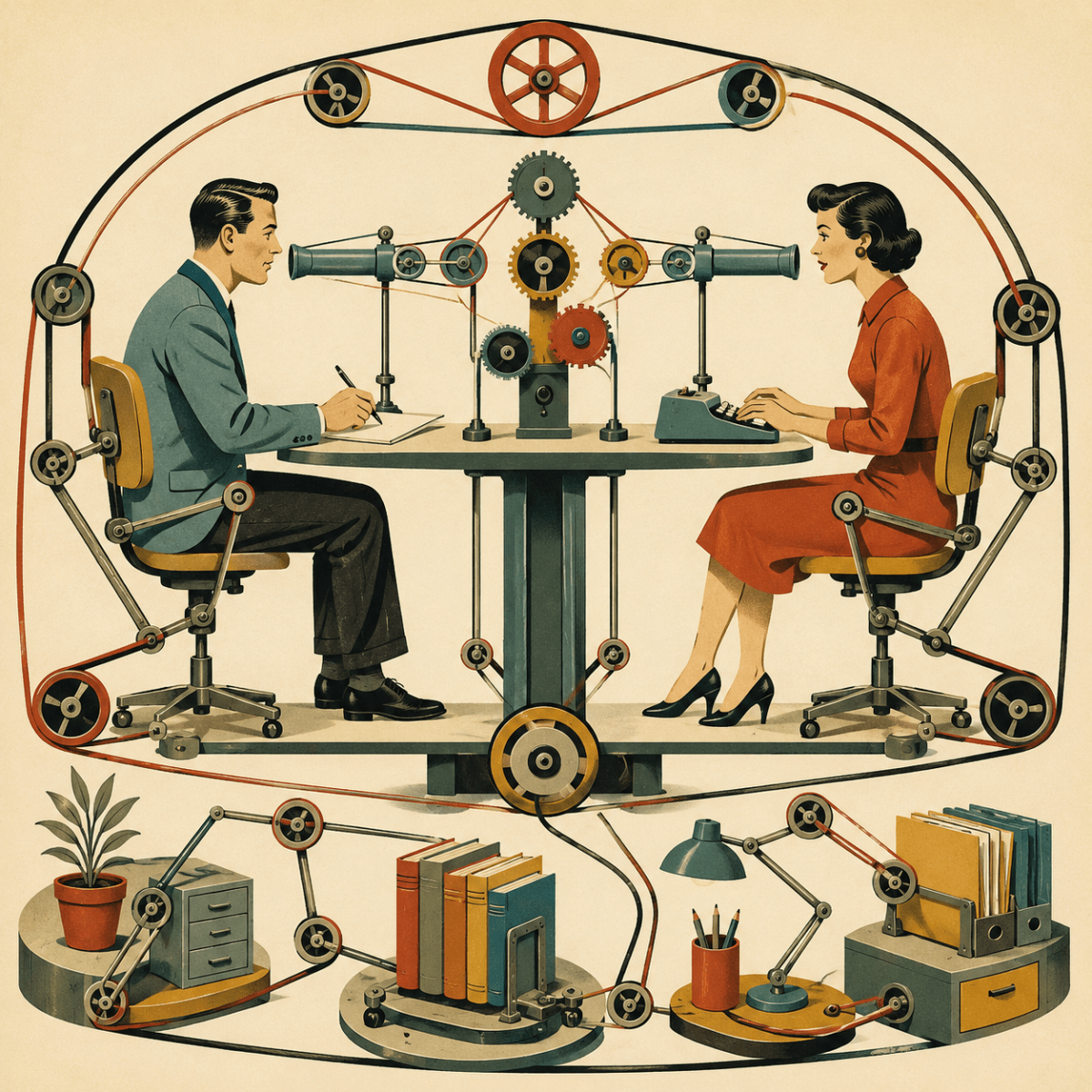
Large institutional systems do not merely maintain narratives about what they are doing or why they are doing it. They stabilise meta-procedures: how statements are produced, validated, circulated, and sanctioned, because at scale the reasons matter less than the repeatability of the process. These methods become the true object of protection because they allow coordination […]
We learn to navigate the world by drawing lines through it. Self and other. Mind and world. Human and machine. These distinctions help us function, the way handrails help us walk down unfamiliar stairs. They stabilise action and expectation. But they are not where reality begins. They are not built into the fabric of existence. […]