When humanity finally runs out of idiots to put in charge, it turns to Captain Fractal. Armed with decades of systems thinking, a ridiculous hat and a dangerous understanding of consequences, he sets about un-fucking civilisation.

When humanity finally runs out of idiots to put in charge, it turns to Captain Fractal. Armed with decades of systems thinking, a ridiculous hat and a dangerous understanding of consequences, he sets about un-fucking civilisation.

Governments invest heavily in defending against foreign interference while neglecting the administrative failures that make societies vulnerable. Bureaucracy has perfected the art of becoming indispensable without necessarily becoming useful.

Institutions study the world remarkably well. The harder problem is that the world they are studying is also inside the building, and there is no position outside the system from which that entanglement simply disappears.

Institutions rarely fail because they cannot recognise problems. They fail because recognising problems is not the same as escaping the conditions that reproduce them.

The world is not merely broken. Too many people are paid to keep it that way.

The system’s entropy offset becomes the labour imposed on those required to submit to its assumptions in order to reproduce its organisational structure through time.
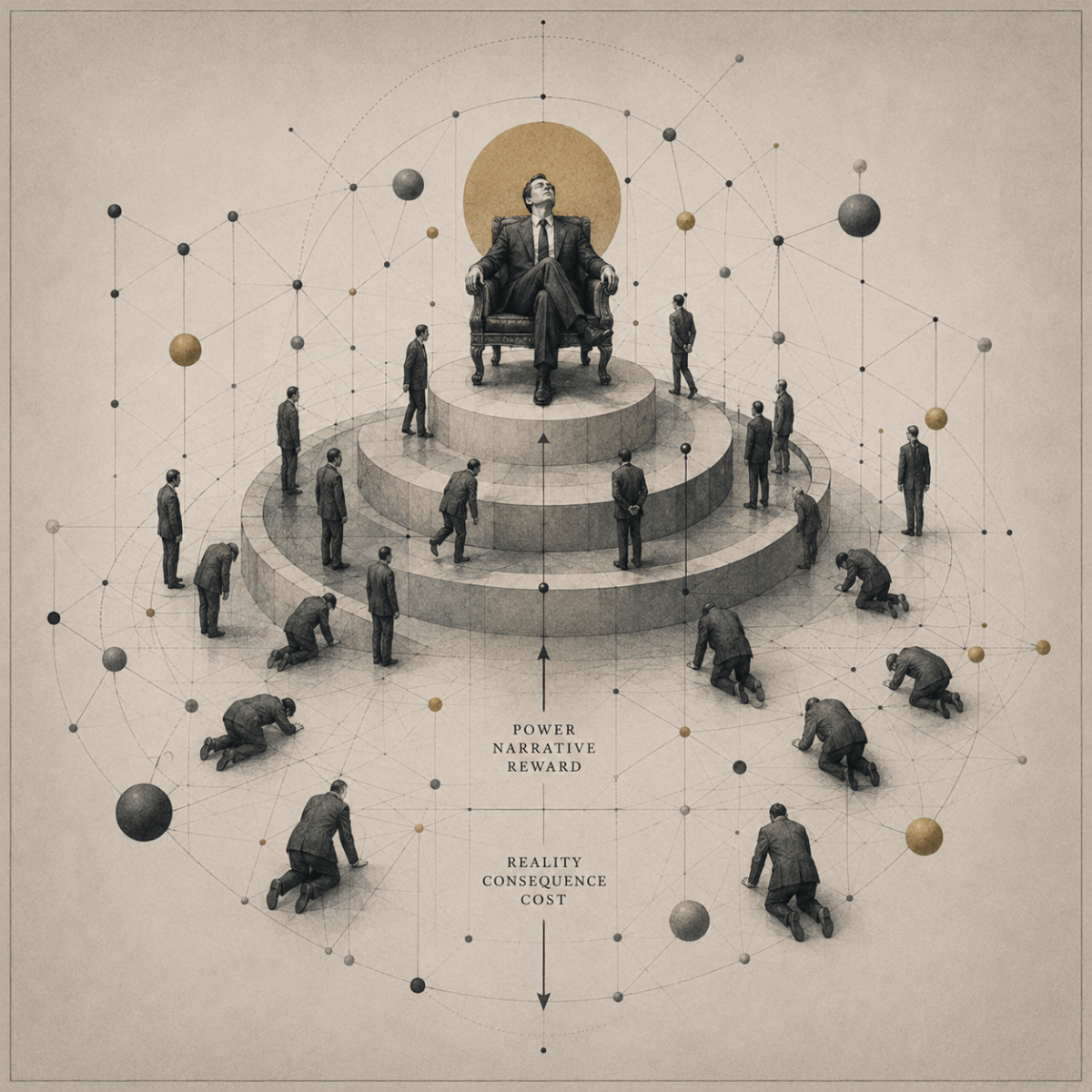
Neurotic bureaucracies do not resist autocracy; they often rehearse for it.

The task is not to create perfect agreement, but to maintain enough shared coherence that a society can continue solving problems without tearing itself apart.

The Reflecting Pool turned green. Perhaps it is simply doing its job.

The appeal of populism is that it makes complexity feel unnecessary. The cost is usually discovered much later.

Populists tell you they’re going to smash the system for your benefit. Funny how it still always seems to end with the rich getting richer, the government getting worse, and everyone else paying for the repairs.

Australia’s political speed-dating with One Nation suggests that what has happened in the USA is not an exception, it is a franchised political method.
Have a WordPress.com account? Log in now.

