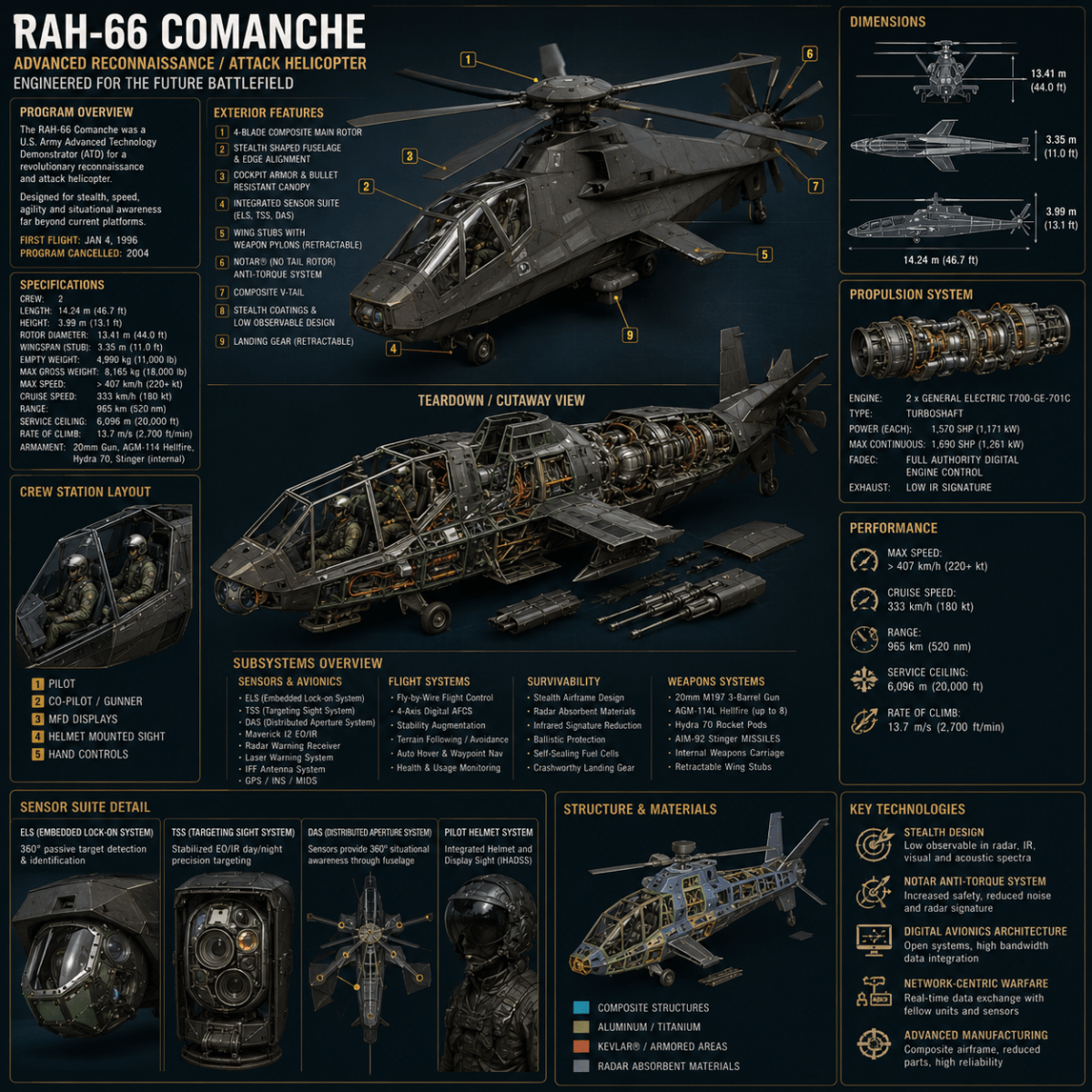
It is often observed that war accelerates technology. The historical record leaves little room for doubt. Metallurgy, navigation, radar, computing, jet propulsion, nuclear physics, satellite navigation, the internet, drones, and artificial intelligence all advanced dramatically under conditions of strategic competition. Yet this familiar observation conceals a deeper question. The issue is not simply why conflict produces technology. It is why technological civilisation repeatedly evolves within environments defined by conflict.
The usual search for simple causes misses the structure of the relationship. Technology does not cause conflict, and conflict does not simply produce technology. Both propositions are too linear for systems of this complexity. The relationship itself is recursive. Conflict creates urgency, investment, coordination, uncertainty, asymmetry, and enormous quantities of strategically valuable information. These conditions favour technological innovation. Those innovations then increase the speed, scale, precision, reach, and complexity of future competition. Each continually reshapes the conditions under which the other evolves. In complex systems, relationships often prove more persistent than the things they connect.
This relationship extends well beyond the battlefield. Modern conflict includes commercial rivalry, financial competition, cyber operations, trade disputes, political polarisation, intelligence gathering, legal contests, sanctions, disinformation, strategic communication, and proxy confrontation. Around these activities has emerged an entire ecology of institutions: defence industries, cybersecurity firms, regulators, intelligence agencies, legal systems, insurers, universities, media organisations, consultants, research laboratories, and the commercial structures that increasingly bind them together. None of these institutions requires perpetual war to persist. They do, however, become progressively organised around the continual management, anticipation, mitigation, or exploitation of technologically mediated conflict. The persistence belongs less to any individual institution than to the relationships through which they collectively reproduce the environment that increasingly justifies their continued existence.
This broad pattern has been recognised from several directions. Lewis Mumford explored the historical entanglement of military organisation and technological development. Paul Virilio argued that warfare repeatedly accelerates technological transformation. Manuel DeLanda examined how conflict shapes institutions, infrastructure, and states across history. Gilles Deleuze and Félix Guattari described distributed relational structures whose dynamics emerge through connection rather than linear causation. Thomas P. Hughes showed how large technological systems become self-reinforcing, while Langdon Winner demonstrated that technologies embody political relationships. The argument advanced here extends these traditions by viewing conflict as one of the principal selection environments through which technological civilisation continually reproduces itself.
Commerce deepens this dynamic. Competitive markets reward local advantage, rapid deployment, measurable returns, and strategic differentiation. Democratic politics often rewards similarly short electoral horizons. Neither is irrational within its own environment; each is simply responding to the pressures that select for its persistence. Together, however, they bias technological civilisation towards immediate advantage rather than long-term stability. Technologies promising security, efficiency, competitive dominance, or economic gain attract investment and political support long before their broader systemic consequences become visible. By the time those consequences emerge, institutions, infrastructure, regulation, and public expectations have already reorganised around them. Solutions become dependencies. Dependencies become identities. Identities become increasingly difficult to abandon.
Technology is therefore neither humanity’s salvation nor its downfall. It is one expression of a much larger adaptive ecology that continually reshapes itself through recursive relationships. Complex systems reproduce the relationships that enable their own persistence, and technological civilisation is no exception. If conflict remains one of the richest environments for technological evolution, technological civilisation will continue drifting towards conflict-rich conditions regardless of anyone’s intentions. That drift is statistical rather than ideological, structural rather than conspiratorial. The challenge is therefore not simply to invent better technologies, but to cultivate environments in which cooperation, resilience, and long-term human flourishing become more evolutionarily productive than conflict. Until then, civilisation will continue mistaking the reproduction of its own dynamics for progress.

 Daedelus Kite
One reply on “technology’s hidden dependency on conflict”
Technology also carries a quieter dependency that is easily overlooked. Every communication technology presupposes separation. If we were not already distinct, there would be nothing to connect. That observation appears trivial until extended to technological civilisation itself. The discrete categories through which technology is designed, organised, regulated, and commercialised—devices, platforms, industries, professions, markets, and institutions—also partition the world into increasingly specialised domains. These distinctions are often indispensable, yet they simultaneously reinforce boundaries between people, organisations, and ways of thinking. The result is not simply greater connection, but a civilisation whose connective capacity grows alongside its differentiation. Integration and fragmentation therefore emerge together, making cooperation and competition complementary rather than opposing features of the same evolving technological landscape.
LikeLike