A system can persist while its parts, states and circumstances change. In complex adaptive systems whose interactions alter their own conditions of continuation, each encounter reshapes the probabilities of what comes next. Persistence consists in reproducing coherent relations through that change. Language and culture perform this same activity. Biological regulation, neural learning and ecological organisation express it through different mechanisms and timescales. The ensemble conditions the continuation of its parts, while their activity renews and transforms the ensemble. A word, a habit or an institution endures through the relations that continually reproduce it. Variation and difference remain constitutive of that organisation, providing possibilities through which it can continue and adapt.
Knowing participates in this process. Attention, memory, language and circumstance condition which facts become available and how they are recognised; every encounter changes those conditions. Truth, as a generalised semantic entity, is a fuzzy attractor: a relational organisation towards which recognition, expectation and interpretation tend to converge, already operative before explicit propositions. Correctness approximates its central limit, the emergent reference around which that convergence takes shape. A judgement can be formally exact while remaining a partial articulation of the wider field. Formalisation stabilises selected distinctions as criteria, definitions and rules, enabling testing and disagreement while altering what can be recognised next. The consequences of encounters constrain this convergence, including where they resist established expectations.
The frequency domain makes the temporal organisation of this process available to inspection. Words recur, but so do relations, expectations and patterns of response. A syllable, a conversational exchange, a daily broadcast and a narrative returning across generations occupy different timescales within a coupled field. Frequency concerns rates of recurrence; phase concerns relative timing. Reinforcement, interference and delay change how these processes sustain one another. Recurrence establishes structure, structure acquires significance, and significance changes subsequent recurrence. Meaning participates in the organisation that produces it. Coherence across the ensemble remains compatible with differences of timing, interpretation and response among its parts. Those differences leave scope for further interaction, through which both local patterns and their wider conditions continue to develop.
Popular culture makes this organisation conspicuous. Songs, films, memes, fashions and celebrity cycles renew familiar relations through changing material. Heroes acquire new faces; anxieties find new costumes; rebellion returns with a sponsorship agreement. Audiences bring expectations formed by earlier encounters, and their responses change what producers, platforms and other audiences subsequently make available. Institutions and corporations exert influence through these relations, including through deliberate design. Their choices operate inside a wider process whose continuation depends on distributed recurrence. The content changes while recognisable patterns of attention, identification and reward persist. Novelty can reorganise those patterns as well as reproduce them. Even hostility contributes to persistence when the argument keeps returning attention to the same object.
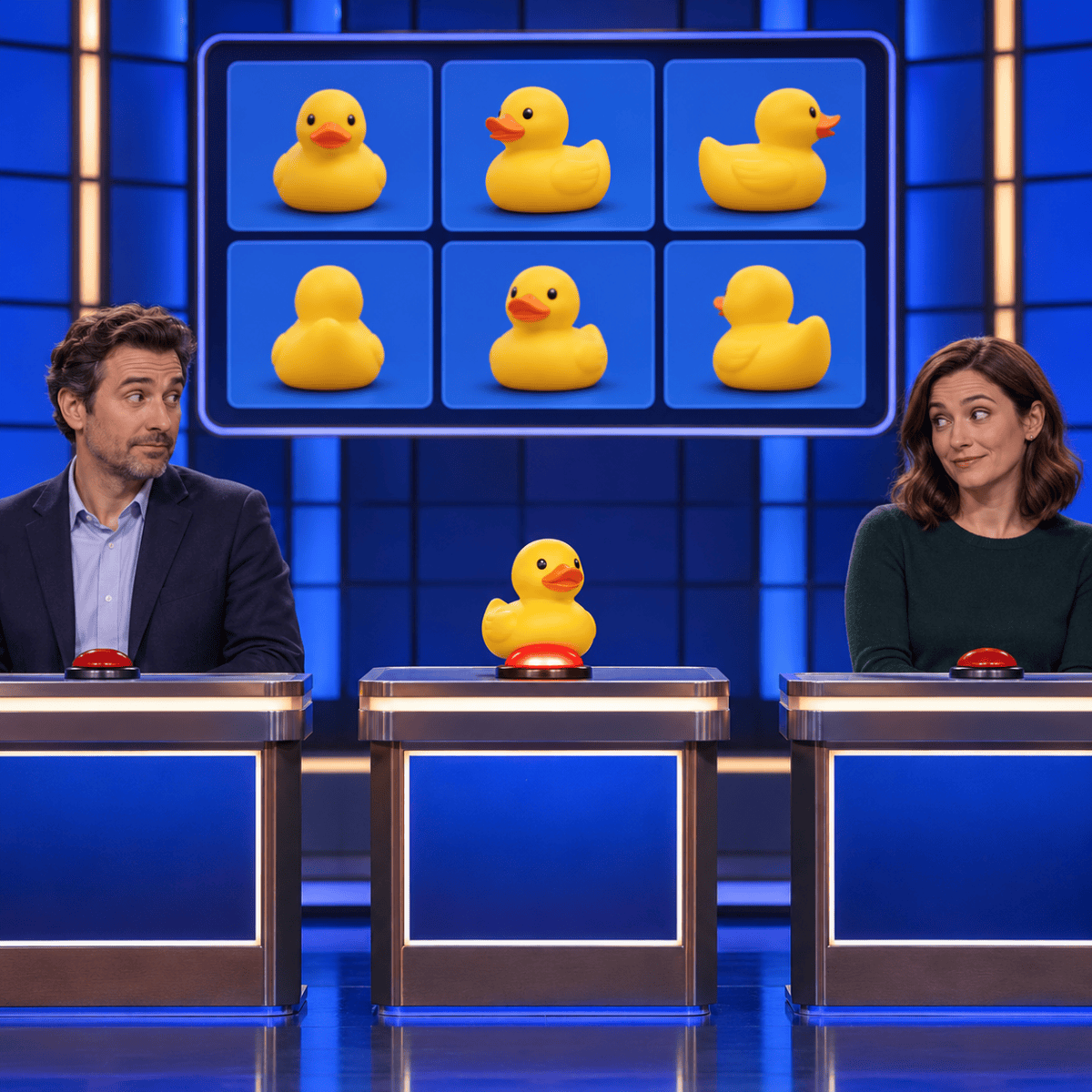
Jeopardy gives the process a neat set of limits. Categories, clues, accepted responses and rewards establish the frame within which knowledge counts as correct. Other game shows arrange different relations among expectation, surprise, recognition and consequence. The answers vary while the format repeatedly organises how knowing is recognised and rewarded. It is entertaining to imagine the questions orchestrated to reproduce a culture favoured by institutions or corporate sponsors; such orchestration operates through an already selective field of learning, attention and recognisability. Outside the studio, this recursive activity unfolds through conversations, news, entertainment and everyday decisions. Each encounter changes the conditions of the next. The ensemble persists through transformations of its parts, and local patterns through their changing relations within the ensemble. Some wrong answers keep charging interest.

