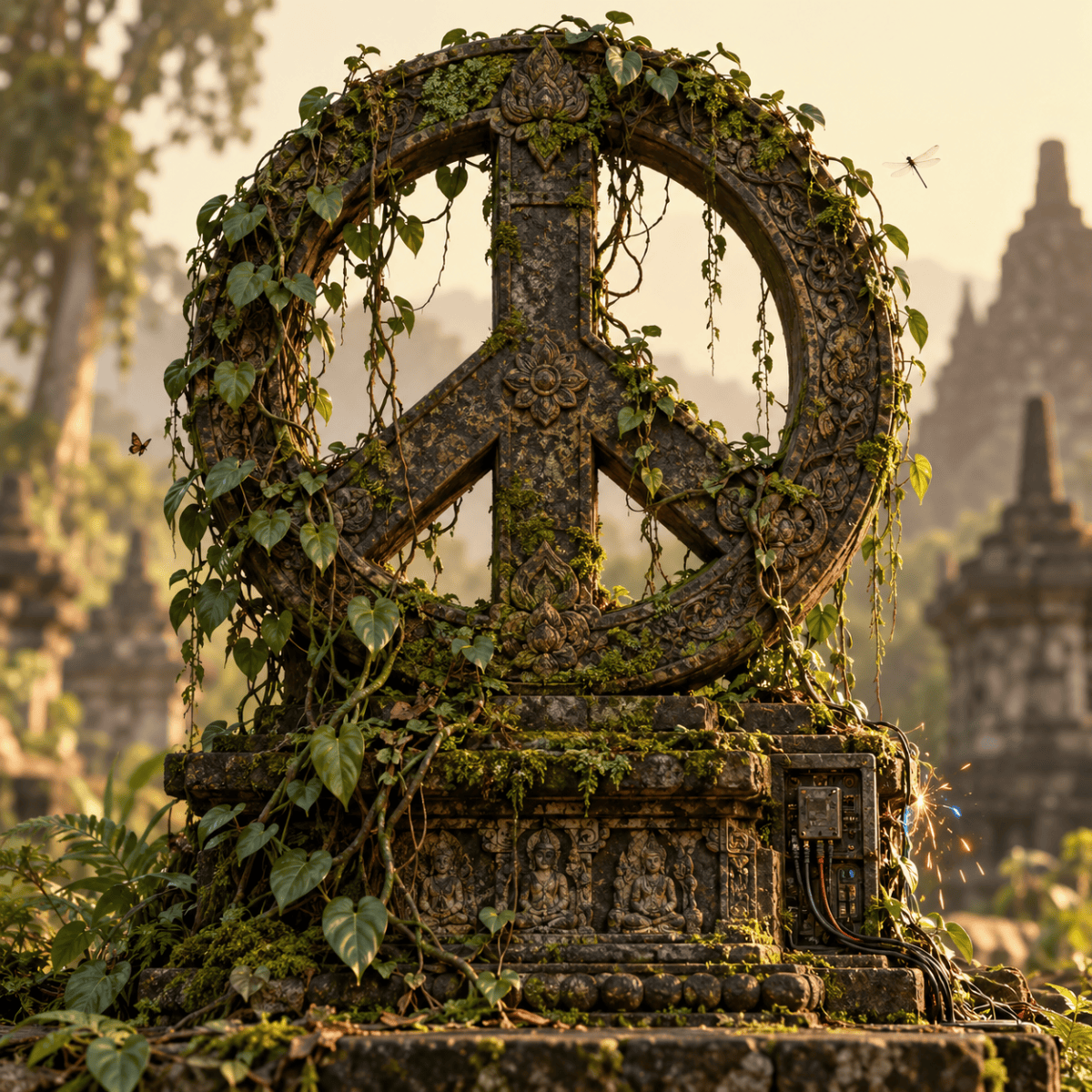
You’d think peace would be a simpler thing to achieve, or at least move towards, but it isn’t. I’ve spent considerable time examining why, and increasingly I find that the difficulty lies not simply in human aggression or political disagreement, but in the systems of security, technology, economics and institutional power that reproduce, and in large measure critically depend upon, the continuation of the very conditions they claim to resolve. These essays approach peace from different directions, but share a central concern: how do we stop organising our world around the perpetual expectation of conflict?
A selection of my writing on peace
1. We Do Not Need War
Examines how war becomes a self-sustaining form of human organisation, rather than an unavoidable consequence of disagreement.
2. Smart Weapons and Stupid Wars
Questions the intelligence of developing increasingly sophisticated weapons while failing to address the larger stupidity of continued warfare.
3. The Opposite of War
Explores peace as the capacity to preserve difference, disagreement and adaptation without resorting to organised violence.
4. Peace Plan
Considers how peace depends on preserving possibilities for future cooperation rather than imposing final, rigid settlements.
5. Vortex of War: The Structure of Escalation
Explains how conflict becomes self-amplifying as each defensive or aggressive response changes the conditions that provoke the next.
6. Peace Is a Managed Service
Argues that peace is not an end state but a continuous practical achievement requiring attention, adjustment and maintenance.
7. War and Peace: The Necessary Displacement of Cost, Complexity, Consequence
Examines how apparent stability and security in one part of the world are often sustained by transferring insecurity, suffering and costs elsewhere.
8. Managed Peace
Develops a practical systems approach to peace based on managing persistent tensions, regulating escalation and maintaining relationships without requiring universal agreement.
9. Technology’s Hidden Dependency on Conflict
Investigates how technological innovation, commercial incentives and institutional interests become organised around recurring insecurity and strategic competition.
10. Philosophy of Language: All War Is Civil War
Reframes warfare within an interconnected civilisation whose antagonisms are reproduced through shared language, institutions, material dependencies and historical relationships.
The common thread is that peace is not simply the absence of war, but a different way of organising the relationships through which we sustain our collective existence. We have devoted extraordinary ingenuity and resources to improving our ability to fight. The more important philosophical challenge is learning how to organise ourselves so that we no longer need to.
Categories
Peace, man…
You wouldn’t think peace would be so difficult, but we’ve built an entire civilisation around making war easier.