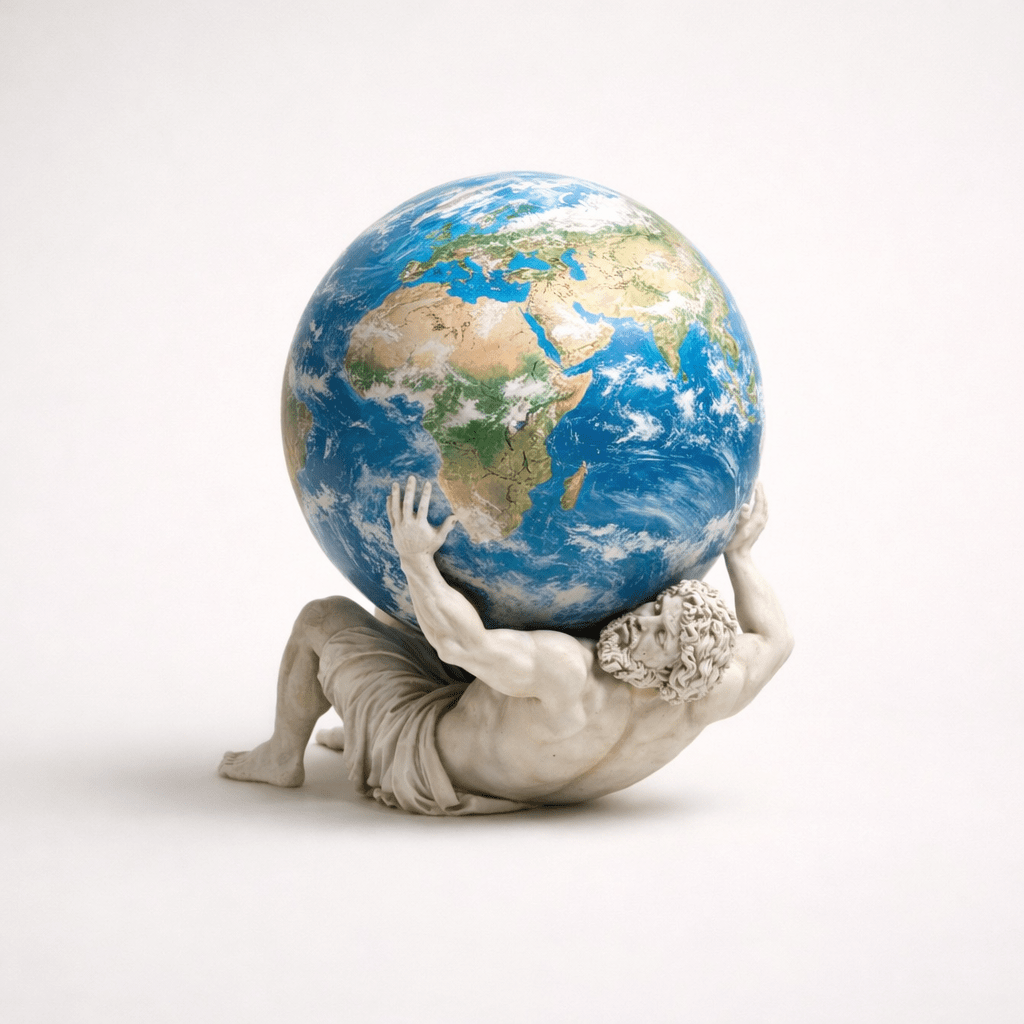
Some years ago, in Australia, inside a technology-adjacent company, (I observed) a senior staff member begin speaking as though the Rio Grande had somehow been relocated through the office carpet. “They will not get through our borders,” or some version of that small imported thunder. The statement was not merely political. It was geographical hallucination with a payroll number. America had become less a country than a broadcast condition, a portable emotional weather system, and this person had stepped under it with the happy certainty of someone mistaking reception for thought.
The interesting thing was not the policy position itself. Borders, migration, law, sovereignty, security: these are real matters, and serious people can argue over them without needing to dress up as prophets in a social media thunderstorm. The strangeness was the displacement. A symbolic machine built for one landscape had been downloaded into another nervous system on the other side of the planet. The trope had detached from soil, law, history, and consequence. It had become pure gesture: a little ideological toy soldier marching across a desk in Australia while dreaming it was defending Arizona.
This is how populist symbolism travels. It does not need understanding. Understanding is almost a liability. What it needs is rhythm, repetition, enemy-shape, threat-shape, belonging-shape. It enters the body before it enters judgment. The phrase arrives as posture, then as emotion, then as identity, and only later, if ever, as an idea. By that point the mind is already decorating the cage. The slogan has done its work. It has converted insecurity into certainty, drift into target, anxiety into moral costume.
Belief is rarely just belief. It is an abstraction people lash themselves to because the lashing feels like agency. The mast may be imaginary, the sea may be imported, the storm may be algorithmically manufactured, but the rope is real enough. It tightens in the nervous system. It gives the body a direction. It offers the cheap intoxication of participation in something large, even if that largeness is mostly noise wearing boots.
The darker possibility is that these games are not simply played by us. Language, symbolism, power, money, media, grievance, and identity form systems that move above and through us. We like to imagine ourselves as captains of opinion, but often we are only the wake. The ship has already passed. The turbulence curls behind it, and there we are, calling the foam our conviction.
So the office scene stays with me because it was not an aberration. It was a clean little diagram of modern belief: a person standing in one country, possessed by another country’s symbolic machinery, speaking with borrowed urgency about a border that was not theirs. Not stupidity exactly. Not even malice in any simple sense. Something stranger. A mind caught in the undertow of abstraction, mistaking the pull for principle, and calling the resulting dizziness significance, morality, politics.
Categories
The Abstract Political Intoxication of Populist Symbolism
Populist symbolism travels by detaching feeling from place, consequence, and thought, then giving borrowed socio-psychological anxiety the dissimulating smoke and mirrors of a theatrical political and identity performance.