Captain Fractal examines how political identities, media algorithms and institutional resistance to change reproduce conflict and instability.

Captain Fractal examines how political identities, media algorithms and institutional resistance to change reproduce conflict and instability.

Over coffee, Captain Fractal considers a civilisation whose communication systems increasingly reward the behaviours that undermine its survival. The machinery isn’t broken. That’s the problem.

From social media and human psychology to Gaia and cosmic self-regulation, an exploration of identity, feedback, emergence and the illusion of control.

Technology at scale preferentially industrialises the parts of human nature that are easiest to measure, repeat, monetise, automate, and weaponise. Those parts are rarely our best ones.
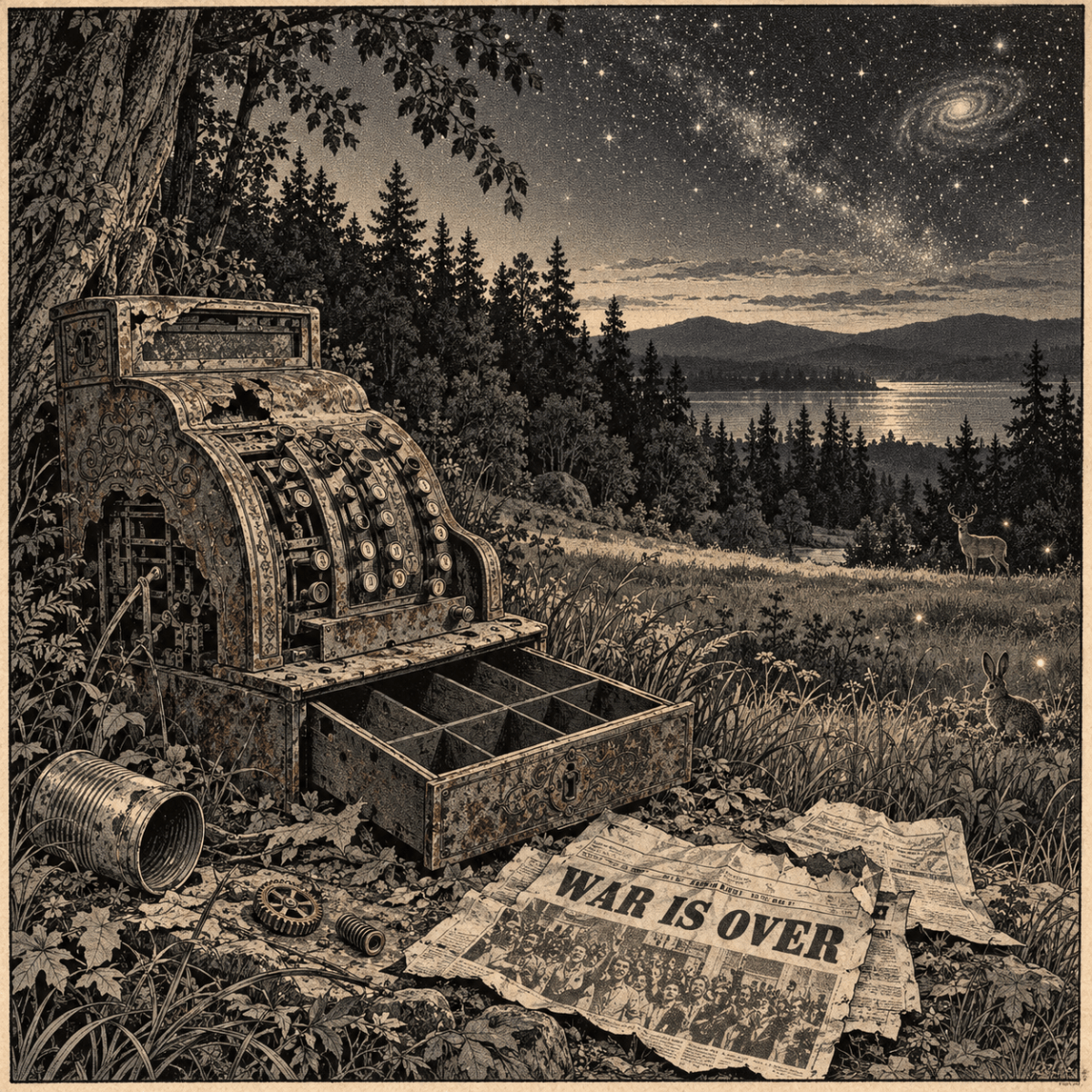
How engagement incentives, selective censorship and data extraction weaken cooperation, and why peace depends on changing what our communications systems reward.

Popularity is not a measure of significance. The economics of attention systematically rewards familiar ideas while disadvantaging those capable of changing how we think.

Europe’s unrest is sustained by a self-reproducing system of conflict in which opposing positions become mutually sustaining and unresolved grievances become politically and commercially valuable.

Populism may not need to be manufactured. An overwhelmed communication system already rewards simplification, antagonism and recurrence, while those best placed to change it profit from the resulting volatility.

Fascism does not begin with a dictator. It takes shape through recurrent patterns of threat, identity and authority, until a leader can occupy the position those patterns have made available.

The student walkout against One Nation points to a larger problem: the affective politics of cultivated antagonism that has become disconcertingly effective as a technologically-mediated, commercially-leveraged narrative system.

A civilisation increasingly governed by visibility mistakes popularity for substance.

This is the triumphal stagnancy of technological overreach: extraordinary technical acceleration coupled to an increasingly repetitive behavioural repertoire.
Have a WordPress.com account? Log in now.

