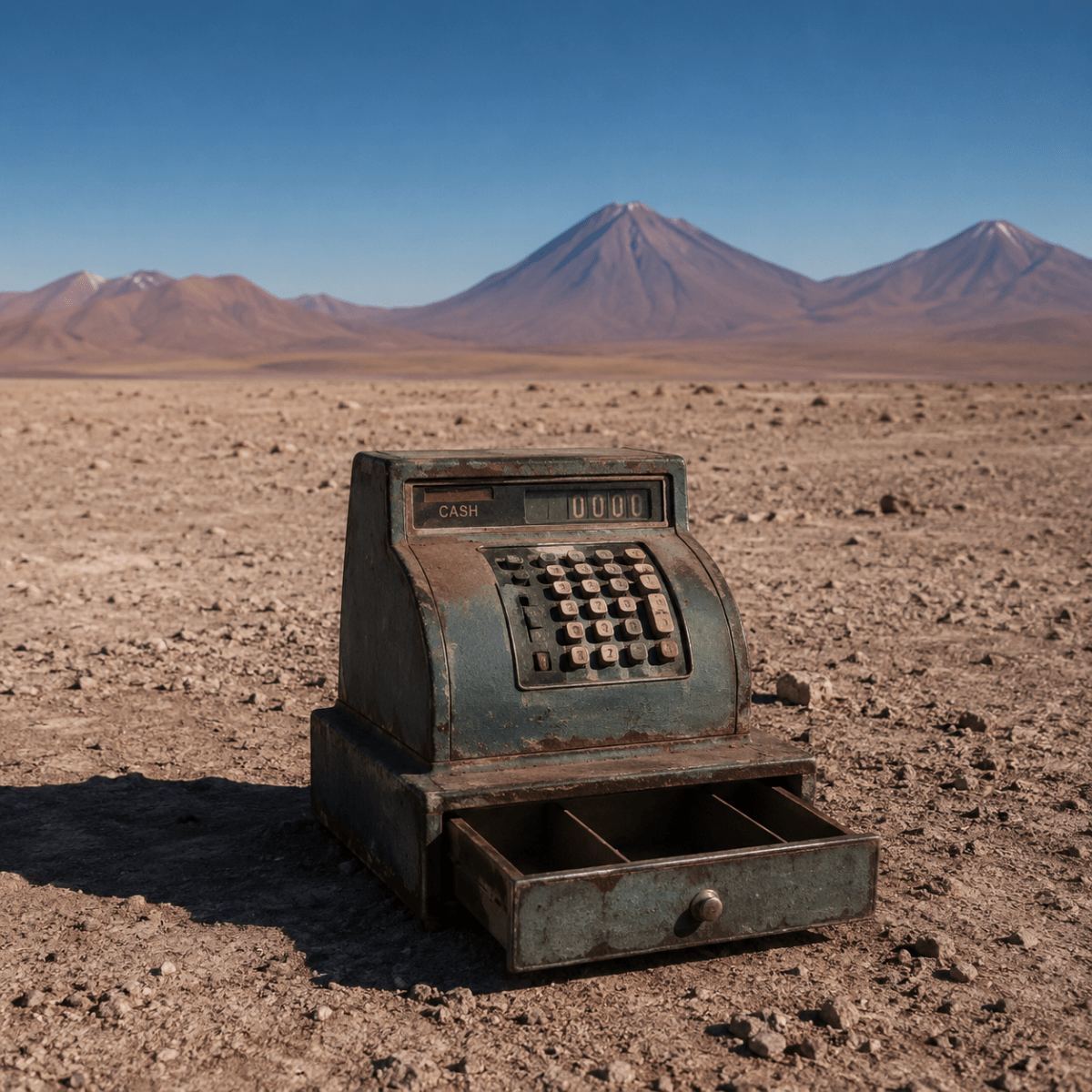
A tariff is usually understood as a cost imposed at a border. Yet borders are everywhere. Every organism, every organisation, every technology, every economy, and every civilisation maintains itself by exchanging energy, matter, information, labour, and resources with its surroundings. Those exchanges are never free. Every gain carries a cost. Every advantage incurs a liability. Every act of organisation shifts burdens somewhere else. The hidden tariff is simply the name we give to that inevitable accounting.
This is not merely an economic observation. It is a property of organised systems themselves. Physics permits no organisation without energy. Mathematics permits no structure without constraint. Logic permits no distinction without consequence. Wherever something persists by maintaining organised difference across time, there exists a corresponding cost. Sometimes that cost is paid immediately. More often it is deferred, displaced, diluted, or transferred beyond the apparent boundary of the system. The invoice never disappears. It merely changes address.
Climate change, housing, artificial intelligence, public health, migration, political corruption, financial instability, and information disorder appear to be different problems because our institutions divide them into different disciplines. Yet they are all invoices generated by the same underlying process. Organised systems persist by importing resources and exporting costs. The larger and more successful the organisation becomes, the more effectively it can defer, distribute, disguise, or externalise those costs. Eventually the invoice arrives.
This explains why so many modern crises seem to accelerate together. They are not independent failures occurring by coincidence. They are different expressions of the same organisational dynamics operating across different domains. Housing becomes a vehicle for wealth extraction rather than shelter. Food systems maximise efficiency while degrading soils and health. Artificial intelligence optimises communication while transforming the conditions under which communication itself occurs. Political systems increasingly reward influence over governance. Environmental systems absorb the accumulated costs of industrial civilisation. Each appears unique when viewed through the lens of a single discipline. Viewed together, they reveal the same recurring pattern.
For decades I have been developing a more general way of approaching problems such as these. The purpose has never been to replace existing disciplines or to construct yet another grand theory competing for attention. It has been to develop a framework capable of recognising when apparently unrelated problems are different manifestations of the same underlying organisation. Rather than beginning with categories such as economics, politics, technology, biology, or language, it begins with the relationships that allow organised systems to emerge, persist, and transform.
That perspective changes the questions we ask. Instead of asking why climate, economics, politics, technology, and culture are all becoming increasingly unstable, we can ask what organisational conditions generate instability across every one of those domains simultaneously. Instead of searching for isolated solutions to isolated problems, we can investigate the deeper dynamics from which they all emerge.
The aim is not to explain everything by reducing it to a single substance, force, or equation. It is to recognise that every persistent system, regardless of its material or scale, ultimately confronts the same condition: organisation is never free. Somewhere, somehow, the tariff is always paid.
Categories
pay the piper: hidden tariff
Every system sends the bill somewhere else until there’s nowhere left to send it.