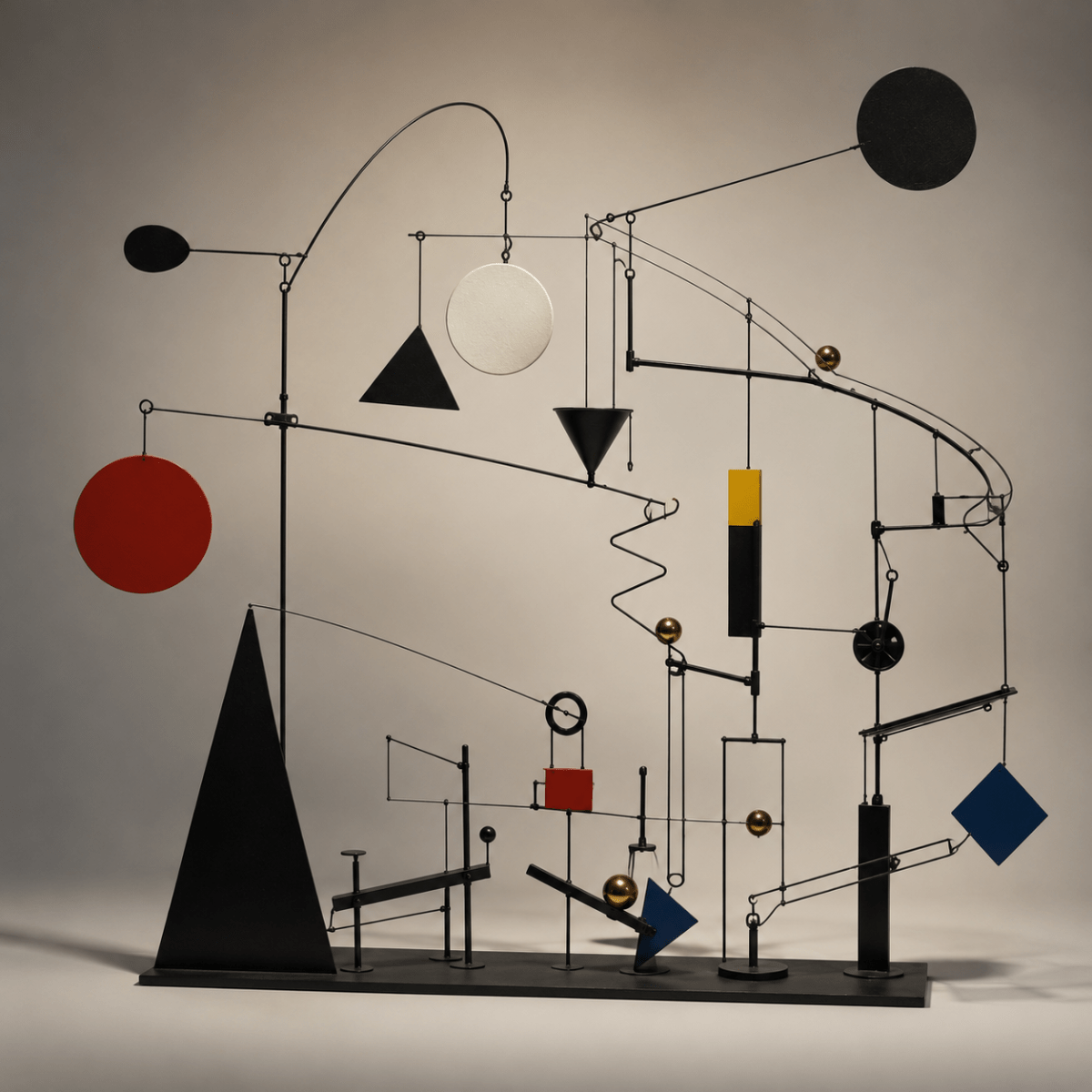
Every enduring structure, from a living cell to a civilisation, exists because it continually resolves the same underlying challenge: maintaining coherence while continually adapting to change. This is not achieved by resisting change, but by metabolising it. Stability is an active process rather than a static condition. What persists is not a fixed object but a continuing pattern of relationships that absorbs disturbance, transforms it, and incorporates the resulting consequences while preserving its defining organisation. Persistence is not the preservation of state, but the continual preservation of organisation through change.
No interaction is instantaneous. Every exchange of matter, energy, or information requires time to propagate through the medium that carries it. Different media differentially accelerate, attenuate, filter, and transform interactions as they propagate. The consequences of every interaction continue long after the initiating event, overlapping with the delayed consequences of countless others. Delay is not an imperfection imposed upon the system; it is the medium through which consequence becomes organisation.
As delayed consequences accumulate, they reinforce, attenuate, redirect, and sometimes cancel one another. The system continually encounters the consequences of its own previous activity, creating a self-interfering field distributed across both space and time. Persistent organisation appears as persistent timing: recurring patterns of relation through which coherence is continually reconstructed across multiple scales. This harmonic substructure is not a fixed rhythm but a continually regenerated distribution of temporal relationships. Its persistence lies in the stability of the relational pattern rather than the repetition of particular events. Present behaviour depends not simply on current conditions, but on the evolving spectrum of delayed interactions the system continually generates.
Delay is far more than latency. It is the interval during which consequence remains active, capable of interacting with subsequent events and modifying the conditions through which they propagate. A cell does not merely receive chemical signals; it responds across cascades of delayed reactions whose timing determines whether it repairs, divides, adapts, or dies. A market does not simply process prices; it absorbs expectations, rumours, shortages, debts, and policy changes at different speeds, producing behaviour shaped by consequences still arriving from earlier decisions. Every interaction alters the field encountered by those that follow. Cause and consequence cease to be cleanly separable, each becoming part of the evolving environment within which the other operates.
A further consequence follows. Metabolising change is, in effect, a continual transduction of entropy into organised persistence. Every successful adaptation binds the system more tightly to the relationships that made that adaptation possible. Persistence progressively converts interaction into dependency. These dependencies are not external additions to an otherwise complete entity; they become part of the conditions from which the entity continually emerges. The apparent unity of the system is an effective abstraction maintained by processes extending beyond its visible boundaries.
Seen this way, persistence is neither static nor local. It is the continual reorganisation of delayed consequences across a distributed field of interactions. Organisation is not merely distributed through space but through time. An enduring system is never wholly present. Part of what constitutes it is always distributed across consequences that have not yet finished propagating through the field. Its coherence is continually reconstructed as those consequences interfere, reinforce, and become the conditions for further organisation. A cell, an ecosystem, a market, a language, or a civilisation exists only while it can continually metabolise the consequences it generates. What appears to be a discrete object is better understood as a dynamically maintained coherence whose identity is continually constituted by relationships extending beyond itself and across time. Organisation is not merely constituted by those relationships; it is the temporary coherence those relationships achieve.
Categories
à plus tard
Enduring systems do not survive by resisting change, but by metabolising its consequences into temporary coherence.