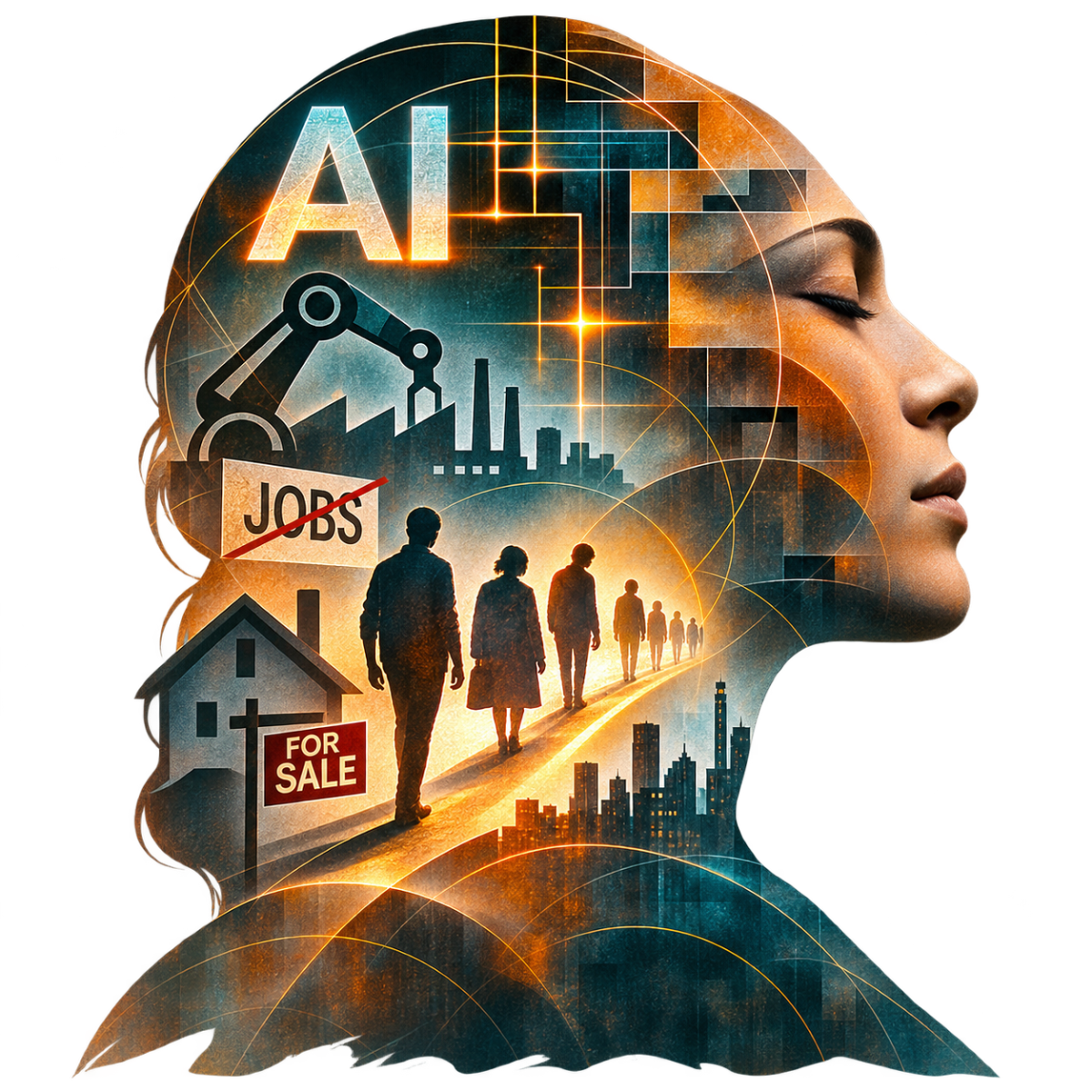
The economic cost of artificial intelligence is not simply measured in jobs displaced, wages suppressed or professions rendered obsolete. Every worker is also a consumer, borrower, taxpayer and participant in the wider reproduction of society. Remove their livelihood and the consequences propagate through families, housing, communities and institutions. Businesses pursue automation to reduce costs and increase productivity, yet collectively remain dependent upon the purchasing power and social stability their decisions progressively undermine. What appears rational within an individual enterprise becomes destructive when reproduced across an economy. The benefits accumulate selectively; the costs disperse through relations that neither the technology nor its commercial owners are particularly enthusiastic about sustaining. Efficiency, it seems, is considerably more attractive when somebody else pays for it.
The greater danger lies in the asymmetry between technological transformation and human adaptation. A corporation can eliminate hundreds of positions in weeks; rebuilding livelihoods, professional identities and communities takes years, assuming the opportunities still exist. Meanwhile, societies are expected to absorb the disruption through institutions already struggling with housing insecurity, inequality and diminishing economic participation. Productivity increases are celebrated as progress, while the human consequences are treated as unfortunate externalities, preferably somebody else’s. Yet an economy is not an independent machine producing wealth for its own amusement. It persists through the very people whose participation makes it possible. A civilisation that systematically eliminates the economic conditions of participation in pursuit of efficiency is not merely transforming work. It is dismantling the relations upon which its own prosperity depends.
Key Takeaways
- AI-driven efficiency redistributes costs throughout society.
- Local economic optimisation generates collective vulnerability.
- Technological displacement outpaces human and institutional adaptation.
- Productivity gains do not guarantee shared prosperity.
- Economic systems depend upon the participation they increasingly undermine.
Reference
ABC News (2026) ‘Australians lose jobs amid recession fears, some forced to sell homes’, 21 November. Available at: ABC News.

