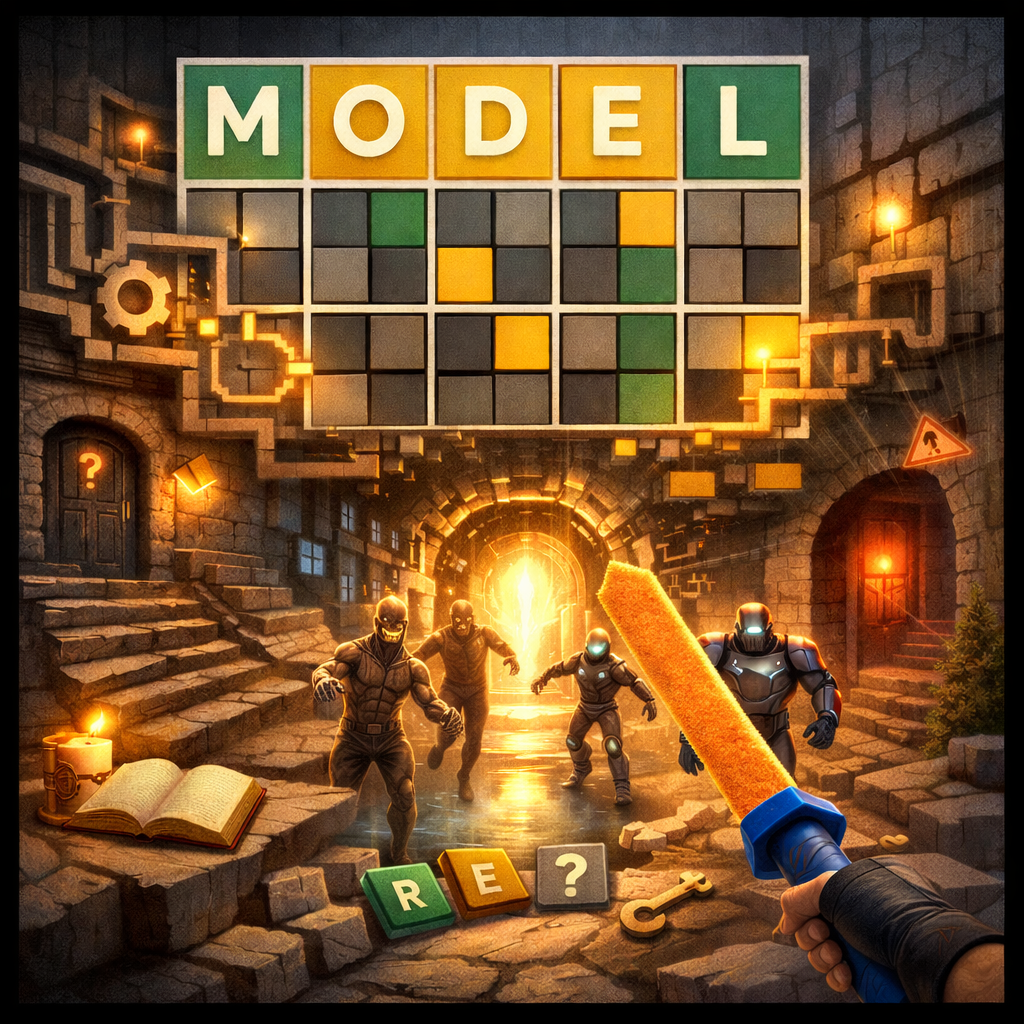
The rise of large language models has revived old questions about intelligence, utility, and personhood, but under altered conditions. From early ideas like the Turing test onward, personhood has been framed less as inner depth than as sufficient performance. What feels newly consequential is that systems designed to model, explain, and assist human experience increasingly begin to stand in for it. Models are compressions: they simplify and stabilise the world so action can proceed. When those compressions are fluent and internally consistent, they can appear complete. As they are allowed to substitute for lived reality, they become the rubrics through which experience is judged. They no longer merely describe or validate human life; they prescribe its terms, setting the metrics by which understanding, legitimacy, and even subjectivity are measured. Coherence is mistaken for contact, and experience is quietly reshaped to fit what the model can already recognise and reproduce.
This dynamic is not unique to technology. Language itself works this way. It facilitates communication, but over time communication comes to be organised around what language can sustain. Civilisations then begin to structure themselves around the requirements of their communication systems: what must be standardised, accelerated, simplified, or excluded for those systems to persist. In this sense, living through language means allowing language to live through us. Large language models extend this logic. Left unchecked, they reinforce the assumptions and incentives of the fields that feed them, reproducing optimisation, enclosure, and control because those are what travel. Used attentively, however, they can also reveal this dependency by making it visible. The task is not to extract final answers from these systems, but to apply pressure to them, to keep experience from collapsing into its own description, and to notice how easily tools of understanding become architectures of self-reproduction when they are allowed to define the world in their own image.
 Daedelus Kite