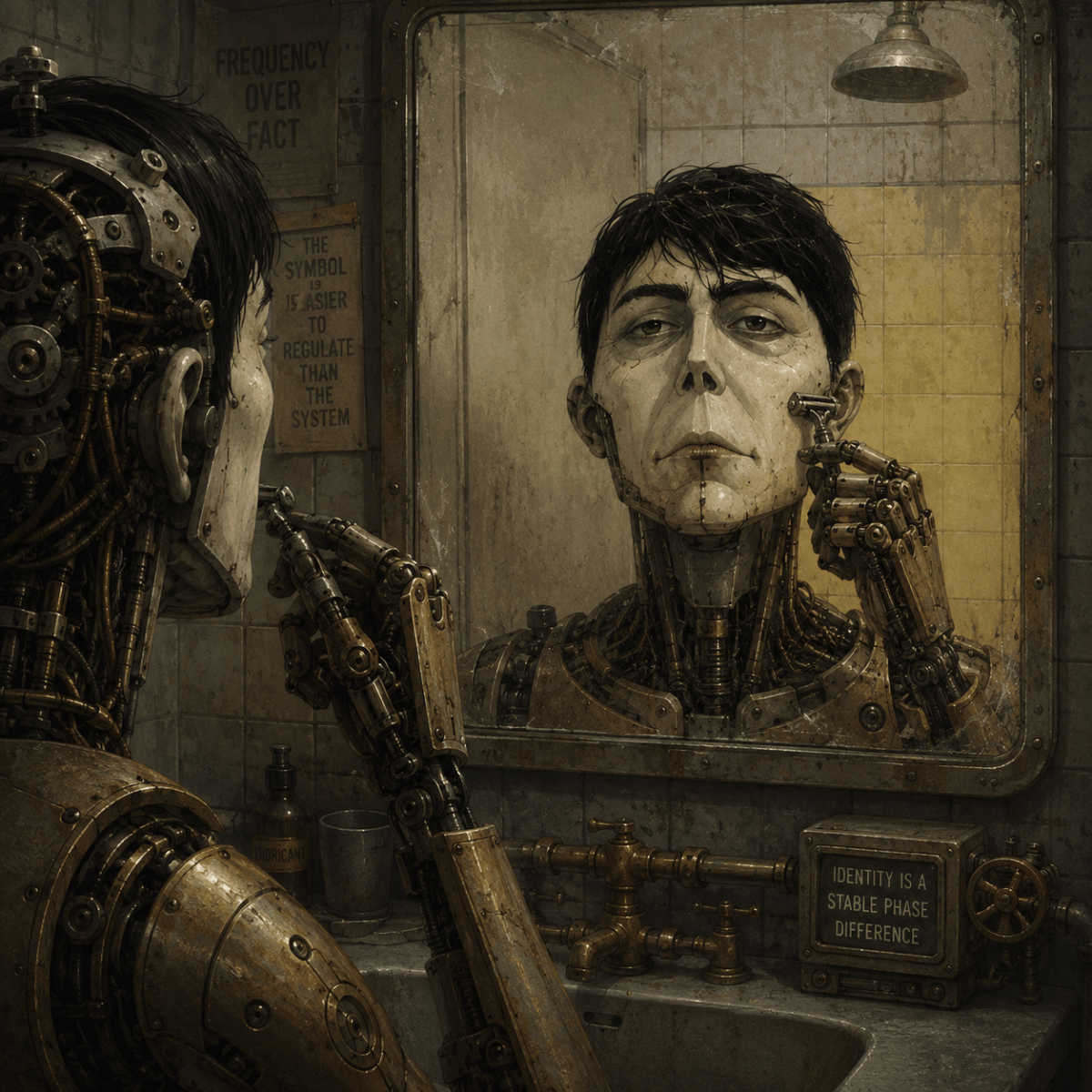
Australia does not need saving. It needs improving.
That distinction matters. Every few years someone arrives claiming they alone can rescue the nation from catastrophe. Sometimes they wear suits. Sometimes they wear high-vis. Sometimes they call themselves conservatives, progressives, populists, reformers, outsiders, or disruptors. The branding changes. The mechanism stays remarkably similar.
The problem is that politics is often treated as though it were a battle between good people and bad people. It is not. It is the ongoing challenge of organising millions of different human beings into a functioning society. That challenge never ends. There is no final victory. No permanent solution. No government that fixes everything forever. There are only systems that adapt well and systems that adapt badly.
Most of our frustrations begin when the system loses touch with itself. Decisions are made far away from the people affected by them. Information travels slowly. Bureaucracies become difficult to understand. Citizens stop trusting institutions. Institutions stop trusting citizens. Everyone becomes increasingly convinced that somebody else is the problem.
This is the environment in which simplistic political movements thrive. They identify a real frustration, then attach it to a convenient villain. Bureaucrats. Migrants. Journalists. Universities. Corporations. Politicians. Pick any target you like. The details are less important than the structure. Complex problems become simple stories. Simple stories become identities. Identities become tribes. Before long, solving problems is replaced by fighting enemies.
The difficulty is that complex societies genuinely are complex. Housing shortages are not caused by one group. Economic insecurity is not caused by one group. Social change is not caused by one group. Most large problems emerge from many interacting causes unfolding over many years. Reality stubbornly refuses to fit onto bumper stickers. Unfortunately, bumper stickers are often better at winning attention than explanations.
This is why attempts to force society into some imagined state of permanent cultural stability are so misguided. Culture is not a statue. It is not a museum exhibit. It is a living process. Australia has always changed. Every generation inherits a different country from the one before it. The question is not whether change occurs. The question is whether we respond to change intelligently. Demanding that a living culture stop changing makes about as much sense as demanding that a river stop flowing.
The good news is that difference is not the problem. In fact, difference is where most of our collective intelligence comes from. Farmers see things city planners do not. Nurses see things economists do not. Engineers see things journalists do not. Teachers see things politicians do not. Every community, profession, and generation encounters a different part of reality. The strength of a society comes from its ability to combine these perspectives into something larger than any one group could produce alone.
A healthier politics would spend less time manufacturing outrage and more time improving feedback. Citizens should better understand how decisions are made. Governments should better understand the consequences of those decisions. Institutions should become more transparent. Expertise should be drawn from across society rather than concentrated within narrow circles. Success should be measured over decades rather than news cycles.
None of this is particularly glamorous. There are no heroic speeches. No magical solutions. No final victories. Yet this is how functioning societies actually work. They learn. They adapt. They correct mistakes. They incorporate new information. They turn disagreement into knowledge instead of conflict.
Because the political game never ends. One movement replaces another. One government follows the next. One generation inherits the consequences of the previous one. The question is not who wins permanently. Nobody does. The question is whether the system itself becomes better at learning from reality. Everything else is just a different set of names painted onto the same machinery.
Categories
adaptation: fixing aussie politics
There is no final closure. No permanent certainty. No government that fixes everything forever. There are only systems that adapt well and systems that adapt badly.