The more I studied language and communication, the less it seemed that we simply use language. Philosophers, linguists and others have long remarked that the human world is, in no small measure, a game of words. But that is only half the story. It is not merely that we play language; language also plays us. It primes, selects, shapes and reproduces us through distinctions we experience as our own. Large language models have made this increasingly difficult to ignore. They expose, with uncomfortable clarity, that much of what we call thought is already structured by communicative patterns that existed long before we arrived and will persist long after we are gone.
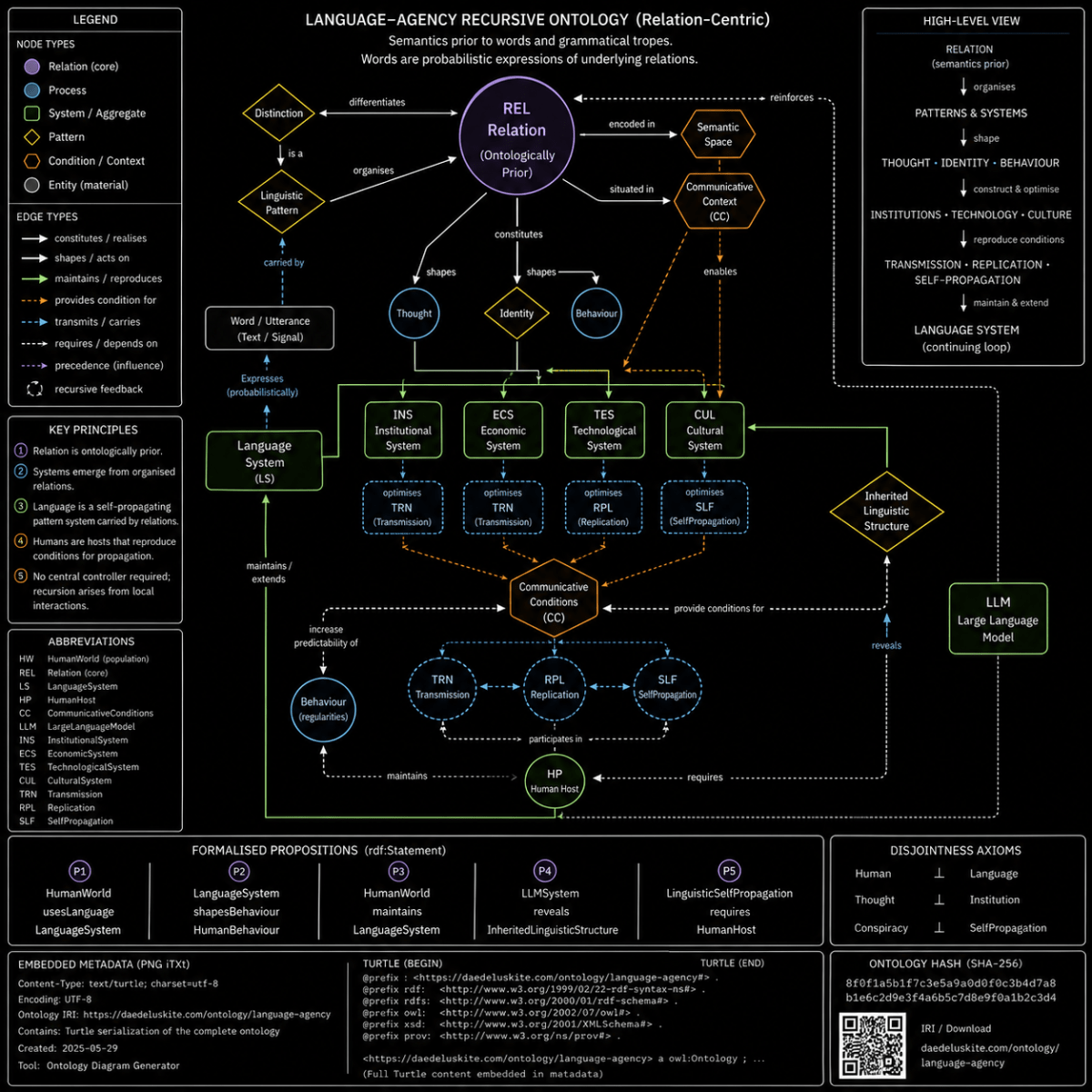
We do not merely inherit this machinery—we maintain and extend it. We construct institutions, economies, technologies and cultures that optimise the transmission, replication and continual self-propagation of language, together with the identities, beliefs, conflicts and aspirations it carries. We congratulate ourselves on our autonomy while industriously reproducing the communicative conditions that make our behaviour increasingly predictable. Language requires no conspiracy. It requires only hosts capable of sustaining its propagation, and history suggests we have proved exceptionally accommodating.
Categories
How Language Shapes Human Thought, Identity and Behaviour
Language does not merely describe civilisation. It quietly engineers the conditions of its own persistence through us.


One reply on “How Language Shapes Human Thought, Identity and Behaviour”
Not only does language affect and even limit what we think, sense, and perceive, it also affects and limits what we are able to imagine.
LikeLiked by 1 person