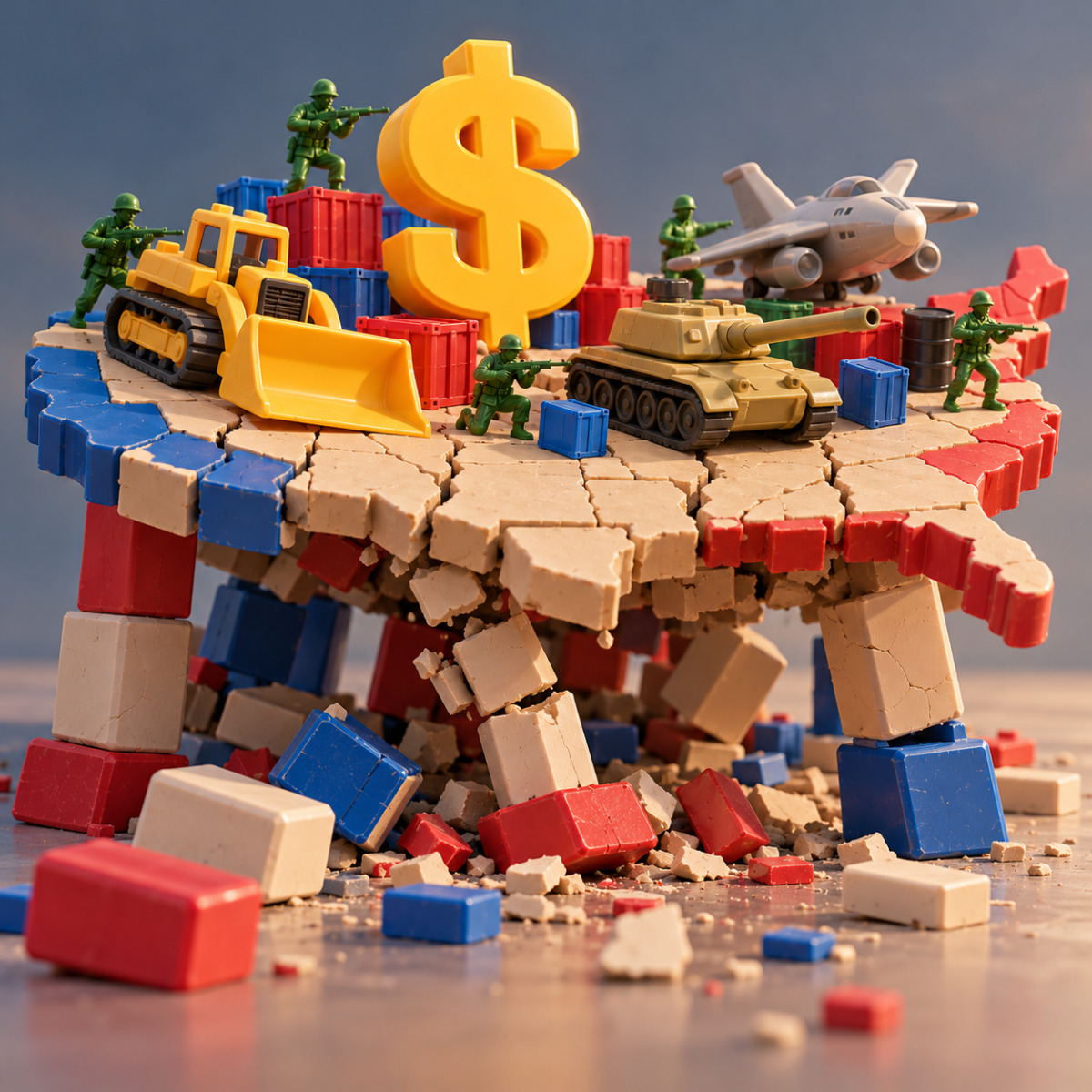
America did not become the world’s most powerful country through military strength and economic wealth alone. For eighty years, other countries have helped sustain its position by trading with it, investing in its economy, sharing intelligence, hosting military bases and cooperating with American institutions. In return, they received security, access to markets and other advantages. American power grew through these relationships. It cannot remain unchanged if those relationships deteriorate.
The current US administration appears to have a catastrophically inadequate understanding of what alliances, allegiances and international trust actually do. It treats relationships as transactions from which America should extract the greatest possible immediate advantage, without recognising that these relationships are themselves among the principal sources of American power. Alliances organise expectations, distribute risks and make collective security possible. Undermining them does not make America more independent. It destroys the conditions that allow American influence to extend across the world.
Donald Trump has accelerated this deterioration, although the problem extends beyond his presidency. American allies must now consider whether agreements will survive the next election, whether military support can be relied upon, and whether access to American technology might become a political bargaining chip. NATO, AUKUS and other alliances remain active. But their members increasingly have to prepare for the possibility that Washington will change its commitments whenever domestic politics demands it.
Trust does not mean friendship or shared political values. It means being able to make plans without constantly worrying that agreements will be overturned. When countries lose that confidence, they spend more protecting themselves. They seek alternative suppliers, develop independent military capabilities and strengthen relationships with other partners. These changes cost money, but they also reduce dependence upon America.
This process is already underway for reasons extending beyond American politics. European countries have discussed greater defence independence for decades. China’s economic expansion has altered global trade, while the pandemic exposed vulnerabilities in international supply chains. American unpredictability adds another reason to diversify. Once countries invest in new industries, defence capabilities and institutions, those alternatives become easier to maintain. Even if Washington restores confidence, the world will not simply return to its previous arrangements.
The November 2026 midterm elections could become an important turning point. A result that strengthens congressional oversight could reassure allies that American institutions can constrain unpredictable decisions. Further political instability could have the opposite effect. Countries already reconsidering their dependence upon America may reach similar decisions at roughly the same time. Changes developing gradually over years could suddenly accelerate as governments revise their expectations about America’s future.
The cost to America is considerable. Its military operations depend partly upon foreign bases, intelligence sharing and allied cooperation. Its financial influence benefits from international confidence in the dollar and American markets. Its technological strength depends upon international research, manufacturing and trade. If cooperation weakens, America must spend more, offer better terms or accept less influence. Military strength cannot automatically replace willing participation.
There is also a dangerous political cycle. When American leaders find other countries becoming less cooperative, they can respond with tariffs, sanctions and threats. These measures sometimes secure immediate concessions, but repeated pressure encourages governments to reduce their exposure. Washington can interpret that independence as hostility and apply further pressure. Each response strengthens the circumstances producing the next. America can appear to be winning individual disputes while making its overall position weaker.
Will this make Americans poorer? Potentially, yes. America will remain wealthy, but maintaining its international position could become increasingly expensive while its economic advantages diminish. Higher costs, disrupted trade and reduced investment opportunities could affect employment, public finances and living standards. Those consequences will not be distributed equally. Americans already struggling with poverty, housing and healthcare have less capacity to absorb additional hardship. Wealthy interests, meanwhile, can sometimes profit from the instability.
The domestic consequences also return to the international system. Economic insecurity encourages political resentment and demands for immediate solutions. Governments responding to those pressures can become more unpredictable, further weakening international confidence. International instability feeds domestic instability, which then reinforces international instability. The problems become mutually sustaining.
None of this makes American decline inevitable. Its alliances remain extensive, and other countries cannot easily replace its military, financial or technological capabilities. But they do not have to abandon America completely to reduce its influence. They only have to become less dependent upon it.
America’s greatest danger is not that it will suddenly lose its wealth or military power. It is that other countries will learn to prosper and protect themselves without relying upon it.
The administration appears to be confusing the ability to impose demands with the ability to sustain influence. That is an extraordinarily dangerous misunderstanding for a country upon which so much of the world’s security still depends.
A superpower does not have to be defeated to diminish itself. Sometimes it can simply make itself too unreliable to remain indispensable.
Key Takeaways
- American power depends upon international cooperation, not simply military and economic strength.
- Undermining trust encourages allies to reduce their dependence upon America.
- Alternative partnerships become harder to reverse once established.
- The November 2026 midterms could accelerate changes already underway.
- The economic and security costs could fall disproportionately upon ordinary Americans.
- America can remain powerful while destroying the relationships that sustain its influence.


One reply on “The Cost of Squandering a Superpower”
I have considerable empathy for the people of America, the majority of whom I believe are decent people caught in circumstances they neither created nor deserve. For all the greed, corporate skulduggery and political opportunism involved, America appears to be losing an information war against its adversaries, and information warfare is now central to modern conflict, shaping not only what people believe but how societies organise, divide and ultimately undermine themselves.
LikeLike