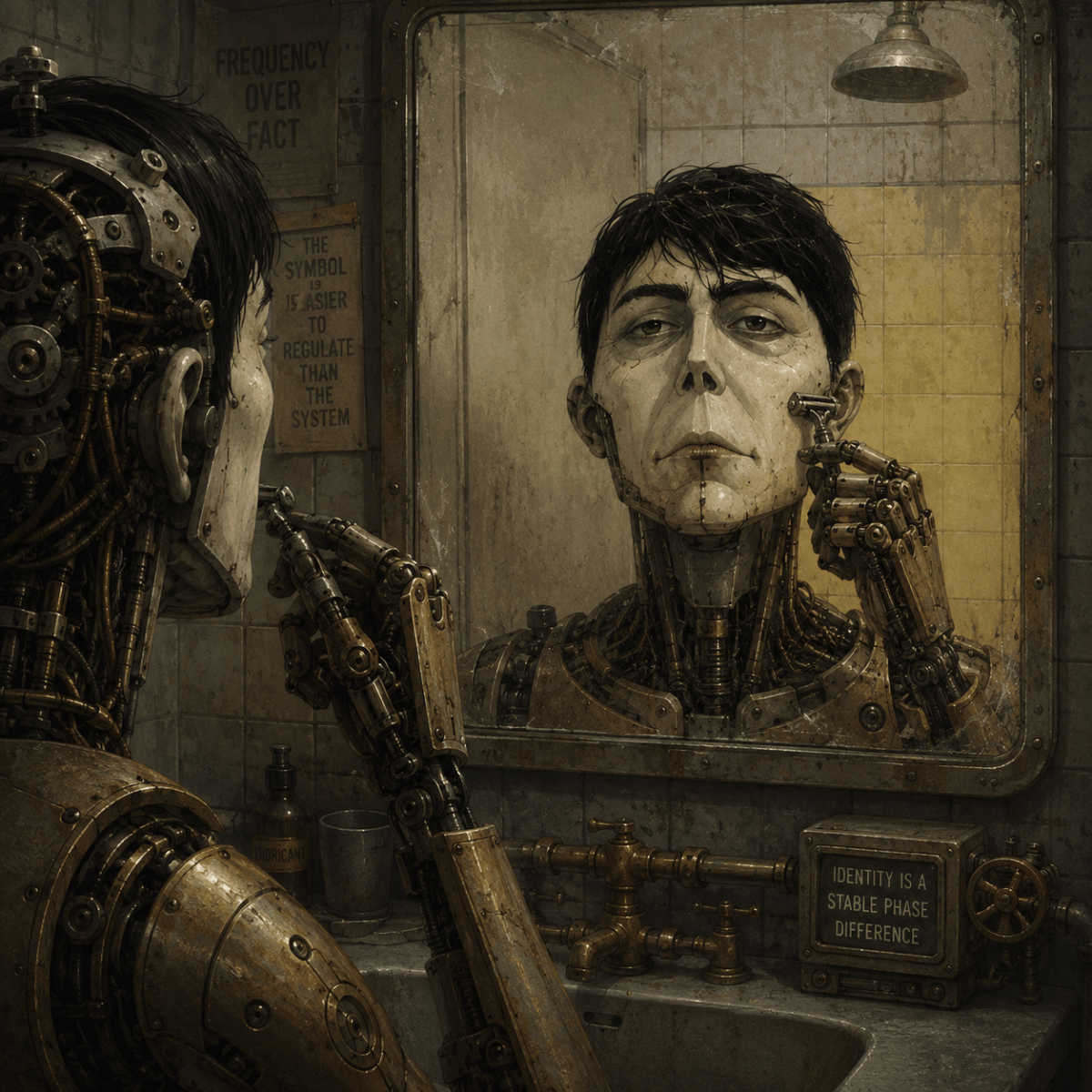
Political and economic systems rarely define themselves in isolation. They define themselves against an opposing story. Capitalism has long relied upon communism as its principal foil: a narrative against which it presents itself as synonymous with freedom, prosperity and individual agency. The historical arguments matter. The more revealing question is what happens when a system begins reproducing, through different mechanisms, the very conditions it claims to oppose.
Warnings that an alternative system will take your wealth, limit your choices, centralise power or subordinate the individual to a larger structure are rhetorically powerful because they appeal to genuine human concerns. Those same outcomes emerge within capitalist societies whenever wealth, ownership and institutional influence become sufficiently concentrated. The mechanisms differ. The structural dynamics do not. Freedom becomes increasingly dependent upon purchasing power. Access depends upon ownership. Decision-making concentrates. Opportunity narrows. Participation becomes conditional rather than universal.
The irony is that the opposing ideology becomes indispensable. It provides the language through which a system recognises its own virtues while rendering its own failures progressively less visible. The external enemy becomes a mirror in which internal contradictions disappear. The more completely the alternative is dismissed, the less readily a society recognises itself in the reflection. The critique becomes so focused upon another system that it ceases to recognise analogous patterns emerging within its own.
This is not an argument for communism. It is an argument against defining any political or economic system primarily through opposition to another. Every persistent system tends to reproduce the relations through which it preserves itself. Over time, those relations can converge upon the very dynamics once denounced under different names. The relevant question is not which ideology claims the moral high ground. It is whether the relations through which power, resources and opportunity are organised remain capable of sustaining a free, adaptive and enduring civilisation.
Categories
political economy: the enemy in the mirror
Much of what capitalism conditions us to fear in communism is what concentrated capitalism already does: centralise power, narrow freedom, restrict opportunity and preserve poverty as structural necessity.