Our political and commercial systems profit from the crises they perpetuate, rendering meaningful dissent unintelligible and civilisational failure commercially indispensable.

Our political and commercial systems profit from the crises they perpetuate, rendering meaningful dissent unintelligible and civilisational failure commercially indispensable.
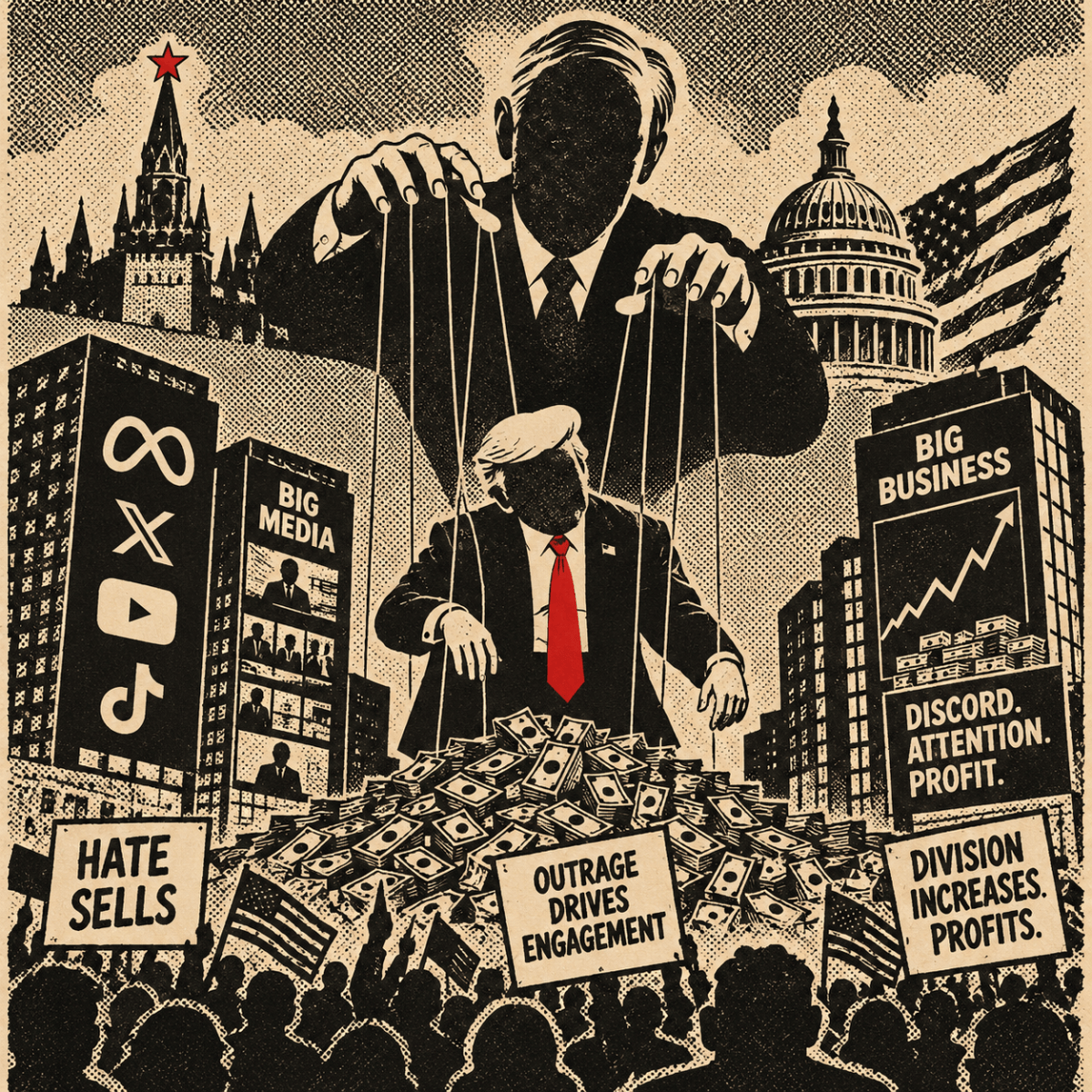
The Soviet Union collapsed, capitalism declared victory, and everyone went shopping. Now political instability is a profitable industry, foreign adversaries exploit the machinery, and the race to the bottom has become self-financing.

Technology at scale preferentially industrialises the parts of human nature that are easiest to measure, repeat, monetise, automate, and weaponise. Those parts are rarely our best ones.

The problem is not capitalism or competition, but the concentration of wealth and power that progressively undermines the conditions through which meaningful competition, economic freedom and social resilience remain possible.

When controversy becomes politically and commercially valuable, incompetence ceases to be merely a failure. Trump’s administration reveals how conflict reproduces authority, even at the expense of human dignity.

We have constructed a civilisation in which recognising existential risk has become another reason to continue producing it.

Much of what capitalism conditions us to fear in communism is what concentrated capitalism already does: centralise power, narrow freedom, restrict opportunity and preserve poverty as structural necessity.

The greatest trick concentrated capitalism ever pulled was convincing the world that its own most destructive tendencies belonged exclusively to communism.
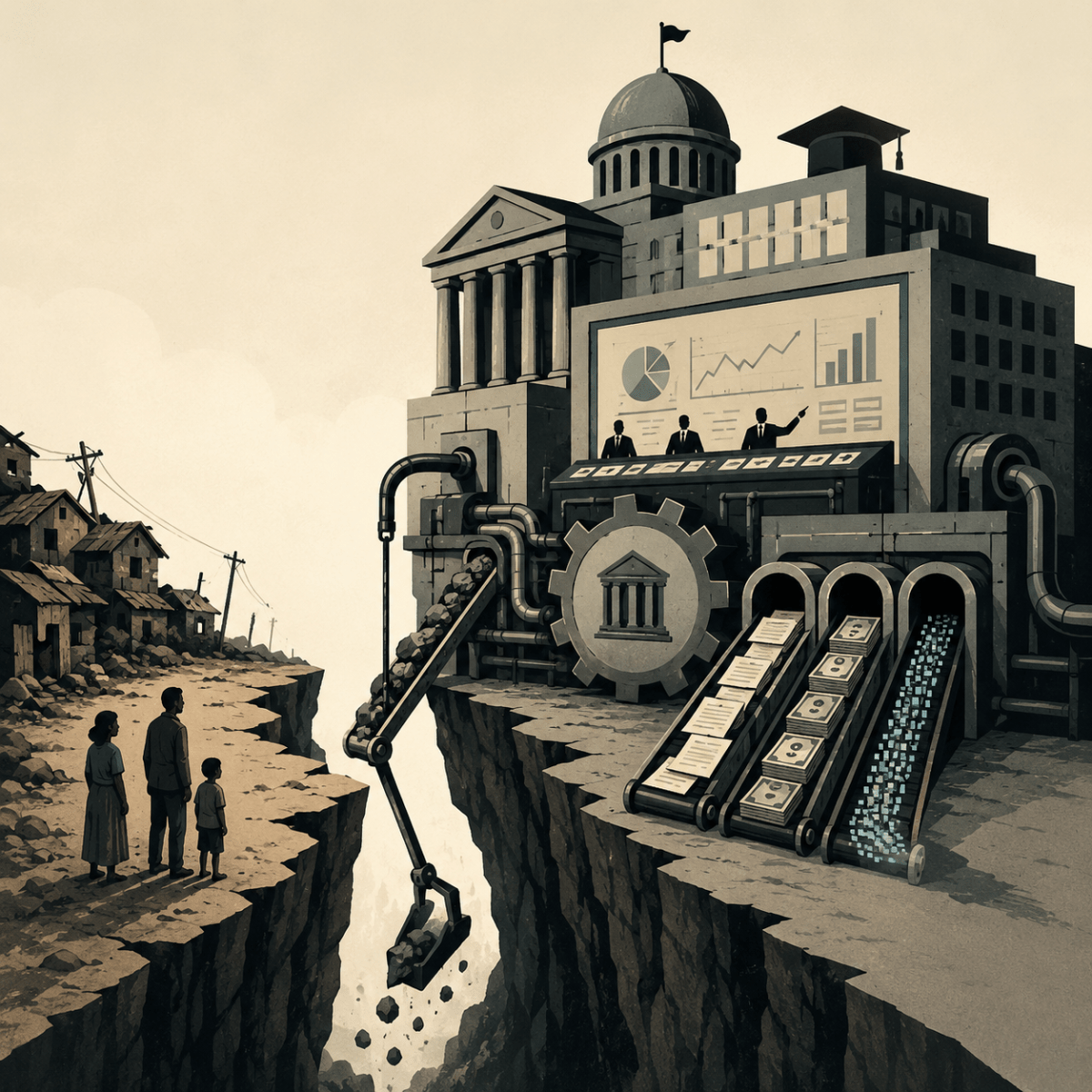
The institutions assigned to solve our deepest problems are sustained by these, the very relations they are unable and/or unwilling to question.

Capitalism does not distribute abundance. It sustains value by distributing differential (as inequitable) access.
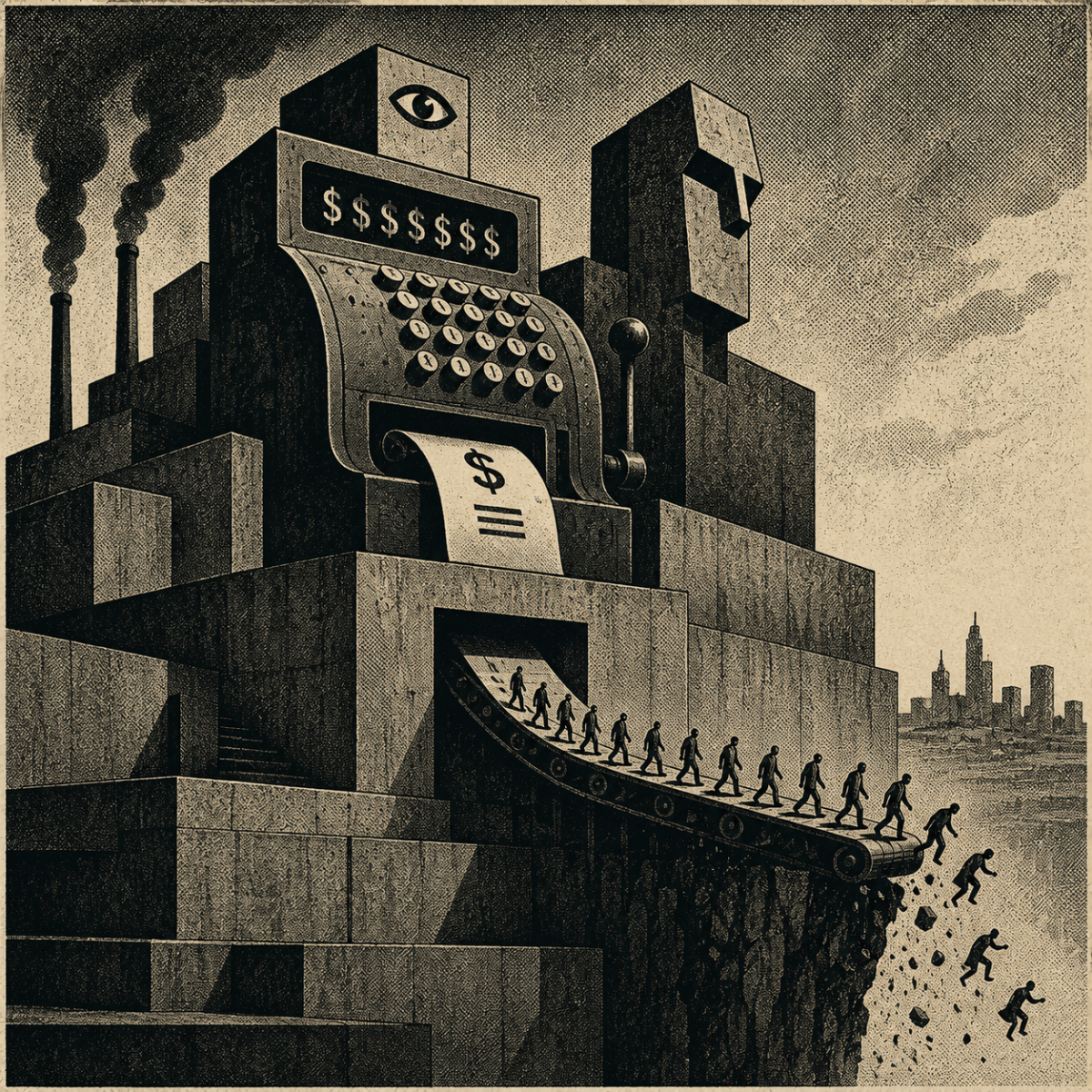
A civilisation organised around limitless acquisition on a finite planet turns systemic collapse into a KPI.

Extreme wealth is not proof of independence. The billionaire appears to stand above society, but in reality stands upon it.
Have a WordPress.com account? Log in now.

