I have written about One Nation repeatedly over the past year, less to argue against a particular political party than to understand the conditions making this kind of politics increasingly effective. The central problem is remarkably simple: a nation cannot be unified by dividing a people against themselves. Populism can generate political coherence through grievance, simplification and the identification of internal adversaries, but the stronger those divisions become, the more difficult genuine national cohesion becomes. Wealth and power matter because they can shape media environments and, through them, public attention and opinion. Cui bono can be asked without naming names: who gains influence, leverage or insulation when complicated social problems are repeatedly reorganised into simple antagonisms?
There is nothing unreasonable about wanting simpler, more accountable government. But Australia itself is not simple, and governing complex systems requires people capable of thinking beyond slogans, binaries and convenient explanations. If this is where Australian politics is going, then I hope sufficiently broad-thinking, capable and intellectually curious people find their way into One Nation as its influence grows. Democracy requires disagreement without turning the population into mutually hostile camps. If One Nation is to become an important part of Australia’s political future, I hope it eventually takes its own name seriously. One nation cannot be built by dividing a people against themselves.
Related writing
1. “Barnaby’s Choice — 8 Dec 2025” — Joyce, One Nation and the competitive advantage of political simplicity.
2. “One Nation, Australia: Contagion Dynamics — 15 Feb 2026” — One Nation examined through repetition, synchronisation, exclusion and communicative contagion.
3. “One Nation, One Idea: Immigration Insecurity in Australia — 22 Mar 2026” — Migration as a simple explanatory container for interacting problems of housing, infrastructure, labour and insecurity.
4. “Angus Taylor’s Immigration Turn: When Populism Borrows the Machinery of the State — 27 Apr 2026” — How populist simplification can migrate from political rhetoric into mainstream institutional power.
5. “One Nation: a Populist Cul-de-Sac of Good Intentions — 14 May 2026” — How a narrow political vocabulary can progressively constrain the range of problems a movement is capable of describing.
6. “one nation: grievance politics surge down under — 1 Jun 2026” — One Nation considered within the international propagation of grievance politics.
7. “techno-populism aggressively consumes our collective future — 8 Jun 2026” — Populism as an emergent consequence of technological systems that preferentially amplify simple, emotionally powerful signals.
8. “big money, small ideas: power corrupts politics — 10 Jun 2026” — Wealth, influence and the widening discrepancy between social complexity and political explanation.
9. “populist capture: one nation — 10 Jun 2026” — Insecurity and information overload reorganised into coherent narratives of nationalism, grievance and blame.
10. “political theatre — 12 Jun 2026” — Political fundraising, social priorities and the allocation of attention and resources.
11. “populism, unmasked — 14 Jun 2026” — Populism treated as a phase dynamic capable of synchronising otherwise separate forms of insecurity and dissatisfaction.
12. “power without responsibility: political incompetency down under — 15 Jun 2026” — Influence and political attention considered against responsibility for their systemic consequences.
13. “one notion politics — 15 Jun 2026” — The conversion of difficult national systems into politically useful but administratively inadequate simplifications.
14. “please explain: xenophobia — 18 Jun 2026” — Cultural uncertainty and vulnerability reorganised into political antagonism.
15. “political speed-dating down under: the golden bulldozer — 20 Jun 2026” — Wealth, One Nation and the international portability of contemporary populist political techniques.
16. “populism down under — 21 Jun 2026” — Populism as cognitive economy: difficult causal structures replaced by immediately intelligible explanations.
17. “finger-painting australia into an ideological corner: populism — 23 Jun 2026” — The distinction between recognising genuine institutional failures and correctly understanding their causes.
18. “conflict, continuity, complexity — 4 Jul 2026” — Political coherence generated through durable adversarial distinctions between an imagined “us” and “them.”
19. “how wealthy sponsors reshape populist politics — 21 Jul 2026” — How relationships with concentrated wealth can progressively reshape the organisations that depend upon them.
Categories
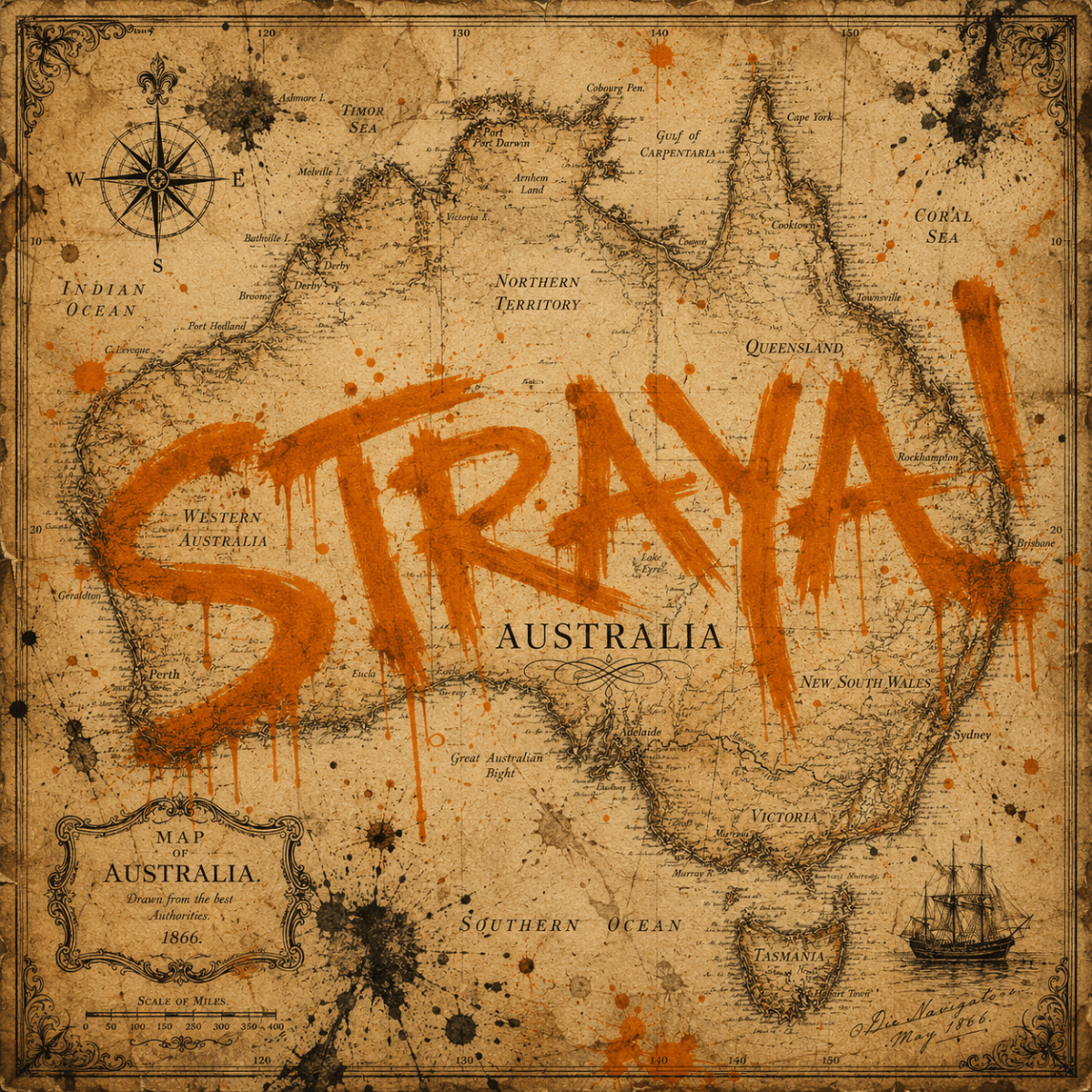
One Nation: A Note on Unity, Division and Australia
A nation cannot be unified by dividing a people against themselves. The danger begins when that contradiction becomes a political method.


One reply on “One Nation: A Note on Unity, Division and Australia”
Your political choices are largely, if not exclusively, your own. At this point, One Nation still resembles the gullible selfishness of poorly informed intuition, packaged, presented and propagated through technologically mediated communication systems whose profitability rises with the volatility, confusion and antagonism of their users, and with the political attractors that form within those conditions. Again, your politics are your choice, but it is worth asking whether that choice is being made with sufficient awareness of where this movement has come from, what it actually believes, and where, in all likelihood, it would take Australia. At present, One Nation often resembles a kindergarten pantomime of a political party: simplified roles, obvious villains, rehearsed lines and little room for complexity. That it is popular does not contradict this description. It may help explain it.
LikeLike