Technology at scale preferentially industrialises the parts of human nature that are easiest to measure, repeat, monetise, automate, and weaponise. Those parts are rarely our best ones.

Technology at scale preferentially industrialises the parts of human nature that are easiest to measure, repeat, monetise, automate, and weaponise. Those parts are rarely our best ones.

A protest becomes something different when separate grievances begin moving at the same time. France offers a glimpse of how synchronisation amplifies communicative affect.

Populism may not need to be manufactured. An overwhelmed communication system already rewards simplification, antagonism and recurrence, while those best placed to change it profit from the resulting volatility.

Nobody needs to control the machinery. Repeated communication changes what people notice, expect and respond to, gradually reshaping the culture and politics that emerge from those interactions.
Fascism does not begin with a dictator. It takes shape through recurrent patterns of threat, identity and authority, until a leader can occupy the position those patterns have made available.
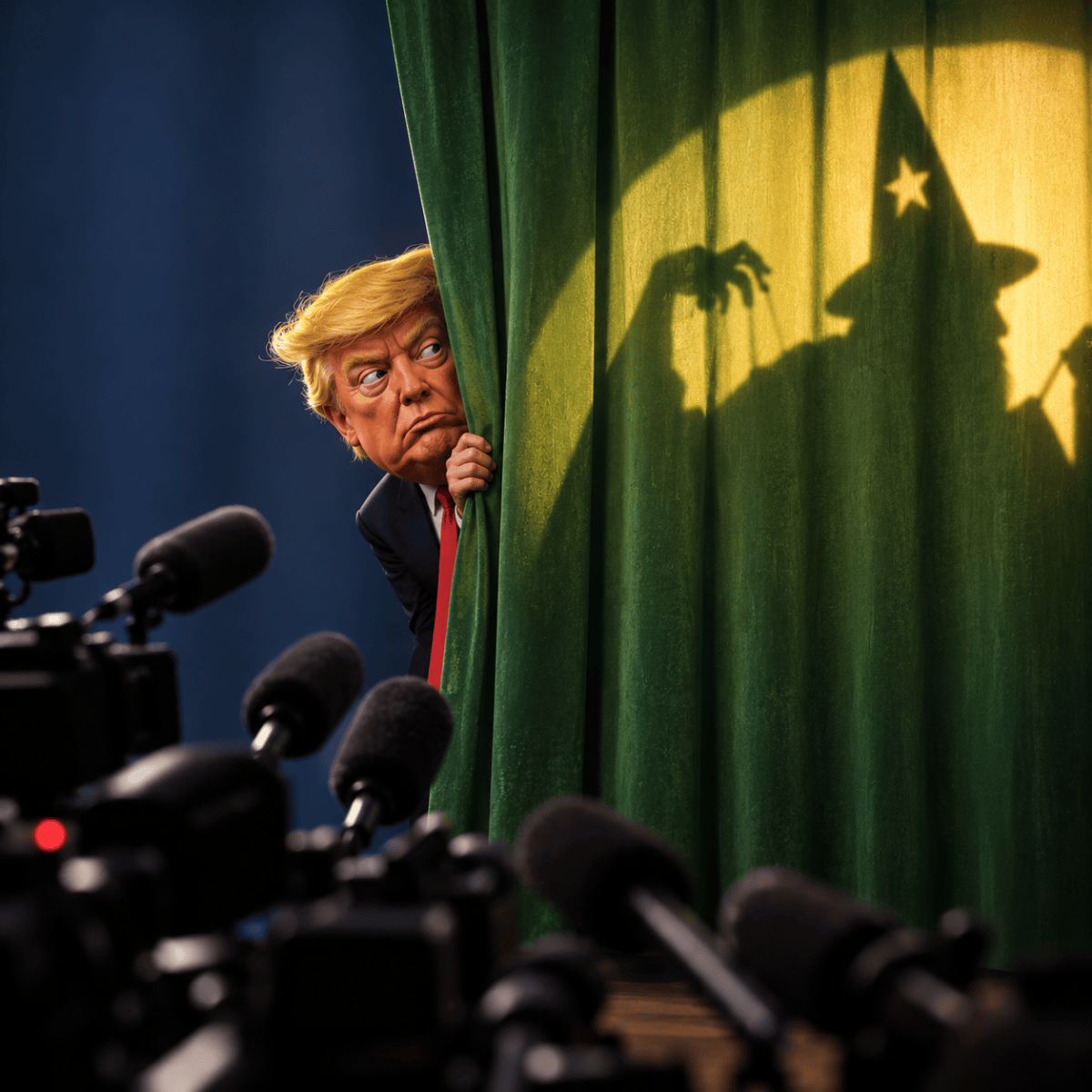
Trump depends upon the opposing media he seeks to exclude. Its opposition generates the conflict through which his political identity acquires force. The wizard needs the curtain, but he also needs someone on the other side insisting that we look behind it.

The student walkout against One Nation points to a larger problem: the affective politics of cultivated antagonism that has become disconcertingly effective as a technologically-mediated, commercially-leveraged narrative system.

We keep telling the same stories in different ways. The faces, crises and characters change. The same tribal pattern keeps finding new forms.
At the limit lies bullshit: language sufficiently detached from external constraint that its capacity to provoke another cycle of response becomes more important than what it describes.

A nation cannot be unified by dividing a people against themselves. The danger begins when that contradiction becomes a political method.

Technocratic complexity and populist caricature are parts of the same feedback loop. Each produces the conditions that sustain the other.
01-DD
Have a WordPress.com account? Log in now.

