We have developed the peculiar habit of treating extreme wealth as evidence of extraordinary human worth. Billionaires become visionaries, entrepreneurs become titans, and the people who accumulate the greatest fortunes are celebrated as though they have personally dragged civilisation into the future. Their opinions are solicited on everything from education to geopolitics, often with remarkably little concern for whether they know anything about either. Apparently, having an enormous amount of money qualifies you to explain the human condition.
The language is revealing. Tech titans. Industry leaders. Masters of innovation. These are not neutral descriptions. They are expressions of deference, part of a culture that confuses economic power with intellectual authority and commercial success with social contribution. We have built an elaborate mythology around people who are, in the end, just people. As Chopper Read put it, another bare bum in the shower. Wealth does not confer wisdom, moral superiority or some exceptional understanding of the world.
Nor have these celebrated individuals single-handedly created the technologies and industries attributed to them. Behind every billionaire stands an enormous accumulation of human labour, public investment, scientific knowledge, institutional infrastructure and historical opportunity. Engineers, researchers, technicians, administrators, cleaners, logistics workers and countless others make these enterprises possible. Much of the underlying knowledge was developed through publicly funded research over generations. Yet the mythology concentrates achievement at the top, while the people whose work actually sustains the enterprise become interchangeable costs to be minimised. The financial rewards are distributed rather differently from the credit.
There is a deeper problem here. Wealth is not simply accumulated within an economic system. Once concentrated, it changes the conditions under which further wealth and influence can accumulate. Money purchases visibility, political access, favourable arrangements and control over the infrastructure on which others increasingly depend. That influence generates further opportunities for accumulation. The process becomes self-reinforcing, and eventually we begin mistaking the consequences of concentrated power for evidence that its possessors deserve it. The mythology helps reproduce the conditions that make the mythology plausible.
Technology intensifies this arrangement. Our ordinary activities generate information, transactions, dependencies and increasingly unavoidable demands for further participation. Even inconvenience becomes productive. Every obstacle creates another interaction, another opportunity to extract value, another reason to remain within the machinery. We are encouraged to admire the people who own these systems while overlooking the extraordinary collective effort that sustains them and the growing difficulty of living outside them. The supposed genius of the individual obscures the systemic organisation of the whole.
None of this requires billionaires to be uniquely malicious, nor does it deny that some individuals make substantial contributions. The problem is the extraordinary asymmetry between contribution, reward and authority. We have allowed the possession of wealth to become a substitute for examining how wealth is produced, who produces it, who benefits, and what the resulting concentration of power does to everyone else.
Perhaps the most ridiculous part is how willingly we participate in the worship. We repeat the heroic stories, adopt the language of greatness, and treat the accumulation of private fortunes as though it were a public achievement in itself. Meanwhile, the people who actually make the world work remain largely invisible.
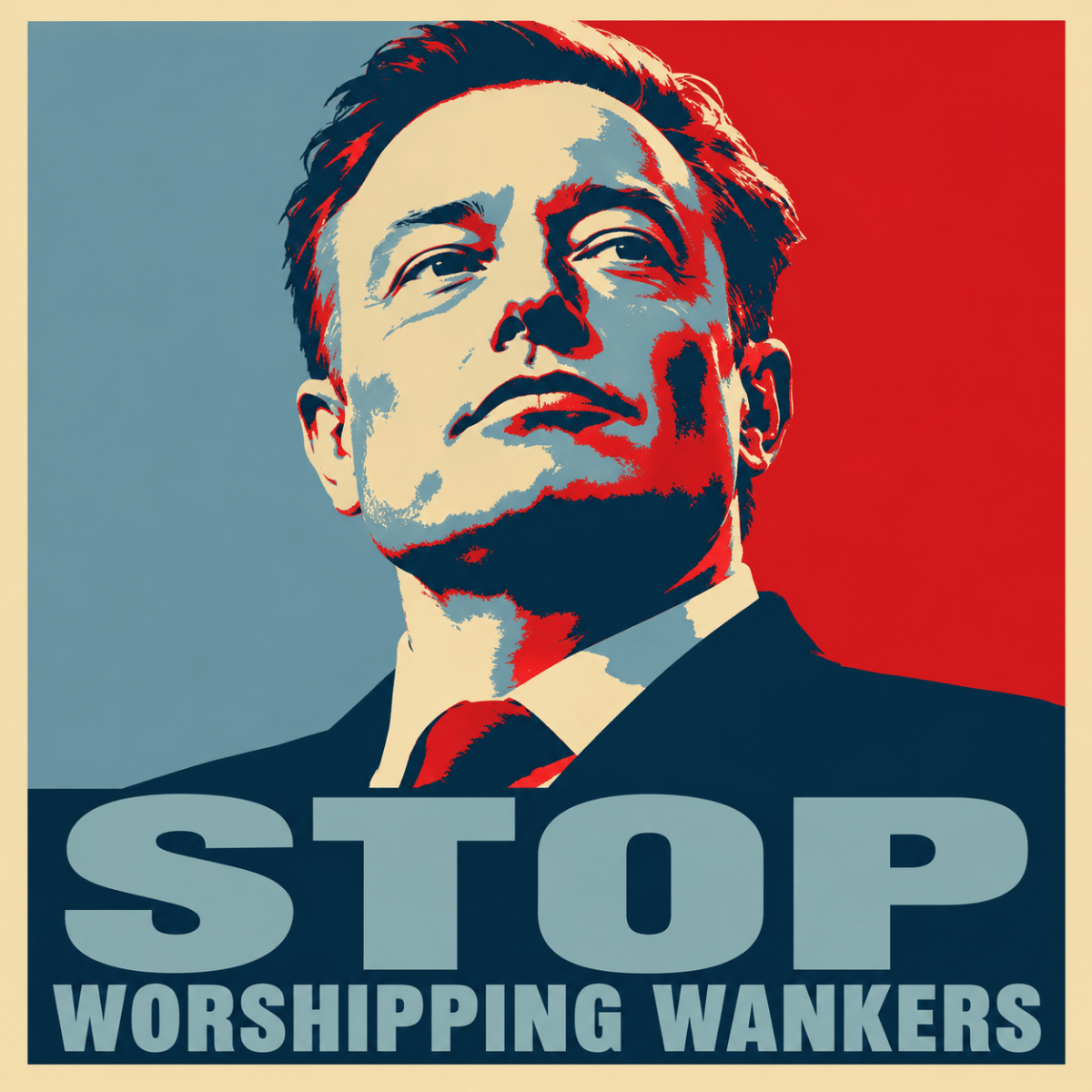
Stop worshipping wankers. They’re not gods, they’re not titans, and they’re certainly not responsible for everything humanity has accomplished. They’re just people who have acquired an extraordinary claim upon the work of other people.
And that is something we ought to examine, rather than applaud.
Categories
Stop Worshipping Wankers: Wealth, Power and the Myth of Genius
We mistake extreme wealth for extraordinary human worth, celebrating billionaires as visionaries while overlooking the collective labour, public investment and institutional power behind their fortunes. It’s time to stop confusing wealth with wisdom.


One reply on “Stop Worshipping Wankers: Wealth, Power and the Myth of Genius”
I’ve been as guilty as anyone of being gullible and naive about extreme wealth and the people who possess it. The celebrity, the power, the extraordinary fortunes, the collective oohing and aahing over people who are supposedly so much more important than the rest of us. Well, they’re not. They’re just people, with all the ordinary human limitations, vanities and absurdities that entails. Would someone like Elizabeth Holmes have risen to such extraordinary prominence without our ridiculous, almost reflexive deference to wealth, prestige and the appearance of authority? We keep confusing the possession of power with deserving it, and the performance of importance with actual human worth. I’ve fallen for it myself, but it’s time we stopped. The whole business is rather disgusting.
LikeLike